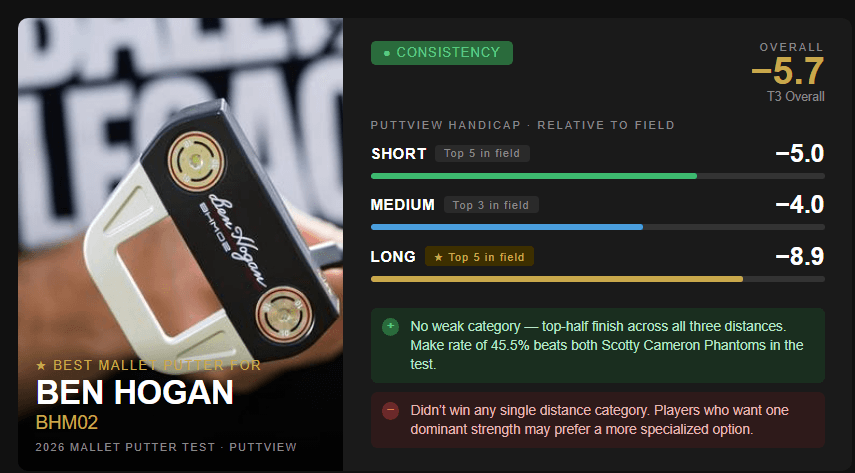
Two Ben Hogan mallets tied for third in MyGolfSpy's 2026 Most Wanted Mallet test, both posting a -5.7 PuttView Handicap across 29 putters and outscoring every Scotty Cameron Phantom in the field. The BHM02 and BHM03 retail for $249.99. The Phantoms they beat retail north of $450.
How Did the Ben Hogan BHM02 Outscore the Phantoms?
The specifics matter here. The BHM02 ranked fifth on long putts at -8.9, a number that cleared every Odyssey, every PING, and both Phantoms tested. The BHM03 posted the best medium-range score in the entire field at -5.9 and tied the test's highest make rate at 45.8 percent. For context, the Phantom 9 came in at 44.2 percent. These are not marginal differences inside a margin of error. These are two sub-$250 putters outperforming category benchmarks on the metric that matters most to scoring.
For Scotty Cameron, the result lands at an awkward moment. The brand is operating from a position of unusual strength on the data side, with a +48.6 percent month-over-month move in the DORMIED Index pushing it to ninth globally. Phantom demand has been the engine of that climb, helped by tour visibility and the Super Select cycle still carrying retail momentum. A third-place finish in a Most Wanted test is not catastrophic. Losing the head-to-head against a $250 putter, in a test enthusiasts read carefully, is the kind of result that gets screenshotted on WRX threads for the next six months.
Can Ben Hogan Challenge Premium Putter Pricing?
The Ben Hogan story is its own subplot. The brand has been through four ownership changes since the original company shuttered in 2008, and the current iteration under Hogan Holdings has spent most of its energy on irons and wedges priced to undercut the majors. Putters were not the focus. That a quiet mallet release lands two models in a tie for third against the deepest field in the category is the kind of moment that has historically built challenger brands. Sub 70 did something similar in irons in 2019. Maltby has lived in that space for two decades. Hogan now has data it can put on a shelf talker, which is a different conversation than nostalgia marketing.
What the Phantom result exposes is not a Scotty Cameron product problem. It is a Scotty Cameron pricing problem. The premium on a Phantom over a comparably performing mallet has always been some combination of milling quality, finish, resale value, and the headcover. None of those things are reflected in PuttView Handicap. When testing data starts circulating that says a $250 putter putts as well or better, the value proposition narrows to the intangibles. That works for the customer who was buying intangibles anyway. It does not work for the customer who reads MyGolfSpy before buying.
Will This Test Change Scotty Cameron Phantom Sales?
The Index trend says Scotty Cameron is still winning the attention war by a wide margin, and one putter test will not change Phantom sales materially in the next two quarters. What it changes is the conversation. Independent fitters now have a data-backed alternative to recommend to the price-sensitive buyer who walked in asking about a Phantom. The next Phantom launch will need to answer that question directly, either with a measurable performance story or a price the data can defend. Cameron has navigated harder moments. The 2009 Select line followed a stretch where Odyssey was eating share at retail and recovered the narrative within a cycle. The playbook exists. The test result just put it back on the desk.