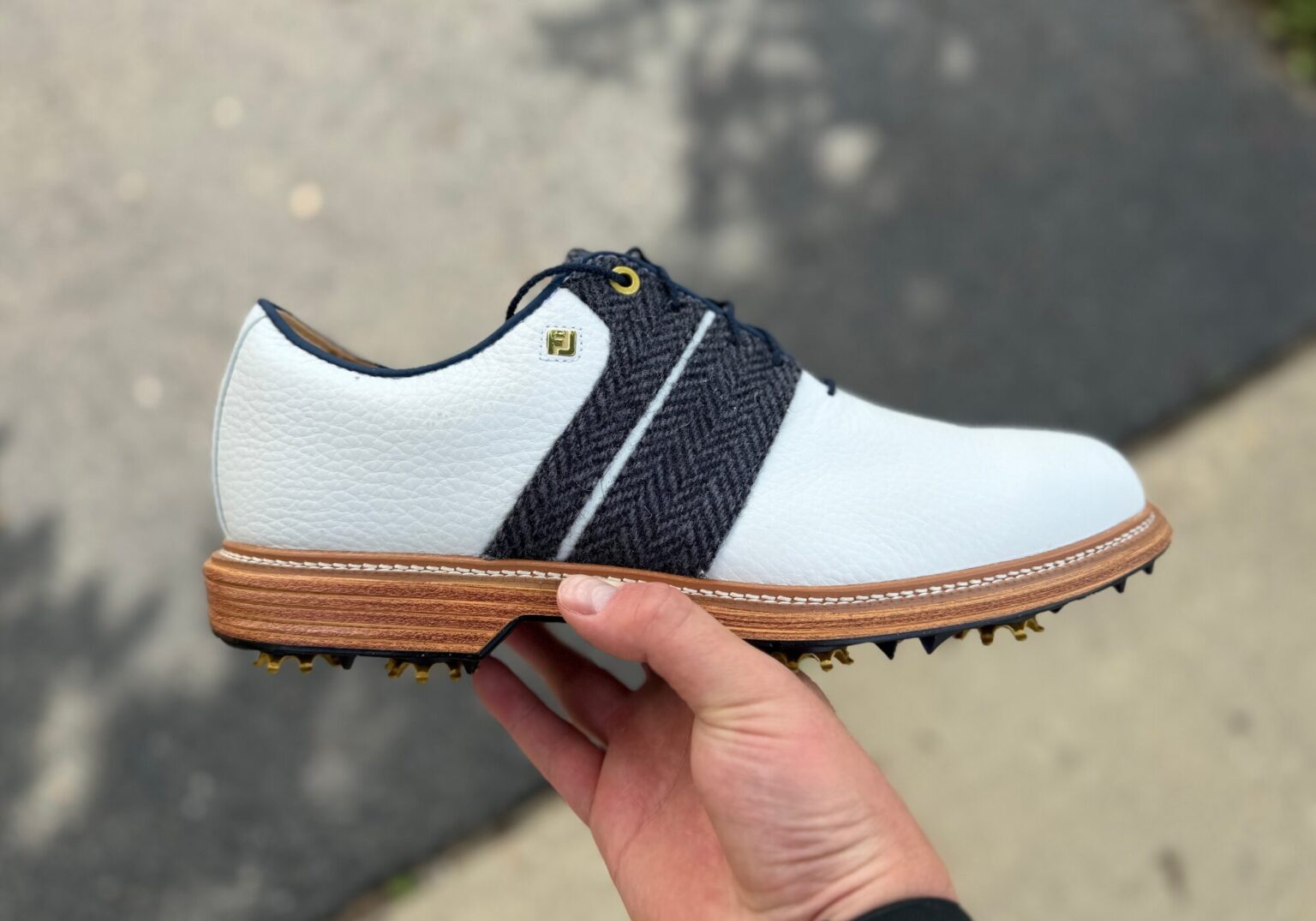
Another June, another FootJoy x Harris Tweed shoe. That is not a criticism. It is the point.
What Is New in the FootJoy Harris Tweed 2026 Shoe?
The 2026 edition drops on the updated Premiere Series Packard platform, wrapping the signature herringbone tweed saddle over FootJoy's new ARCTrax outsole. Comfort upgrades include a molded Ortholite tongue and additional collar padding around the heel. The tread has been redesigned for grip and stability, which is the sort of upgrade language every shoe brand uses every year, but the actual news here is not the outsole. It is the fact that FootJoy has now turned a niche Scottish textile collaboration into a recurring annual event that its customers plan their spring around.
Harris Tweed is one of the few textiles on earth with legal protection: to carry the Orb mark, it has to be handwoven by islanders in their own homes on the Outer Hebrides, from pure virgin wool dyed and spun in the Outer Hebrides. That is not marketing language, that is an Act of Parliament. Which means every time FootJoy drops one of these, the brand is borrowing a level of heritage authenticity that no amount of golf-specific storytelling can manufacture. Adidas can put a Three Stripes on anything. FootJoy can put Harris Tweed on a Packard silhouette and instantly outrank everyone else in the category on provenance alone.
How Do FootJoy's Golf Shoe Collaborations Stand Apart?
The broader context matters. Golf shoe design in 2026 is a war between two philosophies. On one side, the sneaker-influenced camp: G/FORE, Cuater, the endless parade of chunky-soled hybrids trying to convince the range that they belong at the club too. On the other side, FootJoy, which figured out several years ago that the money and the loyalty live with the guy who wants his shoe to look like it was assembled in a workshop rather than dropped on SNKRS. The Legend series is the pointy end of that strategy, and the Harris Tweed collab is its annual reminder to the market of what FootJoy still owns.
The timing is also worth reading. FootJoy sits at number five in the DORMIED Index this month, but the trend line is off nearly nineteen percent month-over-month, which suggests the brand is deep into the seasonal lull that follows a busy spring product cycle. A Legend series drop in June is a way to inject conversation into an otherwise quiet window, and Harris Tweed is a reliably shareable hook. Golf media covers it every year, MyGolfSpy calls it the coolest shoe of 2026 before the box arrives, and FootJoy gets a week of earned coverage for what is functionally a re-skin of an existing platform. This is the kind of playbook only a category leader can run, because only a category leader has the platform worth re-skinning.
Why Do Pro Shops Want the FootJoy Legend Series?
There is also a subtle retail message baked in. FootJoy has spent the last two years leaning into a wholesale-first, pro-shop-friendly posture while competitors like TravisMathew and Malbon chase DTC hype cycles. A Legend series shoe wrapped in handwoven wool is precisely the kind of product a green grass shop wants on its wall: it sells the story to the member without requiring the shop to compete on price with a website. That is not accidental. FootJoy knows exactly who is stocking these.
Where this goes next is the interesting question. FootJoy has now trained a segment of its customer base to expect this collab annually, which is a nice problem to have until the year the drop lands flat and everyone notices. The Packard herringbone is safe. The next one will need to be less safe, or the ritual starts to feel like a subscription. For now, though, the Hebrides-to-fairway pipeline holds.