Comfort out of the box is no longer a nice-to-have in golf footwear. It's becoming the spec sheet line that decides whether a shoe survives its first season at retail.
MyGolfSpy just published a piece framing golf shoe break-in time as a three-tier ranking system: under a round, exactly a round, or longer than a round. The third tier, in their language, is to be avoided like the plague. The publication tests over 100 shoes a year and is now weighting comfort and stability as the dominant scoring categories. That methodology shift matters more than the article itself, because MyGolfSpy's Most Wanted data has become the closest thing the category has to a consumer reports standard.
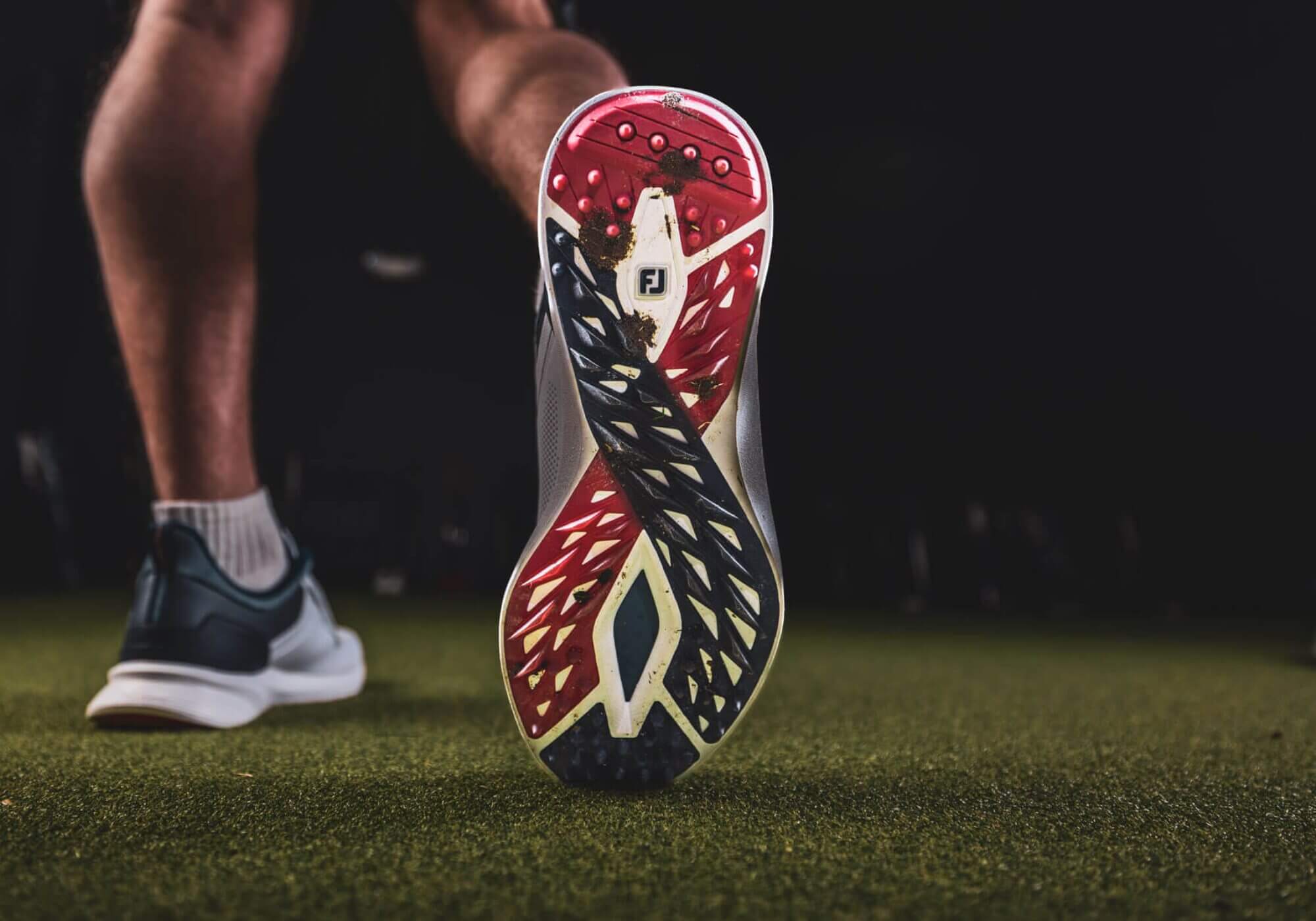
The broader context is that golf footwear has spent the last five years quietly converging with sneaker culture. Adidas Golf, Puma, Nike, and to a lesser extent FootJoy have all leaned into silhouettes borrowed from running and lifestyle lines. The Codechaos lineage at Adidas, the MG4+ at Puma, the spikeless half of FootJoy's Pro/SLX range. All of them are built on the premise that a golf shoe should feel like the shoes you already own, not a stiff leather oxford with cleats glued to the bottom. That premise has a direct consequence: the break-in tolerance of the modern golf consumer has collapsed. Buyers who spend $180 on a pair of Ultraboosts that feel finished in the parking lot are not going to accept three rounds of heel blisters from a competing golf model at the same price.
Which is where Adidas Golf's position gets interesting. Up 22.2% month-over-month and sitting at #22 globally in April, the brand is moving in the right direction in a category where the loudest narrative right now belongs to insurgents like TRUE Linkswear and the resurgent G/FORE footwear program. Adidas's advantage is that its parent company has spent two decades engineering Boost, Lightstrike, and Primeknit for athletes who never tolerated a break-in period in the first place. The golf division inherits that R&D for free. The disadvantage is that the brand has historically released too many SKUs at once, diluting the story of which model is the comfort play and which is the performance play.
The MyGolfSpy framing creates a useful pressure point for the entire category. If publications start grading shoes on a tier system that punishes anything requiring more than 18 holes to feel right, the brands that ship stiff uppers and rigid midsoles are going to feel it at retail within one season. FootJoy's Premiere line, which leans into traditional leather construction, will need to articulate a different value proposition than out-of-the-box comfort. Ecco's Yak leather story, premium as it is, takes time to mold. Those brands aren't wrong to build what they build, but the scoring rubric is shifting underneath them.
The other quiet implication is for spikeless growth. Spikeless models almost universally break in faster than spiked because the outsole geometry is closer to a standard sneaker. If comfort-first scoring becomes the dominant lens, spikeless share is going to keep climbing past the roughly 50% category split it has now. That's good for Adidas, Puma, and TRUE. It's a longer adjustment for the brands whose premium revenue still sits on the spiked side of the floor.
Watch the fall 2026 product cycle. The brands that lead with break-in claims in their marketing copy, not just performance and traction, will be the ones that read the room. Adidas Golf has the materials science to win this argument if the marketing team decides to make it. Whether they do is the question that decides whether that +22.2% trend line keeps climbing or flattens out at the next plateau.