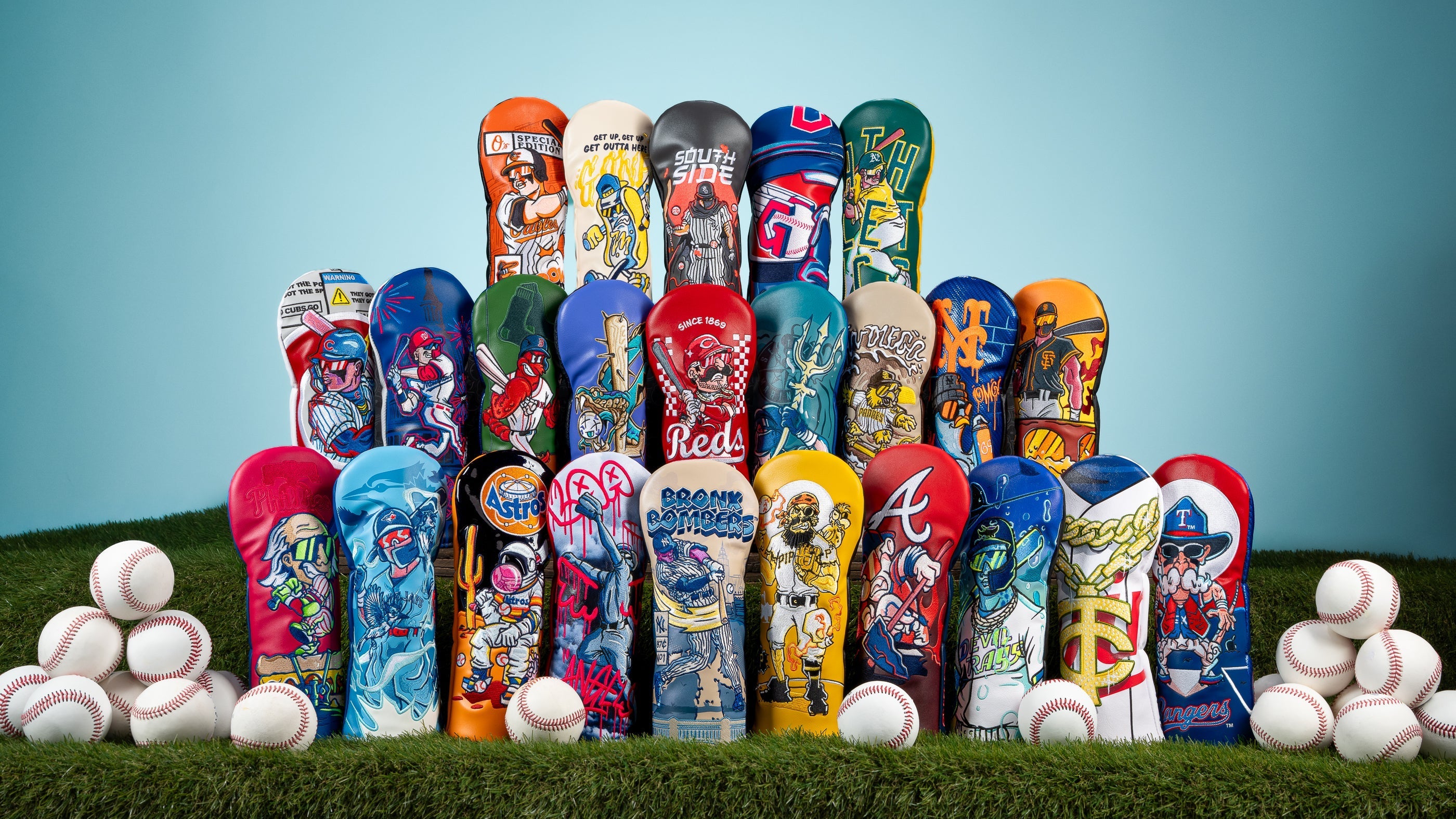
Swag Golf just dropped an officially licensed MLB collection of driver covers, fairway covers, and towels. The move puts the Chicago-based brand into the same licensing sandbox it already occupies with the NFL, NHL, NBA, WWE, and a growing list of pop-culture partners, and it arrives at a moment when Swag's month-over-month momentum is climbing hard.
What Makes Swag Golf's MLB Golf Headcovers Different?
The collection leans on original artwork rather than logo slapping, which is the entire point. Detroit gets a tiger hiding inside the Old English D. The Dodgers get a ramen-loving Lucky Cat, a nod to Ohtani-era Los Angeles that would have felt insane three years ago and feels obvious now. Kansas City gets a throne. This is Swag's whole thesis compressed into a licensing deal: the headcover is the canvas, the team is the excuse, and the collectibility is the business model.
The broader story here is that Swag has quietly become one of the few golf brands to crack the licensed-merchandise category in a way that actually moves inventory at premium prices. Licensed golf gear used to mean a Titleist headcover with a team logo stitched on it, sold at the pro shop of a course near the stadium. Swag figured out that the same fan who spends $400 on a Mitchell and Ness throwback jersey will spend $65 on a driver cover if the artwork feels like something, not like a corporate approvals process. The MLB league office, which has spent the last decade trying to reach younger fans through everything from City Connect uniforms to Fortnite skins, is a logical partner for that thesis.
How Are These Premium Driver Covers Built?
The construction matters too, because this is where a lot of licensed golf product falls apart, literally. Swag's covers use dense embroidery on heavier knit bodies, which holds shape better than the printed neoprene most licensed competitors ship. It's the difference between a cover that looks good on the tee for a season and one that looks good in a display case in five years. If you're pricing at the top of the headcover market, the stitching has to justify it, and Swag has generally understood that better than the mall-kiosk competition.
The interesting business question is what this signals about Swag's roadmap. The brand climbed 22 percent month-over-month in June and now sits at 35th in the DORMIED global rankings, ahead of several legacy accessory makers with far bigger distribution footprints. That kind of movement doesn't come from headcovers alone. It comes from a brand that has figured out how to be the default answer when a golfer wants to express something, whether that something is a team, a city, a joke, or an aesthetic. MLB is just the latest wardrobe change for the same core act.
Why Might Swag Golf Expand Beyond Headcovers?
Worth watching: whether Swag uses this licensing infrastructure to push deeper into apparel and bags. The brand has flirted with expansion for years, and the licensing muscle it has built with the pro leagues is the exact muscle you need to sell a co-branded Dodgers stand bag or a Yankees polo. Malbon has already demonstrated that co-branded apparel with cultural partners is one of the most efficient marketing spends in golf right now. Swag has more license agreements in place than almost anyone in the category and hasn't fully monetized them beyond the accessory shelf.
The MLB drop will sell. The fan overlap between golf and baseball is enormous and underserved, and Swag's take on it is more thoughtful than what the licensed category usually produces. The bigger question is whether the brand treats this as another SKU release or as proof that it can graduate from headcover specialist to something closer to a full lifestyle label. The next twelve months should answer that.