A $200 radar launch monitor that measures five metrics accurately is more interesting than a $2,000 unit that measures fifteen. Shot Scope's LM1 is the rare consumer launch monitor that knows what it isn't.
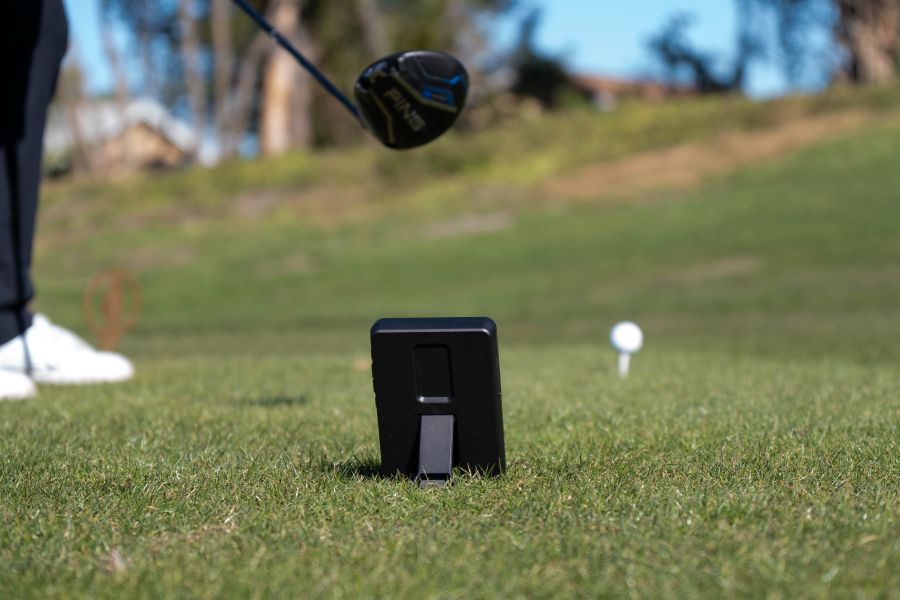
The Scottish brand, better known for GPS watches and shot-tracking tags, has released a pocket-sized Doppler unit that reads ball speed, clubhead speed, smash factor, carry, and total distance. No spin. No launch angle. No club path. For the $200 price point, that subtraction is the product. The LM1 charges via USB in under two hours, reads shots from four to five feet behind the ball, and connects to the Shot Scope app via Bluetooth for session history.
The consumer launch monitor category has spent five years trying to convince amateurs they need spin axis data. Garmin's R10 at $600, the Rapsodo MLM2PRO at $700, Bushnell's Launch Pro pushing past $2,000. Each release added a metric and a price tier. Shot Scope is running the opposite play: identify the four numbers a 14-handicap actually uses to make a club decision, build a device that measures those four numbers reliably, and price it where impulse purchases happen. SkyTrak built a business on the premium end of this category. The LM1 is aimed at the customer SkyTrak never tried to reach.
What makes this notable beyond the spec sheet is who Shot Scope is. The brand has spent a decade collecting amateur performance data through its tag-based tracking system. They have a longitudinal dataset on what mid-handicaps actually do with their clubs, not what tour players do. That data informs which five metrics made the LM1 cut and which fifteen did not. Most launch monitor brands are engineering companies trying to package data for consumers. Shot Scope is a consumer data company that built a launch monitor. The product reflects that.
The competitive read here is uncomfortable for the mid-tier. Garmin and Rapsodo have spent the last three years climbing toward $1,000 by adding camera systems and simulator integration. Shot Scope just made a credible argument that a meaningful percentage of the amateur market never needed any of it. If the LM1 holds up to independent testing the way the early reviews suggest, the $400 to $700 segment becomes a difficult place to sell. Either you justify the premium with simulator-grade accuracy and full ball flight data, or you compete with a $200 unit that does the basics well. The middle gets squeezed.
Shot Scope sits 40th globally and has been flat month-over-month, which is roughly where a niche tracking brand with strong UK penetration and limited US shelf presence should sit. The LM1 is the kind of product that changes that ranking if the distribution catches up to the value proposition. The brand's challenge has always been awareness in the US market, where Arccos owns the tracking conversation and the launch monitor conversation is dominated by Bushnell, Garmin, and FlightScope. A $200 entry point with a clear story is the right wedge into that conversation.
Watch the holiday season. If the LM1 ends up in Dick's, PGA Tour Superstore, and Worldwide Golf endcaps at $199, Shot Scope graduates from a tracking-tag brand to a hardware brand with multiple product lines. If it stays direct-to-consumer and online retail only, the LM1 becomes a great product that not enough golfers found. The distribution decision over the next two quarters tells you which company Shot Scope is becoming.