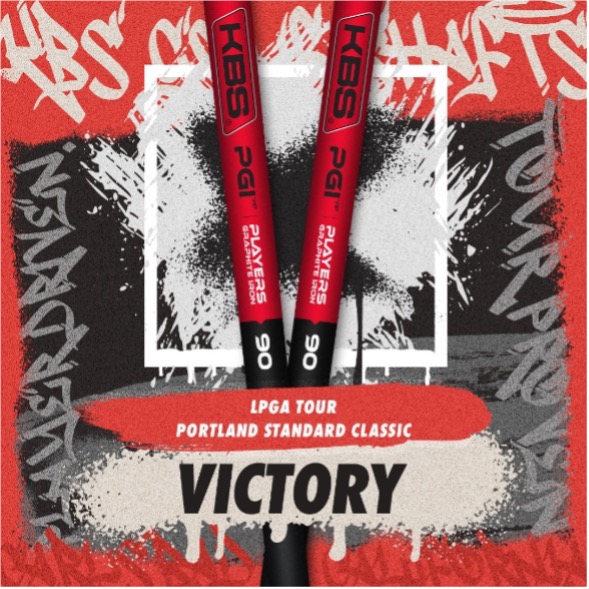
Graphite in an iron shaft used to be an admission of decline. From the mid-1990s through the late 2000s, a graphite iron shaft in the bag meant one of two things: you were over 65, or you had a back problem you did not want to discuss. That stigma held until UST Mamiya's Recoil arrived in 2013 and forced fitters to treat graphite as a performance option rather than a concession. KBS took that opening and built the PGI line on it. At the Standard Portland Classic, four of the top five finishers played KBS iron shafts, all of them graphite.
Which KBS Golf Shafts Did the Top Finishers Play?
The winner played PGI 90 through the irons. Second place used PGI 80 with VX Lite wedges, fourth ran PGI 90 with VX Lite, and fifth combined PGI 80 with Tour Lite wedge shafts. KBS also claims that more than half of the field in women's professional golf now plays its shafts somewhere in the bag, which, if accurate, is a market share number no shaft brand holds on the men's side of professional golf.
What makes that share interesting is not the wins. It is how it was won. Steel iron shafts have been engineered for decades around a fairly narrow band of tour-caliber male swing speeds, with Dynamic Gold as the reference point and lighter steel offerings like XP 95 and Elevate arriving later as concessions to everyone else. The sub-80 mph iron swing was treated as a fitting problem to be solved with existing parts rather than a design target worth its own program. KBS, founded in 2008 by Kim Braly after his work on the Rifle line at Royal Precision, has spent much of the last decade building products specifically for that band. PGI 80 and PGI 90 are not lighter versions of a men's tour shaft. They are shafts designed from the launch and stability requirements of a player who needs help getting a 7-iron to peak height without giving up dispersion.
How Did KBS Golf Build Its LPGA Equipment Position?
The strategic read is straightforward. True Temper still owns the men's professional iron shaft count by a wide margin and always will, because incumbency in that channel is nearly unbreakable. Rather than fight for percentage points there, KBS built a dominant position in a segment the incumbents never prioritized, then let the win notices accumulate. It is the same logic Vokey applied to wedges and Scotty Cameron applied to putters: pick the category where the category leader is distracted, then become the default.
The conversion problem is real, though. KBS sits at #51 of 215 in the DORMIED Index this month, flat month over month, which is what tour dominance in women's golf tends to produce. LPGA equipment coverage does not move retail search volume the way a PGA Tour WITB does, and shaft brands live at the bottom of the fitting funnel anyway. A golfer who buys irons at a big-box store gets whatever stock shaft the OEM negotiated. The PGI story only reaches the customer through a fitter who has the shafts on the cart and the vocabulary to explain why graphite is not a downgrade. That is a distribution and education problem, not a product problem, and press releases about leaderboard finishes do not solve it.
What Could Push KBS PGI 90 Beyond Tour Bags?
The segment KBS has cornered happens to be the only one in golf with reliable participation growth. Women have accounted for the largest share of new golfers entering the game over the past several years, and that cohort is arriving without the graphite stigma the previous generation carried. If KBS can get PGI onto fitting carts and into OEM stock offerings at the same rate it has gotten it into LPGA bags, the flat index line changes. Watch for a stock PGI option in a major OEM's women's iron lineup. That, more than another four-of-five leaderboard week, would be the tell.