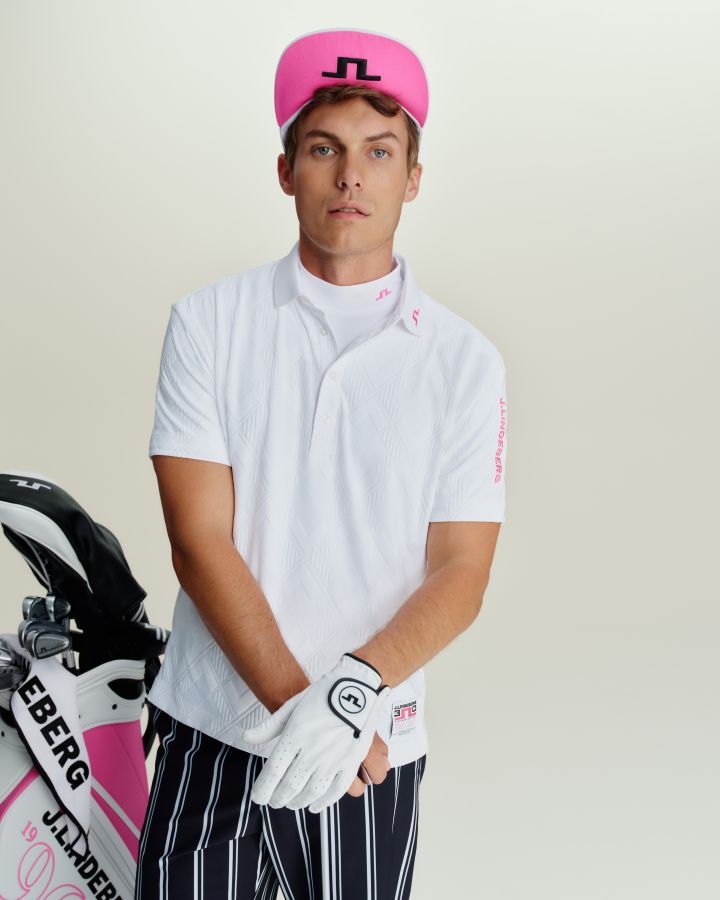
Pink pants, black sweater, snapback. That is the entire pitch for J.Lindeberg's 30th anniversary capsule, and it is a smart pitch because it is the only golf outfit from 1998 that anyone under 50 can still picture.
What Is in the J.Lindeberg 30 Year Anniversary Capsule?
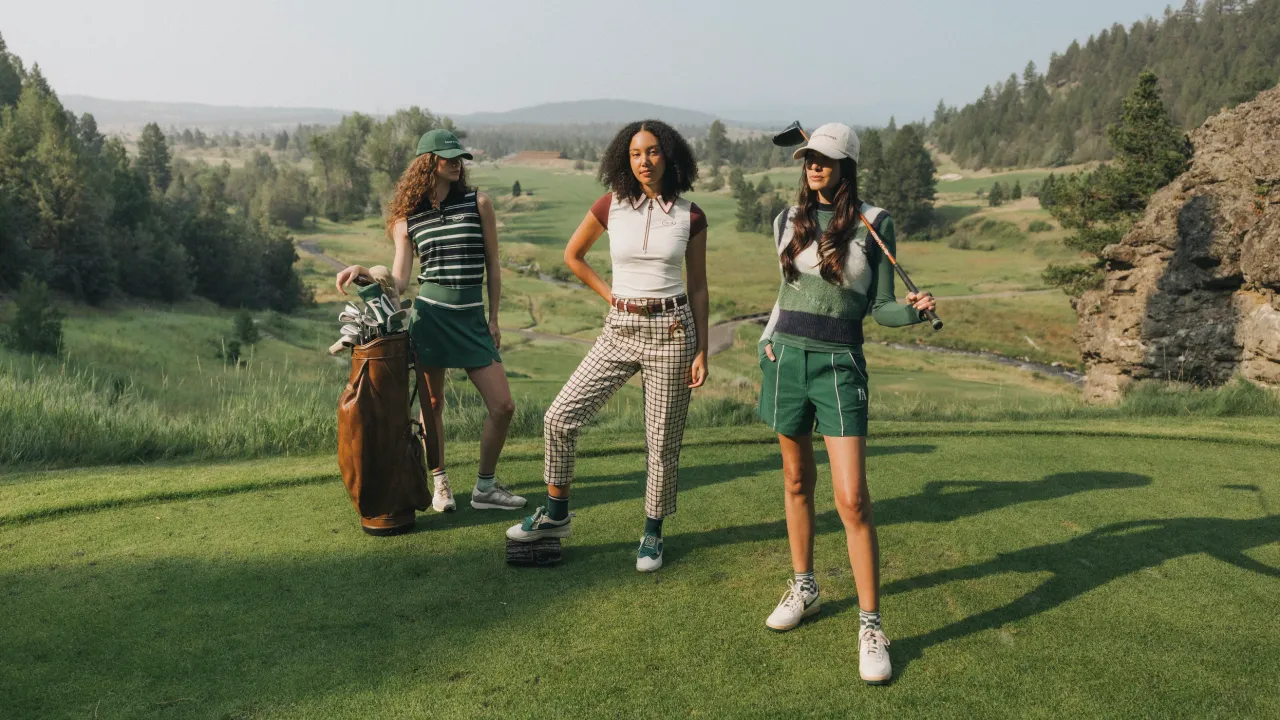
The Swedish brand launched its anniversary collection this week, anchored to Jesper Parnevik's Open Championship look at Royal Birkdale. The capsule revisits the pink, black, and white palette across statement polos, striped knitwear, pleated pants, tailored shorts, dresses, and lightweight layers, all stamped with exclusive 30-year branding. Ambassadors Viktor Hovland and Niklas Norgaard will wear pieces at the U.S. Open at Shinnecock in June, which is the kind of placement that turns a capsule into a moment.
The Parnevik reference is doing real work here. Founder Johan Lindeberg dressed Parnevik in 1997 and 1998 when golf apparel was still dominated by pleated khakis and oversized polos in colors borrowed from hospital scrubs. Pink pants on Sunday at a major was a genuine shock to the system, and the brand has spent three decades trading on the residual credibility of having been first to that fight. Revisiting the look now is less nostalgia than a reminder that J.Lindeberg owns a piece of golf style history that no competitor can buy or borrow.
Why Is J.Lindeberg Revisiting Its Parnevik Moment Now?
The timing is also a tell. Anniversary capsules tend to land when a brand needs to remind the market why it exists. J.Lindeberg sits 16th in DORMIED's global brand index, which is respectable, but the apparel category has gotten crowded in ways that did not exist five years ago. Malbon owns the streetwear-adjacent conversation. Bogey Boys has the cultural press. Eastside Golf has the collab calendar. Quiet Golf and Manors have the design-school crowd. TravisMathew has the volume. J.Lindeberg's positioning, premium Scandinavian fashion that happens to make golf clothes, was distinctive in 2010 and is now one lane among many. Leaning on the Parnevik moment is a way of saying: we were doing this before any of these brands existed.
The product itself looks like it understands the assignment. Pleated pants and tailored shorts read more like ready-to-wear than performance, which is consistent with where the premium end of the category is heading. The striped knitwear is the piece worth watching, because knitwear is where construction quality shows up immediately. A heavy-gauge stripe with proper finishing reads luxury. A thin acrylic blend reads outlet mall. The press images suggest the former, but the proof is in how the hem holds after three washes. Creative director Neil Lewty's framing, blending golf and ready-to-wear through a modern lens, is the same language every premium golf brand is using right now, which means execution is the only thing that separates the winners from the also-rans.
Can J.Lindeberg's Retail Footprint Hold Off Newer Brands?
The broader read is that J.Lindeberg is repositioning around lifestyle rather than performance. The capsule is explicitly described as moving from course to clubhouse to summer evenings, which is the same pitch Holderness and Bourne, B. Draddy, and half the new wave are making. The difference is that J.Lindeberg has 157 stores in fashion capitals like Copenhagen and Shanghai and wholesale distribution in close to 2,000 doors. That retail footprint is the real moat, and it is the one thing the digitally-native challenger brands cannot replicate in a single capsule cycle.
The Parnevik look will sell to the customers who remember it and the customers who wish they did. The harder question is whether J.Lindeberg can use this anniversary to remind a younger buyer that the brand was the original disruptor, not the establishment that newer disruptors are now disrupting. Hovland in pink pants at Shinnecock is a good start. What comes after the capsule is the real test.