Adam R. covers apparel, accessories, and golf culture for DORMIED. He has been tracking brand drops and collaborations since 2018.
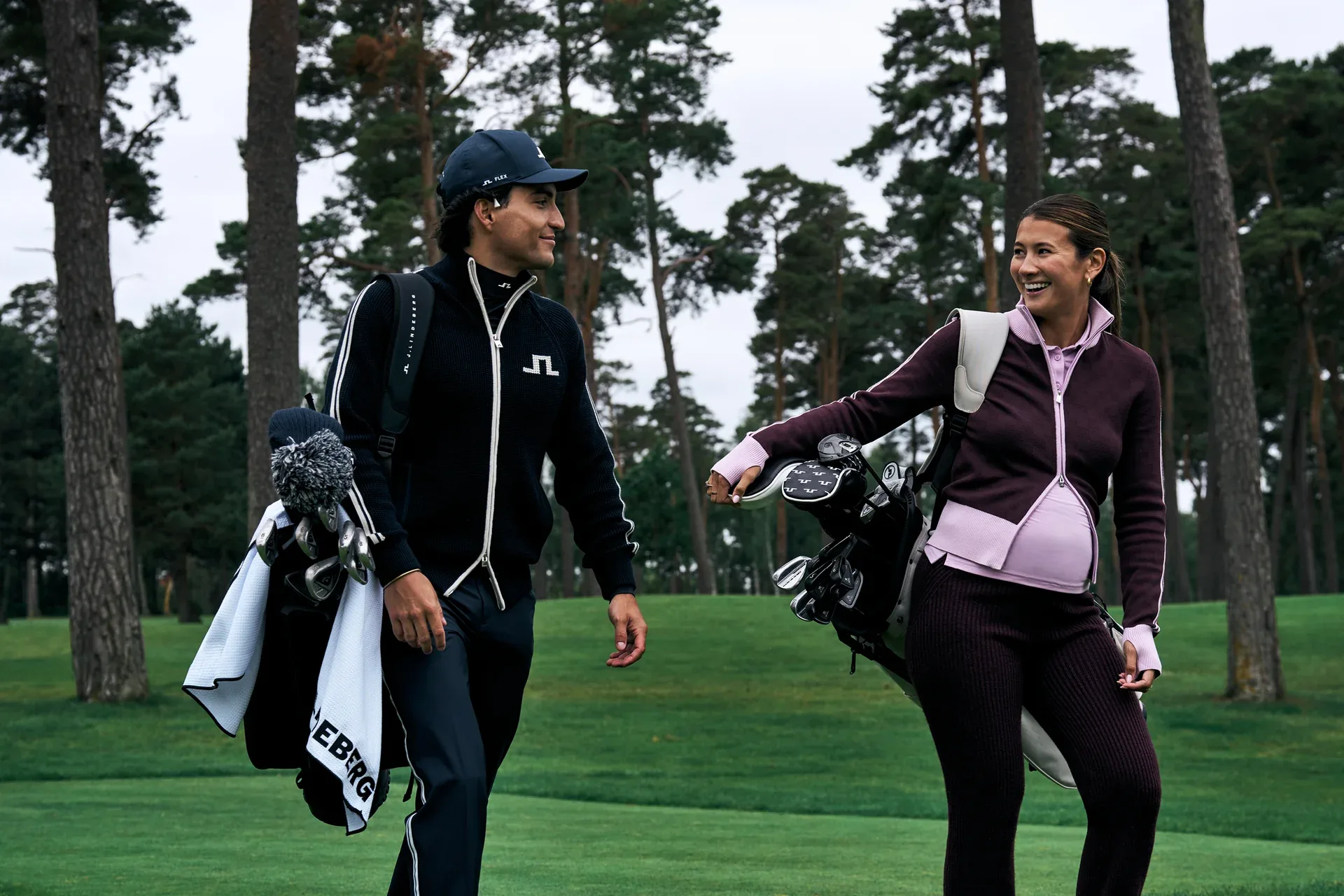
J.Lindeberg is a good golf brand, with one significant qualification: the cut is slim, and that decides whether you love it or return it. On fabric and construction it sits comfortably in the premium tier alongside Peter Millar, Galvin Green and G/Fore, and the design is the reason the brand exists at all. But the Scandinavian silhouette is narrow through the chest, shoulders and sleeve, and it offers little forgiveness to broader or taller golfers. Reviewers converge on the same advice with unusual consistency: size up if you are between sizes.
In one sentence: J.Lindeberg makes genuinely premium golf apparel with excellent fabric and design, and it suits lean, athletic builds far better than broad ones.
Is J.Lindeberg a Good Golf Brand?
Break the question into the three things "good" can mean for a fashion label that entered golf in 1996, and the answers differ.
On build quality and fabric, the verdict is straightforwardly positive. The brand's signature TX Jersey, four-way stretch and OEKO-TEX certified moisture-wicking fabrics are not marketing decoration, and reviewers consistently rate construction above mid-range competitors. Independent assessment puts the polos and trousers in a rare balance of stretch and structure.
On design, it is close to the top of the category. J.Lindeberg did not join golf fashion, it largely started it. That legacy still shows in a colour palette that takes actual positions rather than defaulting to safe neutrals, and in clothes that pass off the course without a change.
On fit, it is divisive by design. The silhouette is slim through the chest and sleeves with shorter hems and clean lines. It looks excellent when sized correctly and unforgiving when it is not.
So: good, and specifically good for golfers with lean or athletic builds who want their clothes to look tailored. If you prefer a relaxed cut, or you are broad through the shoulders, the fabric quality will not rescue the fit, and you would be better served elsewhere.

Who Founded J.Lindeberg and Why Start With Golf?
Johan Lindeberg founded the brand in Stockholm in 1996, launching in Stockholm and New York simultaneously. He arrived from Diesel, where he had been marketing director from 1990 and chief executive of the American business from 1994, which explains the brand's unusual instinct: it was built by a fashion marketer rather than a golf company.
Golf was in the concept from the start rather than added later. Lindeberg's argument was that the game had lost its own visual history, drifting into oversized polos and pleated beige through the late eighties. His reference points ran backwards, to Walter Hagen's tailored knits, Arnold Palmer's pullovers and seventies silhouettes.
To make the case he needed a player, and he had Jesper Parnevik, the brand's first PGA Tour ambassador. Parnevik's close-cut, brightly coloured look stood directly against the prevailing silhouette and effectively launched the brand in golf. The defining win came on 14 May 2000, when he took the GTE Byron Nelson Classic, beating Phil Mickelson and Davis Love III in a playoff that Mickelson exited at the second hole and Parnevik closed out with a par at the third.
Johan Lindeberg left the company in 2007. Since 2012 it has been owned by a small group of investors: Anders Holch Povlsen, owner of the Danish fashion company Bestseller, alongside Dan Friis and Allan Warburg, co-owners of Bestseller China, and Stefan Engström. Our thirtieth-anniversary piece covers the brand's history and how it is using it commercially in more depth.
What Does J.Lindeberg Golf Clothing Cost?
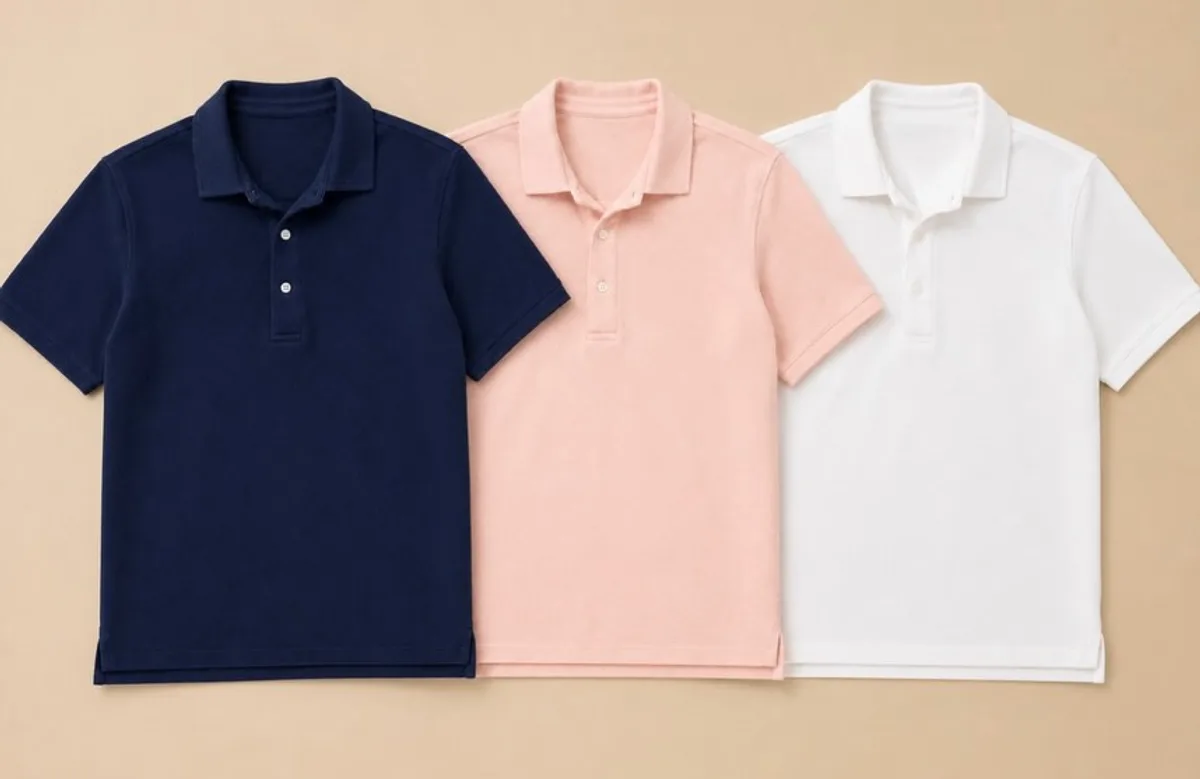
Polos, the category most people buy first, run from about $90 to $125 as of September 2026. The Bridge Polo sits at the bottom of that range at $90, the Heath at $95, the Tour Tech Slim Fit and Calex at $100, the Bo, Finn and KV at $110, and the 30Y anniversary polo at $125.
Layering is where the price climbs. The Tour Tech Mid Layer is about $150, the Kendrick Knitted Zip Sweater and Maclean Quarter Zip Hood about $180, the Ellott Bonded Fleece Pant about $205, and the Jeffrey Windbreaker Sweater about $230. Accessories are more forgiving: caps and visors run $40 to $50, belts $65 to $115, and a three-pack of socks $50. Footwear sits at the top, with the Vent 500 golf sneaker between about $240 and $265.
That spread explains the value picture. At $90 to $125, a J.Lindeberg polo is premium but not outlandish, and it is competitive with Peter Millar for comparable construction. Independent assessment rates polos, trousers and sale-priced midlayers as genuinely good value while marking outerwear and collaboration pieces down for aspirational pricing, and the numbers bear that out: a $230 windbreaker sweater is a design purchase as much as a performance one.
The practical read: buy the polos and trousers at or near full price without much hesitation. Wait for a markdown on the outerwear, which the brand discounts seasonally.
How Does J.Lindeberg Fit Compared With Other Golf Brands?
This is the section that matters most, because it is where the returns come from.
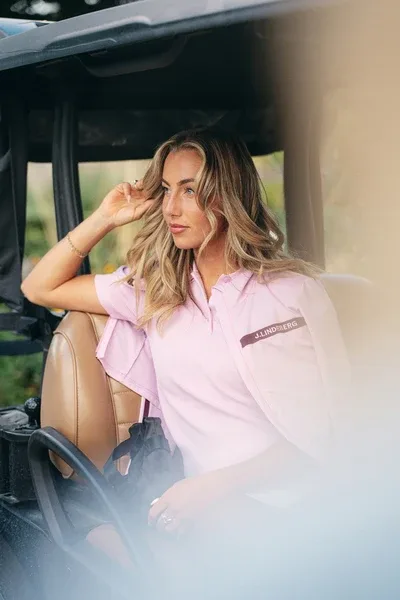
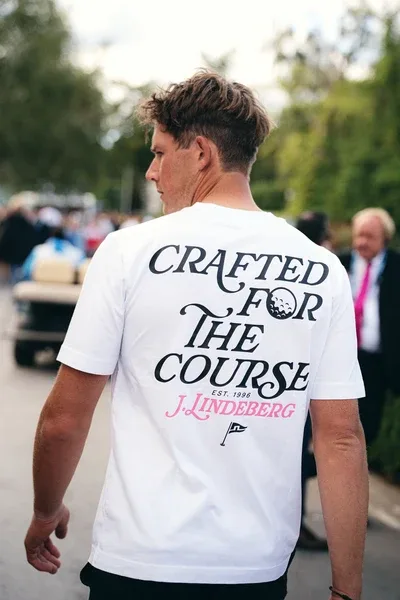
The silhouette is Scandinavian and deliberately narrow: slim through the chest and sleeves, snug across the shoulders, with shorter hems than most American golf brands. Polos and midlayers run slim, and the near-universal advice is to size up if you are between sizes or want anything approaching a relaxed fit. Shorts and trousers run closer to true to size but are still cut close through the leg.
Against the broader market, that puts J.Lindeberg at the trim end. Peter Millar and most American brands cut fuller through the body. If you normally take a medium in an American golf polo and you are anything other than lean, a J.Lindeberg medium is likely to be tight through the shoulders.
Reviewers who fit the cut describe it as excellent. Reviewers who do not describe it as unforgiving. Both are accurate, and the brand has not moderated the silhouette to widen its market, which is a defensible decision and a real constraint on who should buy it.
Which Tour Pros Wear J.Lindeberg?
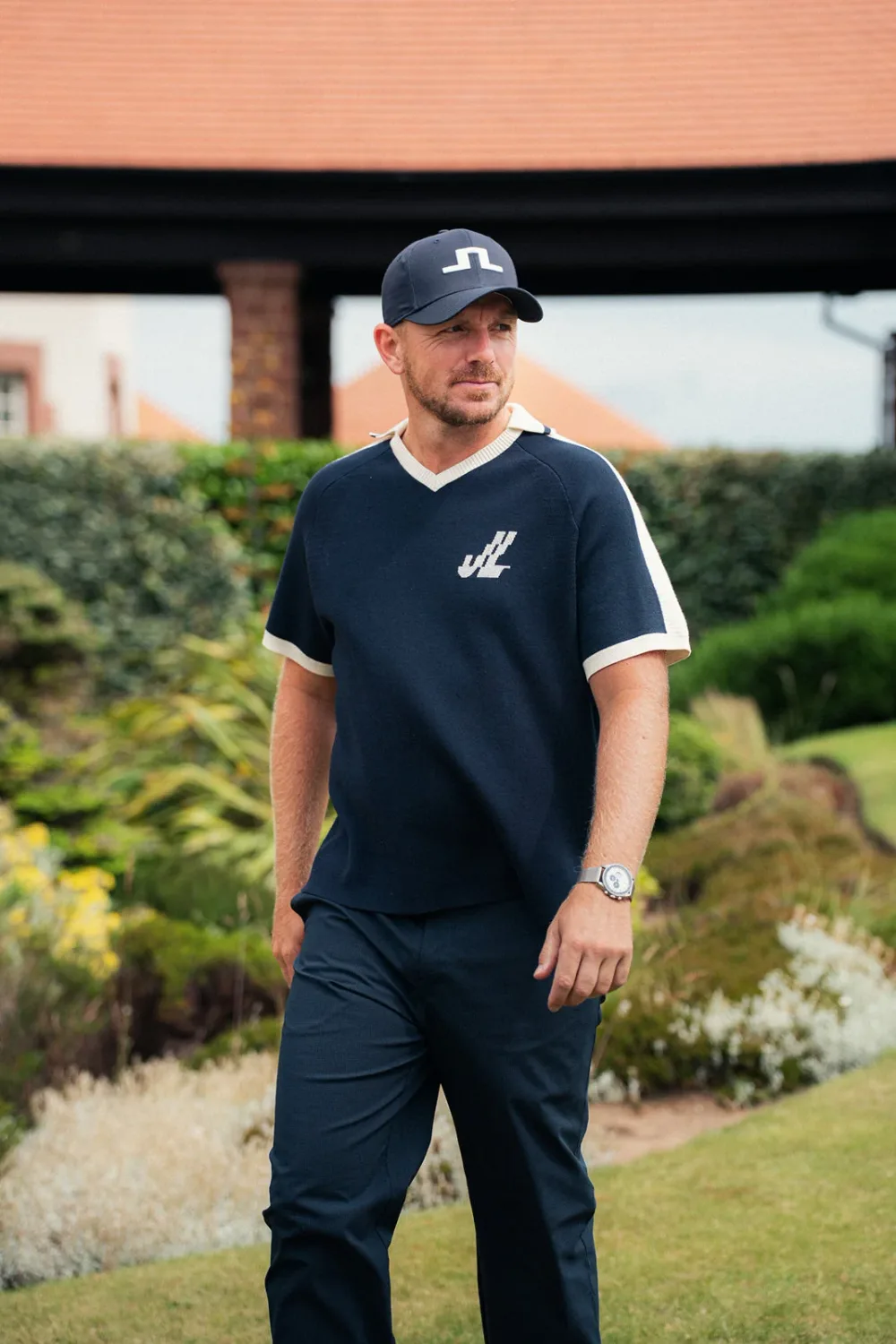
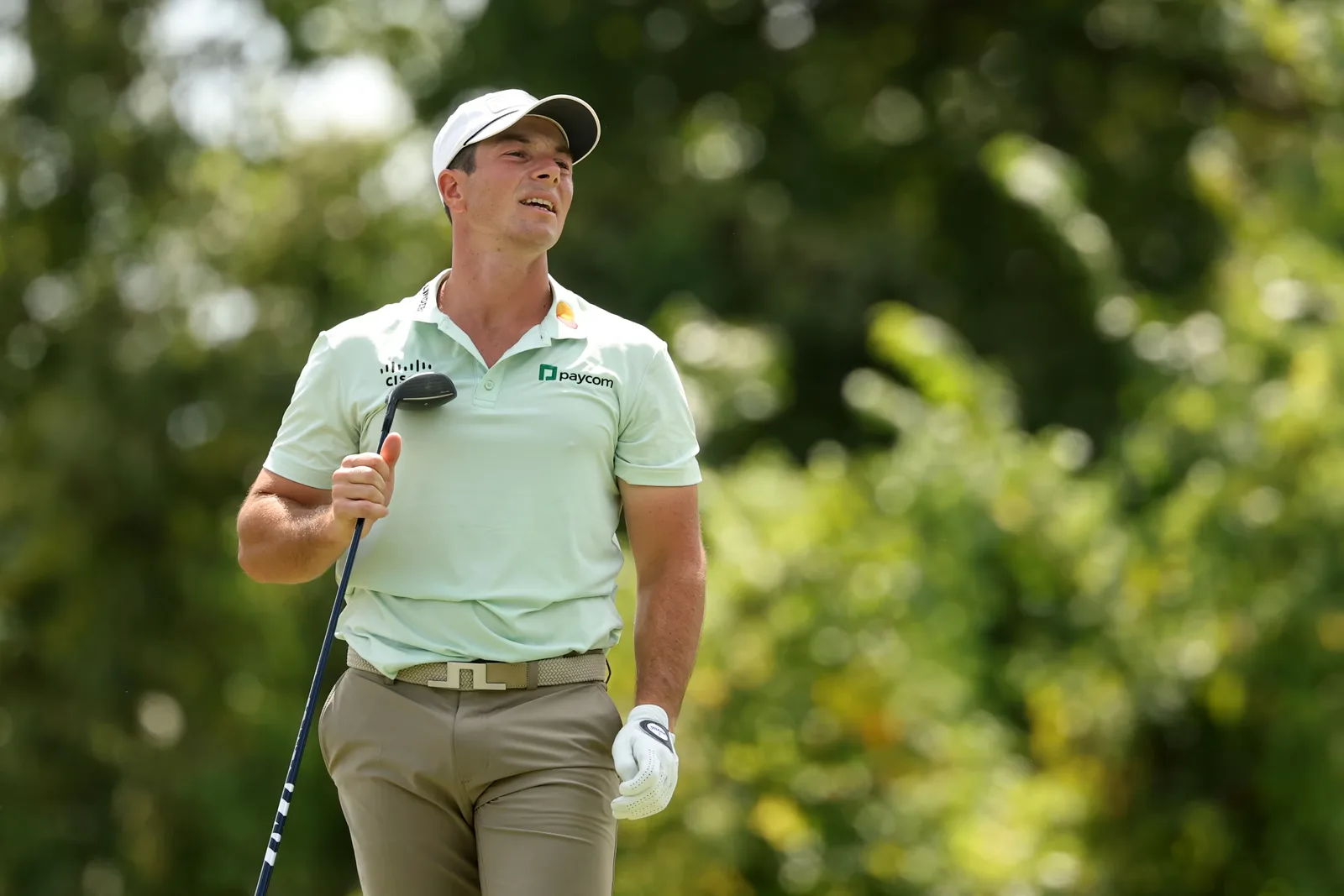
Viktor Hovland is the brand's current headline ambassador, and he wore the thirtieth-anniversary capsule at the U.S. Open. Our piece on his impact looks at what that visibility was actually worth in search terms.
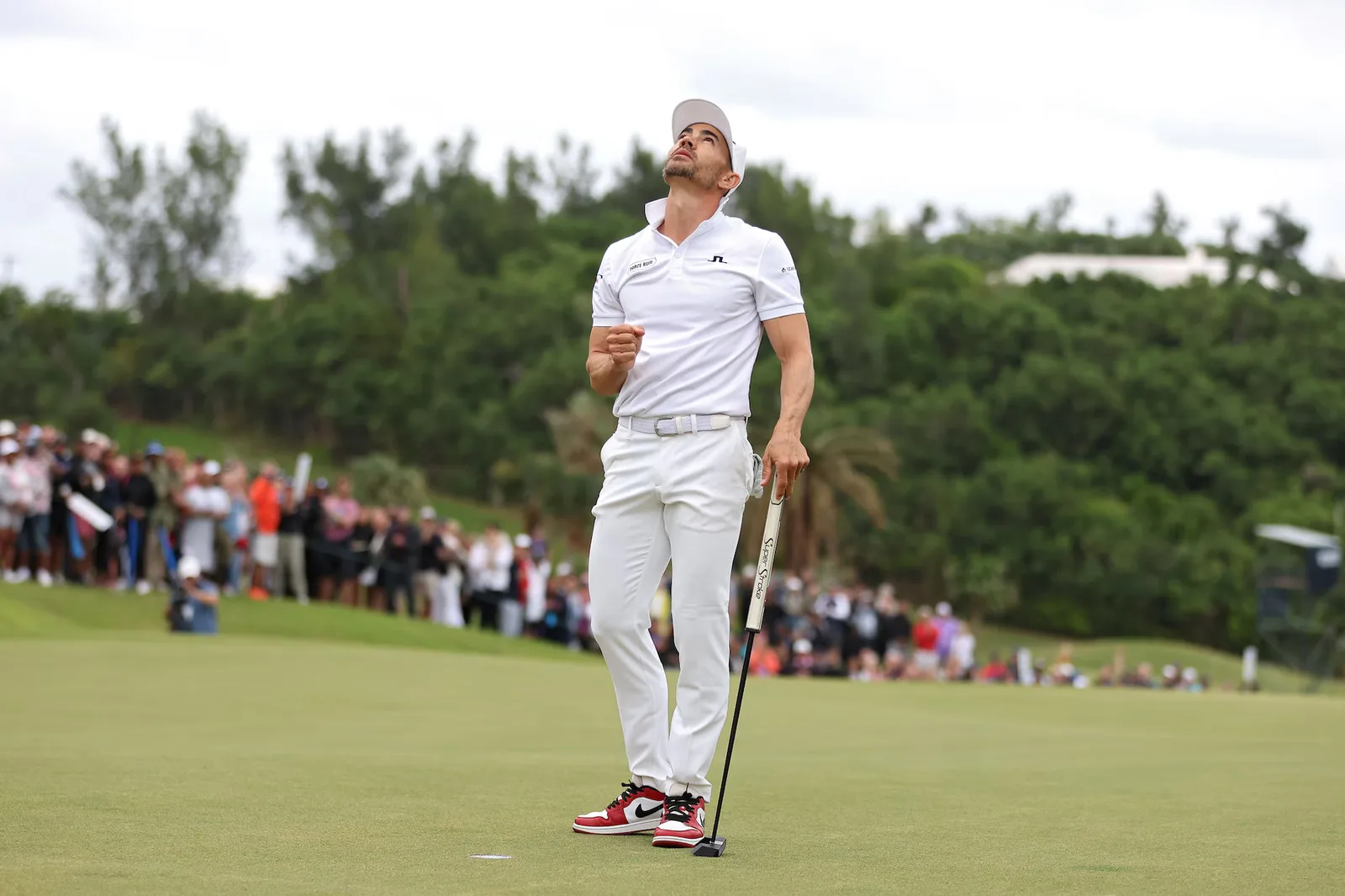
Historically the roster runs back to Parnevik, who defined the brand's first era, and later included Camilo Villegas, whose own reputation for style suited it.
One caveat worth stating: DORMIED's WITB database covers clubs, balls and putters for 277 tour players and does not track apparel, so we do not publish counts of who wears what on tour.
How Is J.Lindeberg Trending on the DORMIED Index?
| Metric | Value |
|---|---|
| Global DORMIED Index rank | 12th of 215 |
| DI score | 11.0 |
| Monthly global searches | 60,500 |
| Month-over-month change | +22.2% |
| Three-month change | -6.5% |
| Year-over-year change | 0% |
Source: DORMIED Index, August 2026 snapshot. The DI score is a brand's global search interest relative to the most-searched golf brand, which scores 100.
Twelfth of 215 with 60,500 searches a month puts J.Lindeberg in the top tier of golf brands by demand, ahead of almost everything in the premium apparel category. The monthly jump of 22.2 percent reflects the anniversary campaign and Hovland's U.S. Open visibility landing in the same window.
The flat year and the negative quarter are the more telling figures. This is a brand holding a strong position rather than growing into a new one, which is what a thirty-year-old label with a defined customer usually looks like. The anniversary work lifted a month. It has not yet moved the baseline.
What Do People Ask About J.Lindeberg?
Is J.Lindeberg a luxury brand?
It is premium rather than luxury. Pricing sits alongside Galvin Green, Peter Millar and G/Fore, above mid-range golf apparel but below true luxury fashion houses.
Where is J.Lindeberg from?
Sweden. The brand was founded in Stockholm in 1996 and remains Stockholm-based, though its owners include the Danish businessman Anders Holch Povlsen.
Who owns J.Lindeberg?
Since 2012 it has been owned by a group of investors: Anders Holch Povlsen, owner of the Danish fashion company Bestseller, alongside Dan Friis and Allan Warburg, co-owners of Bestseller China, and Stefan Engström. Founder Johan Lindeberg left in 2007 and is no longer involved.
Does J.Lindeberg run small?
Yes. Polos and midlayers run slim through the chest, shoulders and sleeves, and the consistent advice is to size up if you are between sizes or want a relaxed fit. Trousers and shorts are closer to true to size but still cut close through the leg.
Which golfers wear J.Lindeberg?
Viktor Hovland is the current headline ambassador. Jesper Parnevik was the brand's first PGA Tour ambassador and defined its early identity, and Camilo Villegas wore it during his most prominent years.
Is J.Lindeberg worth the price?
For polos, generally yes. At about $90 to $125 the construction justifies the premium, provided the cut suits you. Outerwear is a harder case: sweaters and windbreakers run $180 to $230, where you are paying for design as much as performance, and the brand discounts seasonally.
How much is a J.Lindeberg polo?
About $90 to $125 as of September 2026. The Bridge Polo is the entry point at $90 and the 30Y anniversary polo the most expensive at $125.
Does J.Lindeberg make golf shoes?
Yes. The Vent 500 line runs from about $240 to $265.
What fabric does J.Lindeberg use?
The signature is TX Jersey, alongside four-way stretch and OEKO-TEX certified moisture-wicking fabrics used across the range.