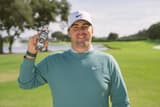
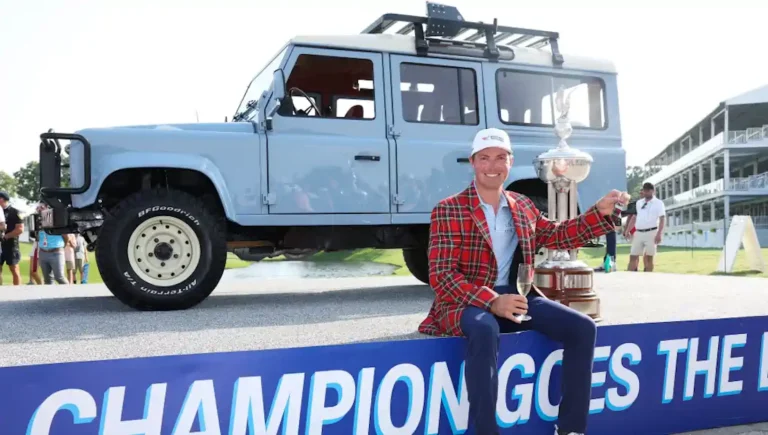
Russell Henley birdied his last three holes in regulation at Colonial, then closed out Eric Cole in a playoff to win the Charles Schwab Challenge. The brand that benefits most from that finish is not in Henley's bag. It's the one whose name is on the gates of the host city.
Ben Hogan Golf does not pay Henley. It does not have a meaningful tour presence. It has spent the last decade in and out of bankruptcy proceedings, restructurings, and ownership changes that would test the loyalty of any direct-to-consumer customer base. And yet, every May, the brand gets a week of television coverage in which announcers say the name Hogan more times than any single tour endorsement could buy. Henley's win, decided on a course where Hogan won five times between 1946 and 1959, extends that coverage into the highlight cycle for another week.
The Charles Schwab Challenge is the only PGA Tour event where the brand equity of a defunct-then-revived OEM gets reinforced by the broadcast itself. Ben Griffin's run at back-to-back wins, the only player other than Hogan to do it, would have been the bigger story. Instead Henley's closing stretch put Hogan's name back in the headline, which is arguably better for the brand than a Griffin repeat would have been. A repeat winner moves the narrative to Griffin. A near-miss keeps the narrative on Hogan.
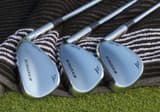
The brand's current position reflects that strange dynamic. A +172.5% month-over-month move in the DORMIED Index, landing at #13 globally in April, is the kind of jump that usually requires a product launch or a major signing. Ben Hogan Golf did neither. What it had was a tournament week leading into Colonial, the Hogan documentary cycle that periodically re-emerges on streaming, and a customer base of forged-iron purists who treat the brand like a religious artifact. The PTx Pro and Icon irons still get cited in WRX threads alongside Miura and Sub 70 as the answer to the question of where forged value lives now that Mizuno's pricing has drifted upward.
The harder question is whether any of this converts. The brand has been here before. The 2017 relaunch under Terry Koehler generated similar attention and ended in Chapter 11. The current ownership has been quieter, more disciplined about inventory, and more focused on the direct channel where the math actually works for a small forged-iron operation. The Hogan name still sells, but it sells slowly, to a specific buyer, in a category where the competition from Mizuno, Srixon, Titleist's T-Series, and the boutique forging houses has never been deeper.
What Henley's win provides is not a sales spike. It's a reminder that the Hogan name still carries cultural weight in golf in a way few defunct-and-revived brands manage. Wilson Staff has it. MacGregor mostly doesn't anymore. Hogan sits somewhere in between, and every Colonial broadcast nudges it back toward the Wilson side of that line. Whether the current ownership can convert cultural weight into a sustainable iron business is the question that has defeated every Hogan operator since the family sold the company to AMF in 1960. The next product cycle, not the next Colonial, is where that question gets answered.