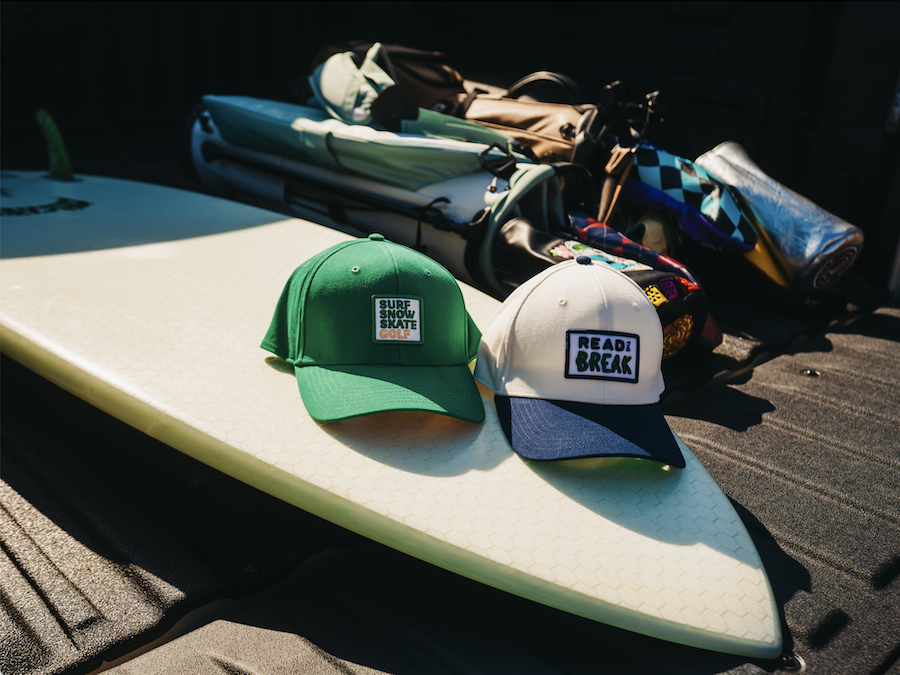
Cobra's new collaboration with BinkyBro, a Utah-based youth headwear brand built on surf, skate, and snow culture, drops a matching parent-and-child hat capsule timed for Father's Day. Two styles, three sizes each, $34.99 for adults and $21.99 for the kids. Read straight, it's a hat launch. Read structurally, it's Cobra acknowledging that golf's youth pipeline problem is a marketing problem, not a participation problem.
The participation numbers actually support Cobra's read. The National Golf Foundation has been publishing junior participation growth every year since 2020, with the 6-to-17 segment now north of 3.5 million. The gap isn't kids picking up clubs. The gap is that almost none of the major OEMs have built any cultural product for families with kids under 12. Callaway has Callaway Junior. TaylorMade has the Rory Junior set. PING has Prodi G. All of them are equipment programs. None of them are lifestyle plays aimed at the parent who's trying to make golf feel as native to their kid's wardrobe as a skate brand or a Patagonia fleece.
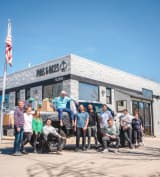
This is where the BinkyBro choice gets interesting. The brand was founded in 2015 in San Diego, moved to Provo, and built its following on Instagram by selling snapbacks to dads who wanted their toddlers to look like miniature versions of themselves at the skate park. It's a narrow niche executed cleanly, and that audience overlaps significantly with the under-40 dad who already owns a King Tec driver and follows Bryson on YouTube. Cobra isn't trying to convert skate kids into golfers. It's trying to give existing golf dads a product that lets their kid match them on the course without looking like a walking pro shop ad.
The SSSG cap, adding Golf to BinkyBro's Surf-Snow-Skate acronym, is the more revealing of the two designs. Action sports brands have spent the last five years quietly absorbing golf, from Malbon to Eastside to Metalwood, and the trade has mostly run the other direction: golf borrowing from streetwear's playbook. Cobra inserting Golf into another brand's established acronym is a smaller version of the same trade. The Read the Break cap is the safer commercial product. SSSG is the cultural signal.
Worth noting that Cobra sits inside PUMA, which has more institutional fluency in youth and lifestyle marketing than any other parent company in the golf equipment business. Acushnet doesn't run cultural collabs. Topgolf Callaway runs them through apparel arms, not the club brand. Cobra has the rare structural advantage of a parent company that already knows how to sell shoes to teenagers, and this collaboration looks like the first time in a while that advantage is being used for something other than a tour pro's footwear deal. The Rickie Fowler era of Cobra-PUMA cultural marketing was loud and personality-driven. This is quieter, broader, and aimed at a customer who doesn't watch tour golf yet.
The DORMIED Index has Cobra up 22 percent month-over-month in April, sitting at #14 globally. That movement is mostly driven by the DS-Adapt driver cycle and Gryson's early-season Tour visibility, not a hat collab. But the trajectory matters for how this launch should be read: Cobra is operating from a position of brand momentum, which is exactly when a company should be spending attention on the customer it doesn't have yet rather than defending the one it does.
The collaboration is being positioned as the first chapter, with expansion planned. That language usually means apparel, and apparel is where this either becomes a real cultural program or quietly disappears after one Father's Day cycle. Cobra has the parent-company resources to make it the former. Whether it commits the marketing spend to push past the initial drop is the actual test. The hats are easy. The follow-through is what separates a press release from a strategy.