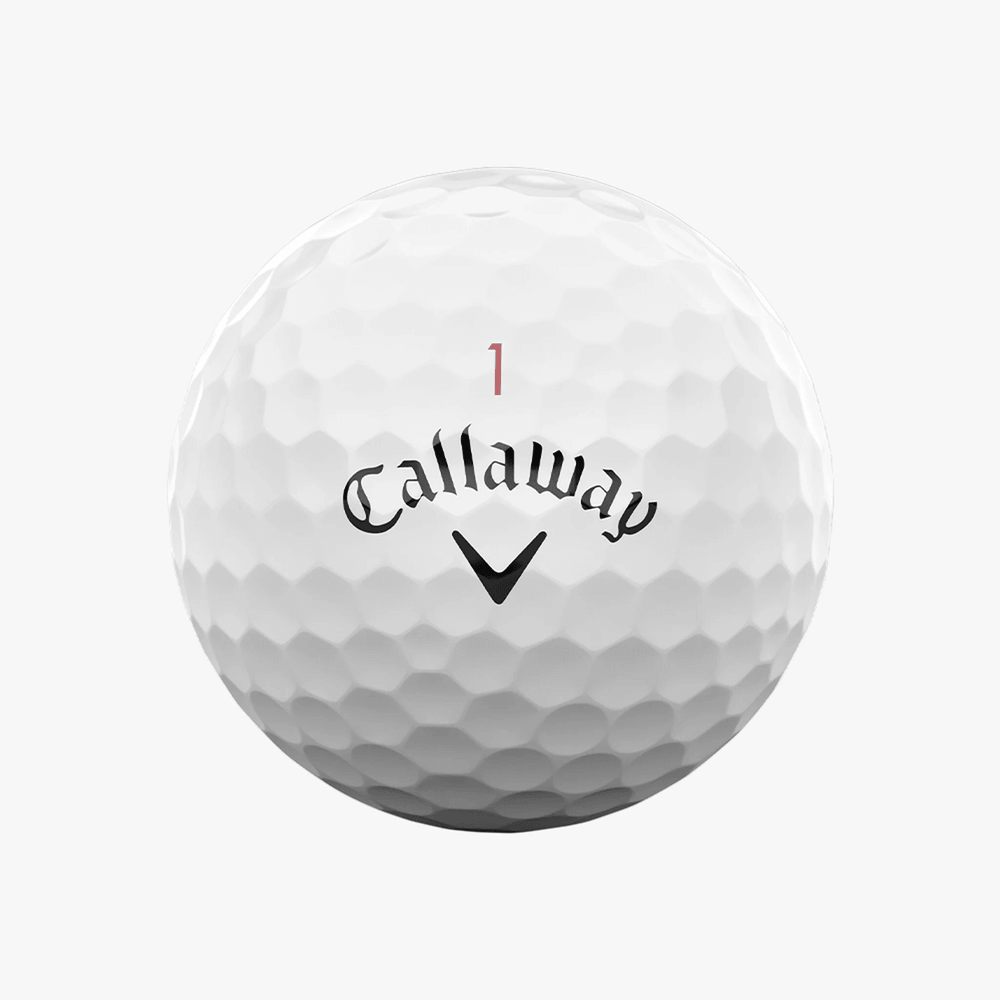
A 100 percent good ball rate across 36 balls is not a marketing line. It is a manufacturing achievement. The 2026 Callaway Chrome Tour cleared MyGolfSpy's Ball Lab with a Quality Score of 92, zero defective balls in the sample, and a compression symmetry number nearly half the field average. For a premium urethane four-piece coming out of Chicopee, that is the kind of result that quietly justifies the shelf position.
Ball Lab grades on five weighted inputs: good ball rate, compression consistency, compression symmetry, diameter, and weight. The Chrome Tour took an A on the metrics that matter most for how the ball plays, and Bs on the dimensional consistency metrics that matter slightly less. Compression symmetry of 1.0 puts it in rare company. The field average is 1.9. That gap is the difference between a ball that behaves the same regardless of orientation on the tee and one that does not.
Context matters here. Chicopee has been making Callaway balls since the Top-Flite acquisition closed in 2003, and the plant survived the 2017 sale of the Top-Flite trademark to Dick's specifically because Callaway wanted to keep the manufacturing. Two decades of process iteration in a single facility is what produces a zero-defect 36-ball sample. Titleist's Ball Plant 3 in New Bedford operates on a similar principle: keep the production close, keep the tolerances tight, and the quality scores follow. The brands that have struggled in Ball Lab testing are almost universally the ones outsourcing production to facilities they do not control.
The one number worth flagging is the 7.7-point compression range across the three boxes, driven mostly by outliers in Box 2. That is a B+ grade and above the category average, but it is also the gap between this score and a 95-plus. Pro V1 and Pro V1x results in recent Ball Lab cycles have come in tighter. If Callaway wants the Chrome Tour positioned as a true Pro V1 alternative rather than a value-tier premium option, closing that compression delta is the next engineering target. At $57.99 a dozen against the Pro V1 at $59.99, the pricing already invites the comparison.
The broader read on Callaway right now is a brand operating from a position of strength it has not held since the original Chrome Soft era. A 22 percent month-over-month move in the DORMIED index, paired with a Ball Lab Quality Award on the premium ball, is not coincidence. The Chrome Tour is showing up in tour bags, the Paradym Ai irons are still moving at retail, and the ball plant is producing measurable results. The structural pieces of a category leader are in place in a way they were not two years ago, when Topgolf was eating the headlines and the equipment narrative was muddled.
The Pro V1 has owned premium ball share for two decades because Titleist treats manufacturing tolerance as the product. Callaway has spent fifteen years trying to break that hold with the Chrome Soft franchise and now the Chrome Tour, and the 2026 Ball Lab result is the closest the brand has come to making the case on Titleist's own terms. The next test is whether the tour validation and the manufacturing data start showing up in market share. The product is finally there. The marketing has to catch the engineering.