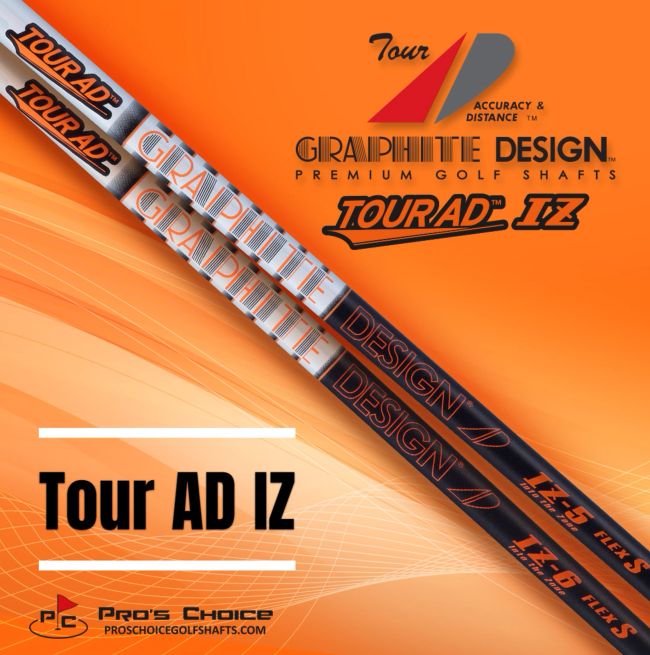
The Tour AD IZ launched in 2018. Eight years later, it just won a PGA Tour Champions event in the bag of the Principal Charity Classic winner, paired with a current Titleist driver. In a category where shaft profiles get refreshed on roughly the same cadence as iPhones, that longevity is the actual headline.
The announcement itself is standard tour-win press release work from Pro's Choice, Graphite Design's exclusive distributor across most of the developed golf world. Champion plays IZ-6 X-flex, shoots 17 under at Wakonda, distributor sends the wire. The interesting part is what the IZ's continued tour presence says about the premium shaft market in 2026.
How Does Graphite Design Compare to Fujikura's Ventus?
Graphite Design's portfolio now includes the new Tour AD FI, plus GC, VF, CQ, UB, XC, DI, and the Anti-Gravity aG33. That's nine current wood shaft families, and the eight-year-old IZ is still pulling tour wins against all of them. Compare that to Fujikura's Ventus lineup, which has been iterated through Blue, Black, Red, Velocore, Velocore+, and TR variants in roughly the same window. Fujikura's strategy is constant evolution and aggressive version control. Graphite Design's strategy, particularly with IZ and DI, is to leave a winning profile alone and let tour validation accumulate. Both work. They just work differently.
The technical claims in the release, TORAYCA T1100G pre-preg with NANOALLOY in the tip, 50t carbon fiber, are real materials, not marketing language dressed up. T1100G is the same Toray fiber used in aerospace structural components and has been a fixture in premium Japanese shaft manufacturing since the late 2010s. The firm-handle, firm-plus-tip profile that defines the IZ is also why it keeps winning with older tour players: it rewards committed transitions and tolerates aggressive release patterns, which describes a meaningful slice of the Champions Tour demographic. The IZ-6 X in particular has been a quiet staple in that bag profile for years.
Why Does Graphite Design Skip Consumer Marketing?
Graphite Design's DORMIED ranking sits at 81 with a 22 percent month-over-month move, which reflects the structural reality of the brand: low consumer marketing volume, high product-level credibility, and a US distribution model that runs through Pro's Choice rather than direct retail presence. The brand does not chase share-of-voice the way Fujikura, Mitsubishi, or even Project X do. It accumulates tour wins, lets fitters carry the message, and prices the product where it needs to be priced. The aftermarket premium shaft category is one of the few corners of golf equipment where this approach still works, because the buyer is self-selecting and already in a fitting bay when the decision happens.
What to watch is whether the new Tour AD FI, released earlier in 2026, eventually displaces IZ and DI as the brand's tour workhorse, or whether it joins them as another long-tail option in a catalog that increasingly resembles a portfolio of cult classics. Graphite Design's willingness to keep eight-year-old SKUs in active rotation is the brand's competitive moat. As long as tour players keep winning with shafts that came out during the first Trump administration, the moat holds.