There are, generously, three places on the planet that will cast a urethane cover for somebody else's golf ball. Titleist does it in-house at Ball Plant 3 and Ball Plant 4 and does not take outside work. Foremost in Taiwan handles a meaningful share of everything else. And then there is the Korean plant formerly known as Nassau, which TaylorMade bought in 2021 and folded into its own supply. That short list is why the most interesting spec on Snell's new ball is not the core.
Why Does the Snell MTB Black LTD Use Cast Urethane?
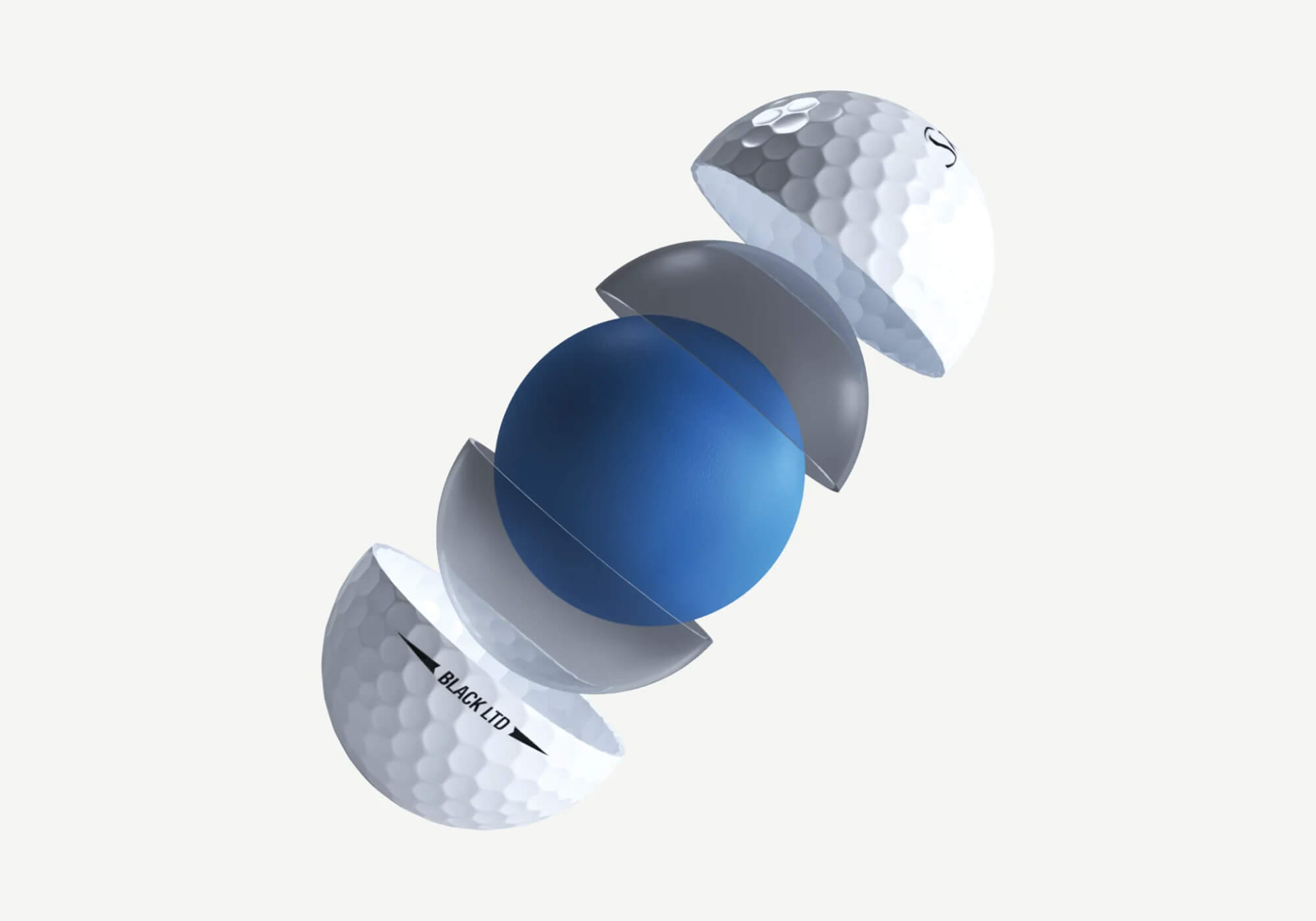
The MTB Black LTD is back in a limited run under a new Heritage Tour Series banner: three-piece, 360 dimples, compression in the low 80s, controlled launch, lower driver spin. Standard tour-ball copy. The cover is where it changes. Snell lists it as cast urethane, which is a two-part liquid poured into a mold and cured around the ball, slow and unforgiving and impossible to reform if you get it wrong. The payoff is a thinner, softer cover that survives a wedge. The alternative, thermoplastic urethane injection molded into a shell, is cheaper, faster and more tolerant of error, and it has gotten legitimately good. It is also what Snell's own PR3 and PR4 use, branded as TPU-X. The company just drew a line down the middle of its own shelf.
The original MTB was a Nassau ball. When TaylorMade absorbed the plant, Snell went looking for partners, and the quality record since has been the problem. MyGolfSpy's Ball Lab teardown of the Prime 3.0 found 20 of 36 balls in the sample over the USGA weight limit and compression spread across 17.8 points. For a company founded by Dean Snell, who has a Pro V1 on his resume and spent the better part of a decade building the most credible DTC ball operation in the country, that is not a rounding error. It is a manufacturing partner that could not hold a tolerance, and consumers noticed faster than the brand could correct it.
What Does Cast Urethane Say About Snell's Factory?
Which is why the cover line reads as an announcement about a factory rather than a product. Nobody casts urethane in a shop that cannot control weight and compression. The process demands the kind of process discipline that shows up in a Ball Lab report as consistency. Snell has not said where the LTD is made and does not need to. The list of candidates is four names long, one of them is Titleist, and the word "limited" on a cast urethane run tells you the volume was allocated rather than ordered.
Pricing lands at $38.99 per dozen, $37.99 at two to four dozen, $36.99 at five or more, white only, while supplies last. That number matters more than it looks. The top of the tour ball market now sits comfortably north of $50, and the DTC challengers who undercut it have mostly done so with TPU covers and a value argument. Snell is re-entering with the expensive process at a mid-market price, which is the original Snell pitch from 2015 restated: Pro V1 construction without the Pro V1 margin. The difference is that in 2015 the DTC ball market was nearly empty. Now it includes Vice, Maxfli's direct program, Cut, OnCore and a Costco line that has moved to cast urethane itself. Snell no longer has the shelf to itself, and it spent three years handing that shelf away.
Can One Limited Run Revive Snell Golf?
At #137 of 215 in DORMIED's global brand ranking and flat month over month, Snell is closer to dormant than distressed, which is the harder position to escape. A single limited run of one ball does not fix that. What would fix it is the second entry in a series that a brand only names "Heritage" if it plans to keep going. An MTB X LTD is the obvious next move, and it is also the actual test: whether Snell has secured recurring capacity at a real factory or bought one batch of goodwill. Watch the reorder, not the launch.