
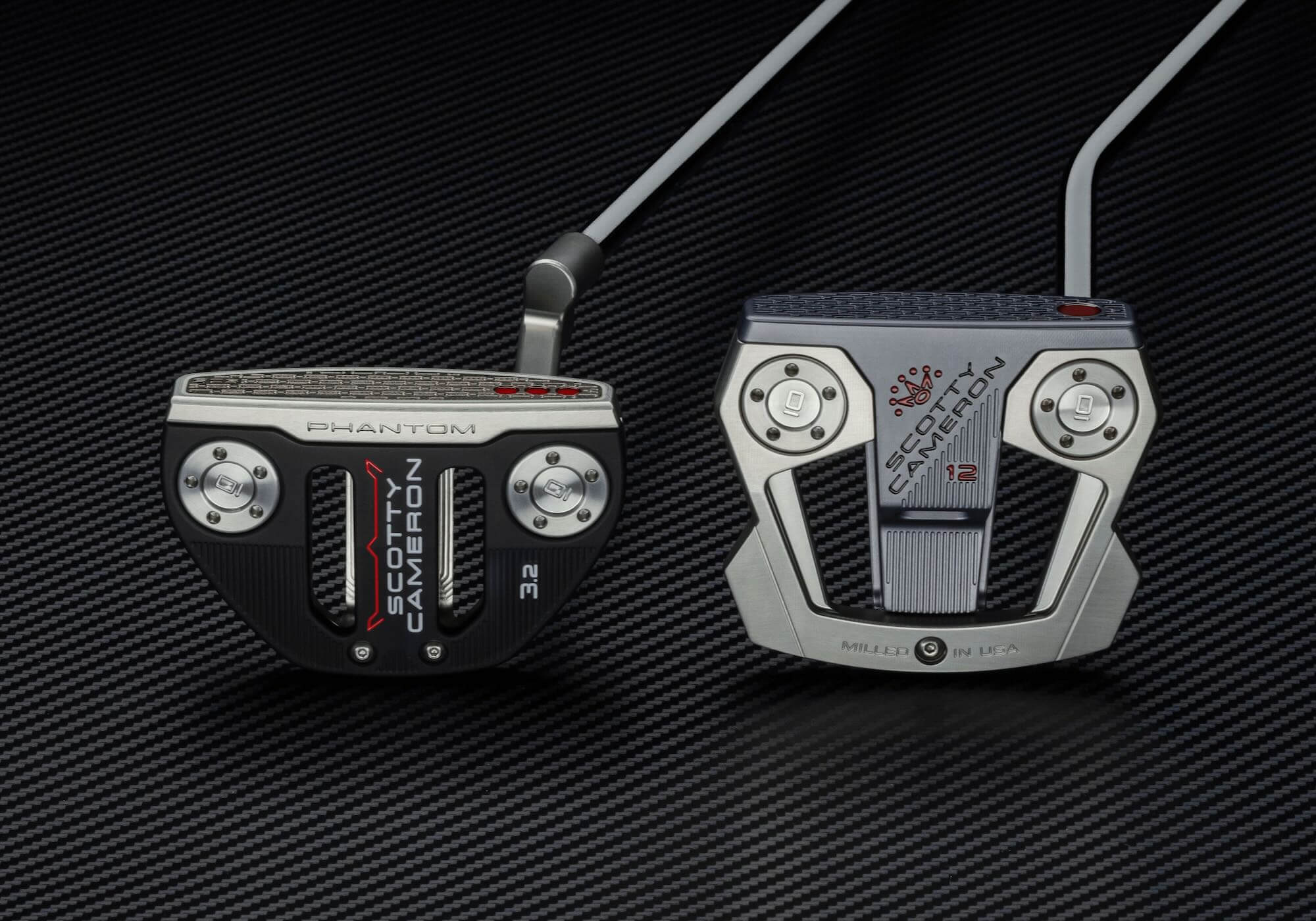
A $499 carbon steel insert in a Scotty Cameron mallet is not the headline most people will take from the Phantom 3.2 and Phantom 12 launch. The headline is that Cameron has now built a 13-model mallet line, and the brand that spent two decades selling the Newport as the only putter that mattered is now playing the shape-and-size game it used to leave to Odyssey and Bettinardi.
What Do the Scotty Cameron Phantom 3.2 and Phantom 12 Add?
The Phantom 3.2 and Phantom 12 close out the 2026 Phantom range at opposite extremes. The 3.2 is a compact rounded mallet borrowing the T-crown sightline from the Phantom 9, the footprint of the old GOLO 6, and the weight-relief slots from the Kombi, a putter discontinued around 2014. The 12 is a full rear-weighted mallet with a stainless perimeter accounting for 65 percent of head weight, built for MOI rather than blade-like feel. Both ship in late July at the standard $499.
The Kombi reference is worth pausing on. Cameron has historically been careful about which design DNA it revisits, partly because the Studio Design and Futura eras did not all age well commercially. Pulling slot geometry from a twelve-year-old model into a 2026 release suggests the R&D group under Austie Rollinson is more willing to mine the archive than the brand was a decade ago, when the Newport 2 was effectively the entire conversation. The Phantom line now does what the Odyssey #7 family did for Callaway: it lets one nameplate cover every head shape a fitter might recommend.
Why Did Scotty Cameron Build a Carbon Steel Insert Putter?
The full-face carbon steel insert is the actual engineering story. Cameron has been a milled-face brand for its entire premium history. Inserts at Titleist have generally lived in the Scotty Cameron Futura and lower-tier Phantom X lines, not the flagship conversation. A chain-link milled carbon steel insert across all 2026 Phantoms is a feel-and-sound bet, and it required retooling every head in the family to accommodate it. That is real tooling spend on a category where Cameron does not need to chase volume. It implies the brand sees the insert as defensible IP, not a one-cycle experiment.
The competitive context matters. L.A.B. has rewritten the premium putter conversation around zero-torque, and the resale market data on used L.A.B. models is the kind of signal Cameron's distribution partners notice. Cameron's response has been to expand neck options across the Phantom line, including zero-torque configurations, rather than launch a dedicated counter-model. That is a more conservative play than Odyssey's Square 2 Square answer, but it preserves the Phantom architecture as the single chassis story. Lydia Ko shooting 60 at the Ford Championship with a center-shafted Phantom 12 prototype gives the launch a tour anchor, though Cameron's tour count has always been a lagging indicator of retail intent rather than a leading one.
What Signals How the Scotty Cameron Phantom Line Is Performing?
The brand sits seventh globally this month, with a 17.7 percent month-over-month decline that reflects the quiet period between the spring Phantom rollout and this late-July drop. The trajectory question for Cameron is not whether the Phantom line sells. It will. The question is whether a 13-model mallet family with a shared insert dilutes the singular-object mystique that made Cameron a $499 brand in the first place. Odyssey learned that lesson with the White Hot OG relaunch: when you have too many SKUs, the heritage piece becomes the premium piece by default. Watch whether Cameron quietly reissues a Newport-family milled-face flagship in 2027. That is the move that tells you how the Phantom expansion is actually performing inside Titleist.