Every footwear brand eventually figures out that the cheapest new product is an old product in better leather. Most of them have to call a supplier to do it. Ecco owns the supplier.
What Is New in the Ecco Golf BIOM C5 Premium?
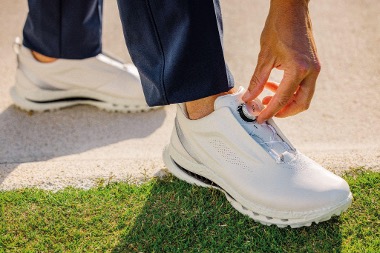
Ecco Golf has introduced the BIOM C5 Premium, a higher-tier build of the BIOM C5 that launched earlier this year. The platform underneath is unchanged: the BIOM Natural Motion last, the E-TTS outsole, Gore-Tex Surround waterproofing with 360-degree breathability, and Fluidform Direct Comfort in the midsole. What is new sits on top. A cleaner, uninterrupted upper in Ecco Performance Leather, precision side stabilisers, and an aluminium Boa dial replacing the standard one. No US price accompanied the announcement, which is its own small tell.
The tannery detail is the part worth sitting with. Ecco is family-owned, founded in Denmark in 1963, and controls the entire chain from hide to shop floor: its own tanneries, its own factories, wholesale, and more than 2,000 retail stores across 88 countries. Almost nobody else in golf footwear can say that. When FootJoy or Adidas wants a better upper on an existing last, it means a supplier negotiation, a minimum order, and a margin split with a leather house in Italy or Vietnam. When Ecco wants one, it routes a different grade of hide through a plant it already depreciates. The upgrade cost is internal and the upgrade price is external, and the gap between them stays in Denmark. That is the actual product here. The shoe is the delivery mechanism.
Why Does Ecco Use an Aluminium Boa Dial?
The Boa dial is the other signal, and it is the one component Ecco does not make. Metal versus plastic has become the tier marker in performance footwear the way a bezel finish works on a watch, borrowed wholesale from cycling and snowboarding, where riders learned to read the dial before reading the spec sheet. Golfers picked up the same grammar fast. A serious buyer standing in a green grass shop will register the aluminium dial in about a second and a half, which is roughly a second faster than they will register anything about Fluidform. Ecco knows this. The dial is doing marketing work, not just closure work.
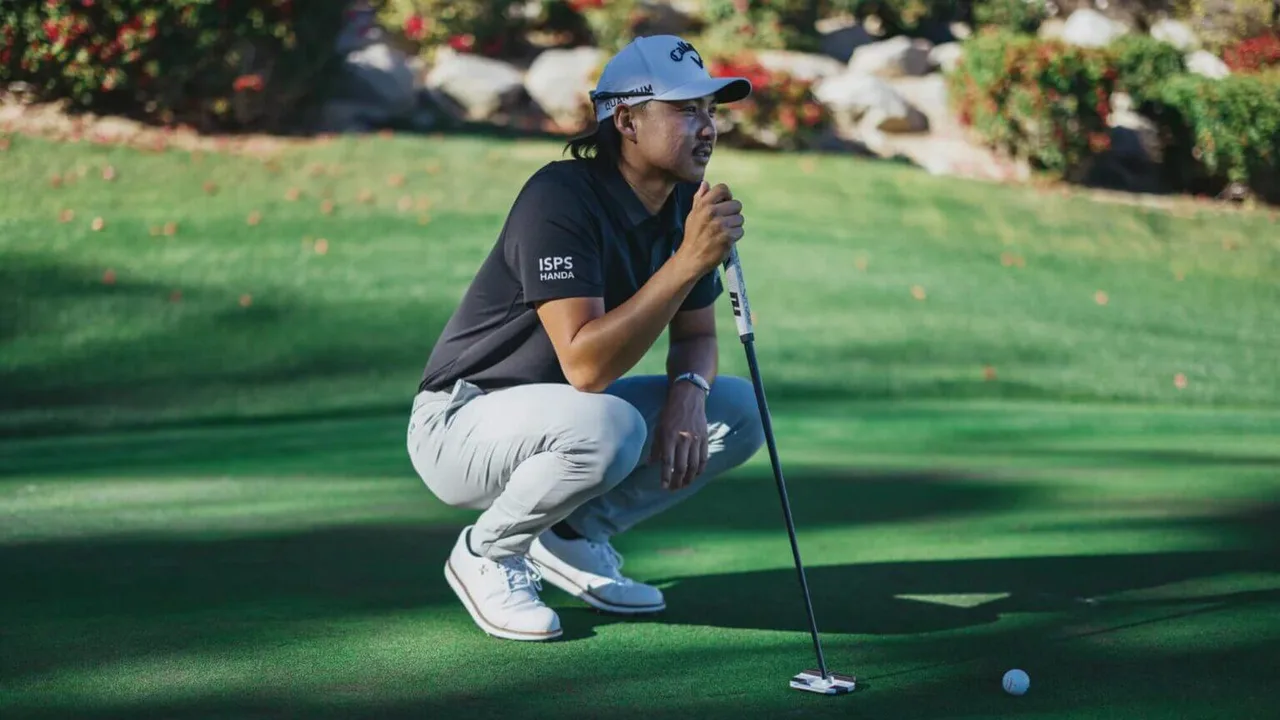
Where this gets complicated is attention. Ecco's product has never been the problem. Its tour roster is respectable without being loud: Aaron Rai, Lydia Ko, Erik van Rooyen, Thorbjørn Olesen, Thomas Bjørn, Lin Xiyu, Freddy Schott. Meanwhile True Linkswear, Payntr and Sqairz have converted budgets a fraction of Ecco's into a disproportionate share of the conversation, largely by picking a single argument and repeating it until people repeat it back. Ecco currently sits 132nd of 215 brands in the DORMIED Index, down more than 17 percent month over month, which for a 20,000-employee company selling through 14,000 doors is not a business result. It is a volume-of-voice result. The shoes are in the shops. The brand is not in the group chat.
How Should Ecco Price and Market the C5 Premium?
A Premium tier is the correct response to that, but only if it is priced and marketed like one. The risk in vertically integrated companies is that they treat a materials upgrade as sufficient in itself, because internally it genuinely is more shoe. Externally, nobody buys a hide grade. They buy a reason. Watch two things over the next two quarters: whether the C5 Premium lands at a number that forces a comparison with FootJoy's Premiere series and Nike's tour builds, and whether Ecco puts it on the feet of the players who actually get camera time on Sunday rather than distributing it evenly across a roster. The tannery gives Ecco a structural cost advantage almost nobody in this category can match. Cost advantages only turn into market share when somebody is watching.