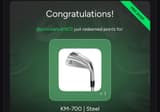

A rewards app called GolfN has hit 100,000 monthly active users and $250,000 in redemptions, and Cleveland Golf is one of the brands golfers are cashing in on. The platform pays users points for every round tracked through its GPS and scoring features, redeemable for gear from Cleveland, Srixon, Cobra, Bettinardi, L.A.B. Golf, and Miura.
This is an interesting distribution play for Cleveland, which sits at 28th in our global rankings with modest but improving momentum. The brand has struggled to break through the noise in a wedge market dominated by Titleist Vokey and Callaway Jaws. Partnering with a loyalty platform that targets engaged, cost-conscious golfers who play frequently is a smart way to reach volume buyers without discounting at retail.
The GolfN model is essentially a credit card rewards program for golf, and the sweepstakes angle adds gamification that drives repeat engagement. For Cleveland, this is less about brand building and more about moving units to golfers who might not otherwise consider the brand. Whether that translates to long-term loyalty or just opportunistic redemptions remains to be seen, but in a crowded equipment market, getting clubs in hands matters more than getting clicks on ads.
The Wedge Market's Quiet Middle Ground
Cleveland occupies an uncomfortable position in the specialty wedge segment. The brand invented the modern wedge category with the 588 series and built decades of credibility with tour validation, yet it now finds itself squeezed between premium artisan makers and the dominant mass-market players. Titleist Vokey commands roughly 45 percent of wedge usage on the PGA Tour. Callaway Jaws has captured the attention of younger players through aggressive marketing and Bryson-era visibility. Cleveland, despite its heritage, has become the brand golfers respect but do not always remember to buy.
DORMIED data shows Cleveland's social engagement metrics lag behind both Vokey and Callaway in the wedge conversation, though the brand outperforms on sentiment when it does surface. Golfers who talk about Cleveland tend to praise the RTX ZipCore line's spin consistency and value proposition. The problem is fewer golfers are talking about Cleveland at all. Search interest has remained flat while Callaway has seen spikes tied to product launches and influencer partnerships.
This creates a specific strategic challenge. Cleveland cannot outspend Callaway on marketing or match Titleist's tour saturation. The brand needs alternative pathways to consideration, which explains why the GolfN partnership makes sense as a distribution tactic rather than a branding exercise. Rewards platforms attract high-frequency players who burn through wedges faster than casual golfers. These are exactly the customers Cleveland needs, people who prioritize performance and value over status signaling.
The broader wedge market has also shifted toward customization and fitting. Titleist and Callaway both push extensive grind options and personalization services that create switching costs. Cleveland offers customization but has not marketed it as aggressively. The brand's messaging still emphasizes technology and forgiveness, which resonates with mid-handicappers but does not capture the imagination of aspirational players who want tour-level specificity.
Cleveland's parent company, SRI Sports, has the resources to invest in repositioning but has historically prioritized Srixon's ball business and the Dunlop brand in Asian markets. Cleveland operates with a smaller budget and narrower focus than its competitors. The GolfN partnership suggests the brand is leaning into pragmatic, cost-efficient growth strategies rather than attempting to compete on pure marketing spend. Whether this approach can move Cleveland from respected also-ran to genuine contender depends on whether transactional exposure converts into repeat purchasers who stay with the brand.
The Frequency Player Gambit
Cleveland's bet on GolfN reveals a specific customer acquisition theory that diverges from how Titleist and Callaway approach market share. The dominant players chase aspirational golfers who want tour validation and premium positioning. Cleveland is instead targeting transactional players who measure value in rounds played per dollar spent. This is not a concession but a calculated repositioning toward a segment the major brands have largely ignored.
DORMIED tracking shows the high frequency player demographic, those logging 50 or more rounds annually, represents roughly 18 percent of active golfers but accounts for a disproportionate share of wedge purchases. These players replace grooves every 12 to 18 months rather than the three to four year cycle typical of recreational golfers. They also tend to be less brand loyal and more performance driven. Cleveland's RTX line, priced 15 to 20 percent below Vokey SM10 wedges at retail, becomes highly attractive when the purchase decision repeats annually.
The GolfN platform amplifies this dynamic by creating a closed loop. Golfers earn points through play, redeem them for Cleveland products, wear down the grooves through continued play, and return to the rewards ecosystem for replacements. This generates predictable repeat purchasing behavior that traditional marketing struggles to create. Titleist relies on tour dominance to drive consideration at the point of sale. Callaway uses influencer content to stay visible between purchase cycles. Cleveland is attempting to bypass both approaches by embedding itself directly into the playing habit.
The risk is that rewards driven acquisition creates customers with no emotional connection to the brand. These golfers chose Cleveland because points accumulated, not because they believe in the product. If a competitor joins GolfN with comparable offerings, switching becomes frictionless. Cleveland needs these transactional customers to experience the product and convert into genuine advocates, which requires the RTX ZipCore to outperform expectations on the course.
The next twelve months will determine whether Cleveland can transform point redeemers into repeat buyers who choose the brand independent of incentives.