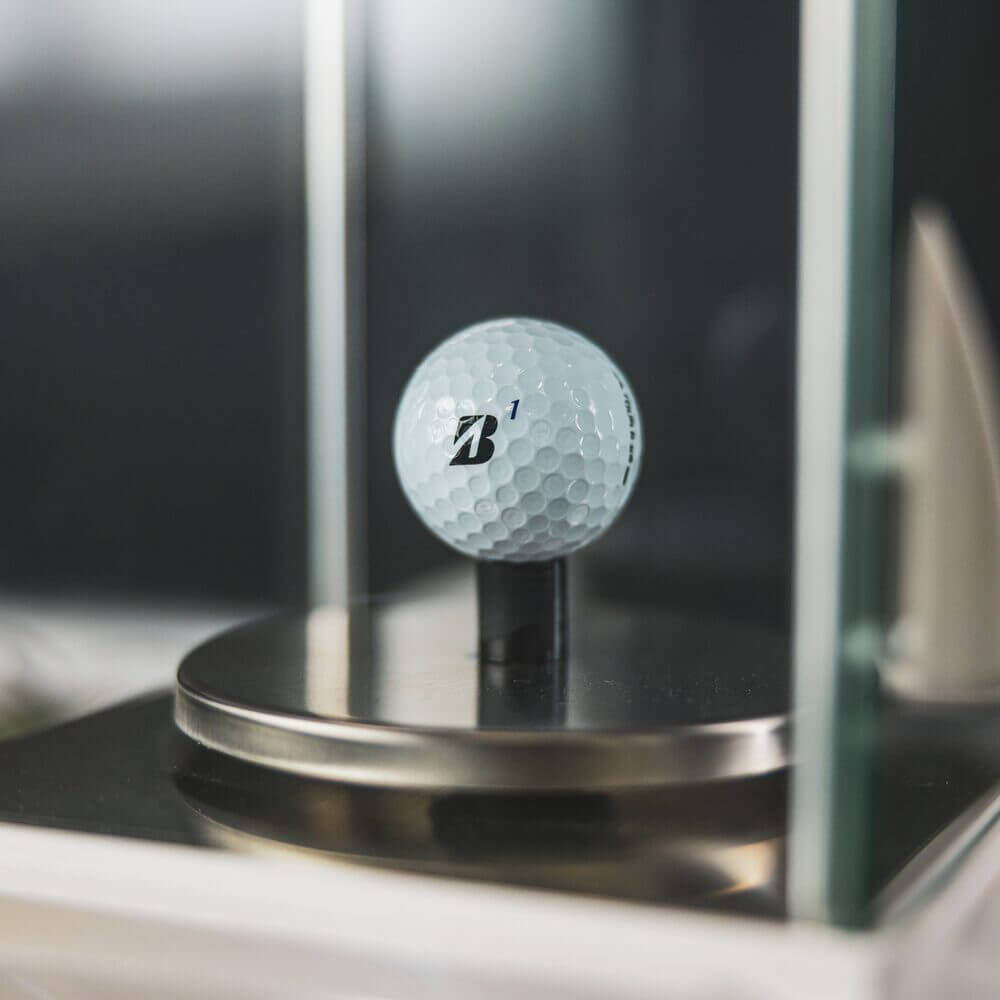
Robot testing rarely produces a number that clean. In MyGolfSpy's 2026 ball test, the Bridgestone Tour B XS spun 10,546 rpm on a dry full wedge and 10,515 rpm on the same shot wet. That is 99.7 percent retention, which is close enough to zero degradation that the difference sits inside the noise floor of the test itself.
What Did the MyGolfSpy 2026 Ball Test Reveal About Urethane?
The headline finding of the test was broader: urethane covers beat ionomer covers on wedge spin by wide margins. Urethane averaged 5,415 rpm on a 35-yard wedge against 3,506 for ionomer, and 10,339 rpm on a dry full wedge against 7,079. But the more useful result is the variance inside the urethane category. The gap between the Tour B XS at 5,948 rpm and the Snell PR3 at 4,274 rpm on the same 35-yard shot was 1,674 rpm. Both balls have urethane covers. On a full dry wedge, the ionomer-covered Vice Tour produced 9,217 rpm and outspun the urethane PR3 at 8,886.
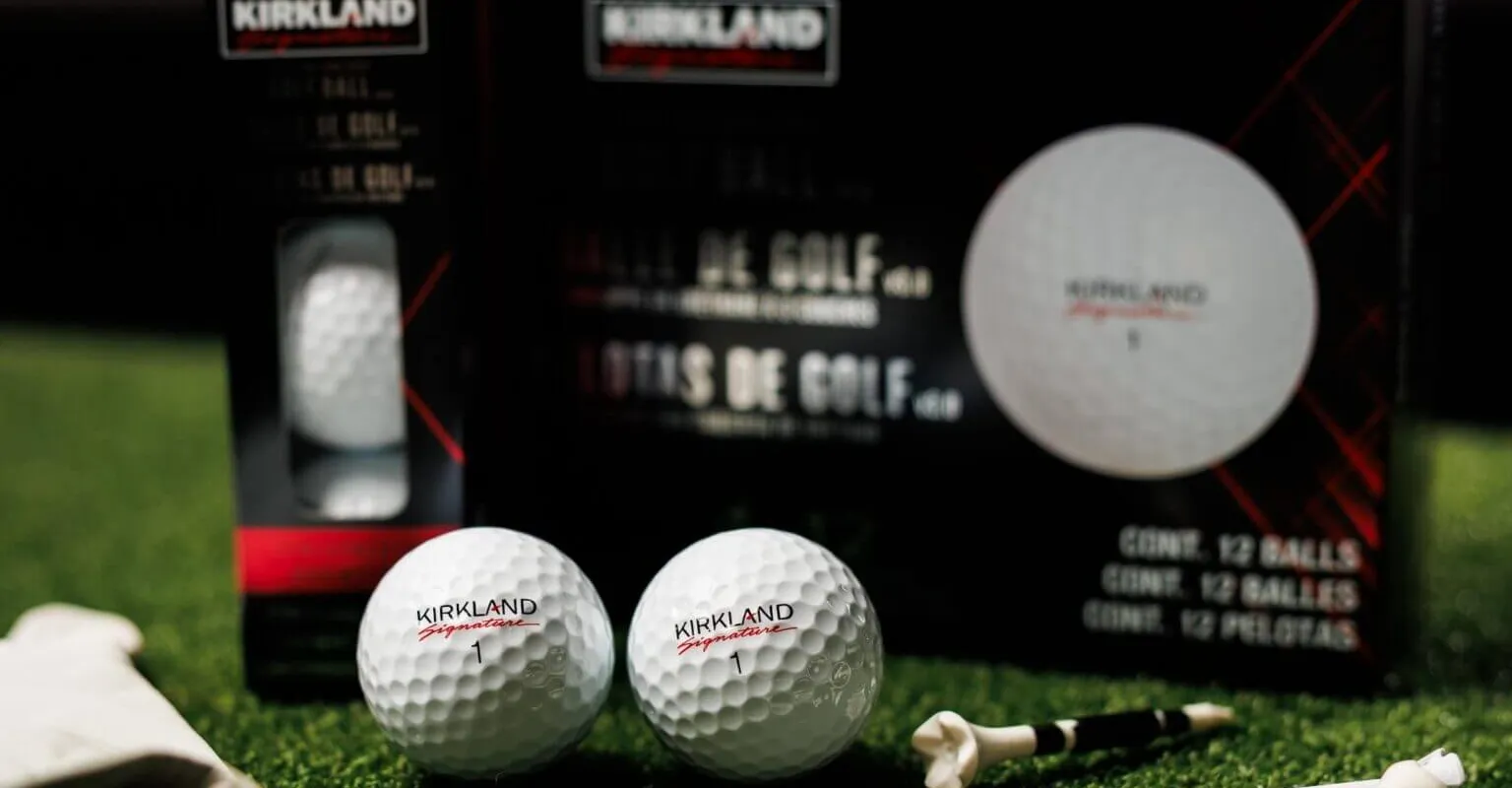
That is a problem for a decade of ball marketing. The direct-to-consumer ball boom that ran from roughly 2016 through 2020, built by Snell, Vice, and eventually Kirkland's Performance+, sold almost entirely on a single word. Urethane cover, tour construction, half the price. It was a legitimate argument at the time because the majors were charging a premium partly for the cover material itself. The 2026 data reframes it. Urethane is a category, not a spec. Kirkland Performance+ posted 4,458 rpm on the short wedge, roughly 1,500 rpm behind the top of the urethane group, and it is still urethane. What separates the balls is formulation, cover thickness, mantle interaction, and manufacturing tolerance, none of which appear on packaging.
How Does the Bridgestone Tour B XS Handle Wet Wedges?
Water is where the separation gets ugly. Urethane balls retained about 90 percent of dry full-wedge spin when moisture was introduced. Ionomer retained about 55 percent, dropping from 7,079 rpm to 3,891. Within urethane, the spread ran from Bridgestone's 99.7 percent and Titleist's 98.6 on the Pro V1x down to 77 percent on the TaylorMade Tour Response and 73 percent on the Snell PR4. Every wedge shot from damp rough, every morning round on dew, every pitch after a rain delay lives in that gap. It is arguably the most course-relevant number in the entire dataset and the one no consumer has ever walked into a golf shop asking about.
Bridgestone has been building toward exactly this result for longer than most of the field. The company's B-Fit ball fitting program, launched in 2006, was the first attempt at scale to treat ball selection as a fitting problem rather than a shelf decision, and the REACTIV cover work that arrived on the Tour B line in 2020 was a genuine materials argument about how urethane behaves at different impact speeds. The engineering has generally been sound. The commercial translation has not. Bridgestone sits 67th of 215 brands in the DORMIED Index with attention down 18.2 percent month over month, which is roughly where a company lands when it consistently wins on substance and consistently loses the argument about what substance means.
Why Is Wet Spin Retention a New Proof Point?
The opening here is narrow but real. Wet spin retention is a new proof point in a category where the old one, cover material, has been fully commoditized by companies charging thirty dollars a dozen. Whoever teaches golfers to ask about it gets to define the next round of premium pricing, and Bridgestone currently holds the best number in the field. Titleist has the distribution and the tour presence to own that conversation if it decides the conversation is worth having. Bridgestone has the number and about eighteen months before somebody else engineers to it. What the company does with that window will say more about its next five years than any cover formulation.