A 172.5% month-over-month jump in brand attention is the kind of move that usually requires a tour win, a viral product, or a controversy. Ben Hogan Golf had none of those in April. What it had was a category that's increasingly tired of the personality-driven equipment marketing playbook, and a brand whose entire identity is the opposite of that playbook.
What Sets Ben Hogan Golf Apart From Personality Marketing?
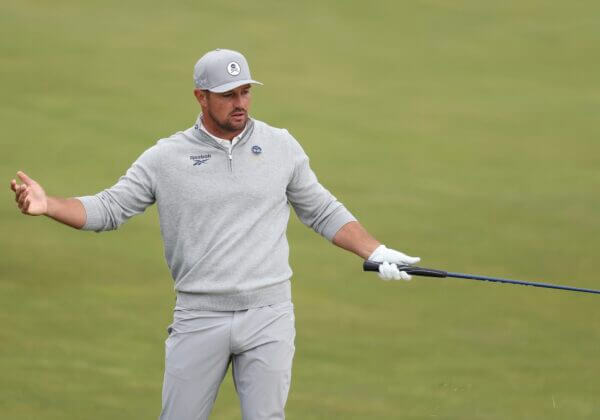
The timing is worth noting. The same month Ben Hogan Golf climbed to 13th globally, the loudest equipment-adjacent story in golf was Bryson DeChambeau telling a podcast he might quit professional golf for content creation. Two ends of the spectrum: a brand named after the most analog craftsman in the sport's history, and a player whose equipment relationship has been a recurring storyline of grievance, single-length experiments, and Krank driver detours. The contrast isn't subtle.
Ben Hogan Golf has been left for dead more than once. The original company folded into Callaway in 2003. The Terry Koehler revival in 2014 ended in bankruptcy by 2017. The current iteration, operating since 2019 under Chad Coffin's ownership, has run a quiet direct-to-consumer model built around precision-milled wedges, forged blades, and the Edge irons line. No tour staff to speak of. No Times Square billboard. No influencer seeding budget that anyone can identify. The brand sells to the golfer who already knows what a V-sole is and doesn't need to be told the Apex line came out in 1972.
Why Is DTC Golf Equipment Gaining Ground in 2026?
That positioning has historically been a ceiling, not a floor. Mizuno spent two decades being the iron brand serious players bought and the brand casual buyers never considered, and the gap between WITB count and market share told the story. What's changed in 2026 is that the casual buyer is getting harder to reach through the channels OEMs have spent a decade building. The Bryson-style content economy, the LIV-adjacent marketing, the influencer-fitting circuit: it works until it doesn't, and the fatigue is measurable. PXG's retail pivot, Callaway's tour staff reshuffling, and TaylorMade's pricing experiments all suggest the personality-as-marketing era is hitting diminishing returns.
Into that vacuum walks a brand whose entire pitch is the absence of a pitch. The PTx Tour irons get reviewed by the Plugged In Golf and MyGolfSpy crowd, not by a 22-year-old with a ring light. The Equalizer wedges are bought by golfers who've already cycled through Vokey and Cleveland and want something that feels different. The Edge CFT is one of the few super game-improvement irons designed by a company that also still sells a true muscleback. That breadth, on a DTC budget, is unusual. So is the fact that the brand's social presence reads like a small machine shop's, because functionally that's what it is.
Has Ben Hogan Golf Spiked in Attention Before?
Whether a 172.5% jump in the DORMIED Index sustains is the open question. Ben Hogan Golf has spiked before, in 2019 around the relaunch and again in late 2021 when the Icon line dropped. Both times the attention regressed within a quarter. The difference this time is that the broader category is moving toward the brand's positioning, not away from it. When the biggest equipment story of the month is a top-10 player threatening to quit golf for YouTube, the market for a brand that just makes clubs starts to look bigger than it did a year ago.
The next twelve months will test whether Ben Hogan Golf can convert attention into the kind of volume that keeps a DTC iron program solvent. The brand's history says spikes fade. The category's current direction says this one might not. The product roadmap, and whether it can hold premium pricing without a tour staff to validate it, is the variable that matters now.