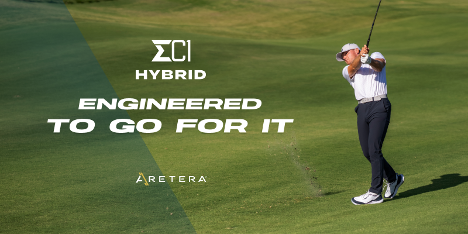
The aftermarket hybrid shaft is the least-demanded product in the graphite business, and it is also the one category where a shaft brand's absence gets exposed in real time. ARETERA Golf just closed that gap, announcing the EC1 Blue Hybrid line in 65, 80 and 95 gram weights across flexes 2 through 5, available worldwide through its fitter network.
Why Does the ARETERA EC1 Blue Hybrid Skip a Full Grid?
Six flex and weight combinations. Not twelve, which the three weights and four flexes would suggest, but six, meaning the Carlsbad brand built a matrix targeted at specific player profiles rather than a full grid. That restraint is the most informative thing in the release. Hybrid shafts do not sell in driver volume and never have. For most of the category's history, a hybrid shaft was a wood shaft tipped and trimmed, or a heavy graphite iron shaft borrowed from a lighter-swinging senior build. Fujikura's Ventus Hybrid was the first aftermarket hybrid profile in recent memory to become a genuine tour staple rather than a courtesy SKU, and it did so largely because it gave fitters something purpose-built to reach for instead of improvising.
That is the actual business logic here, and it has nothing to do with predictable loading and unloading. ARETERA's product is not really a shaft; it is a position on a fitting cart. When a golfer sits down at Club Champion, True Spec or a good independent shop, the fitter works through a brand until the brand runs out of answers. A shaft company with no hybrid option hands the customer to a competitor mid-session, and that swap is where brand loyalty leaks. EC1 Blue Hybrid exists so a fitter who just sold a 3-wood build does not have to reach across the rack.
Does ARETERA's Spread-Tow Carbon Golf Shaft Claim Hold Up?
The engineering claims deserve the usual scrutiny. Spread-tow carbon fabric is a real material choice with real torsional benefits, used well outside golf, and ARETERA has been consistent about it since launch rather than inventing it for this release. Coreless Design and PowerGrid Carbon Fabric are the brand's own naming conventions layered on top. The four stated performance pillars, predictable loading, repeatable delivery, consistent flight, dependable distance, are descriptions of what any competent hybrid shaft is supposed to do. Co-founder Alex Dee's more useful line is the one about non-hybrid players considering putting the club back in the bag, because that is the only growth story available in a category losing share to high-lofted fairway woods every season.
ARETERA sits at 189th of 215 in the DORMIED Index, flat month over month, which is roughly where a three-year-old shaft brand with no tour contract obligations and no retail shelf presence should sit. Shaft brands do not win on search volume or social reach. They win on fitter cart share, which is close to unmeasurable from the outside and enormously durable once secured. Mitsubishi and Graphite Design have spent decades building exactly that kind of quiet moat, and neither one trends.
Which Shaft Should ARETERA Launch After the Hybrid?
What to watch is whether ARETERA keeps filling the matrix or starts chasing visibility. The pattern that works for a challenger shaft brand is unglamorous: complete the lineup, get onto every cart that matters, let the fitting bay do the marketing, and accept that nobody outside the industry will notice for three years. Iron shafts are the obvious next hole. If the brand instead pivots to a name signing or a tour-count press cycle before the lineup is complete, that will say it needs revenue faster than the fitter channel can deliver it. The hybrid launch suggests patience. The next SKU will confirm whether that is a strategy or a phase.