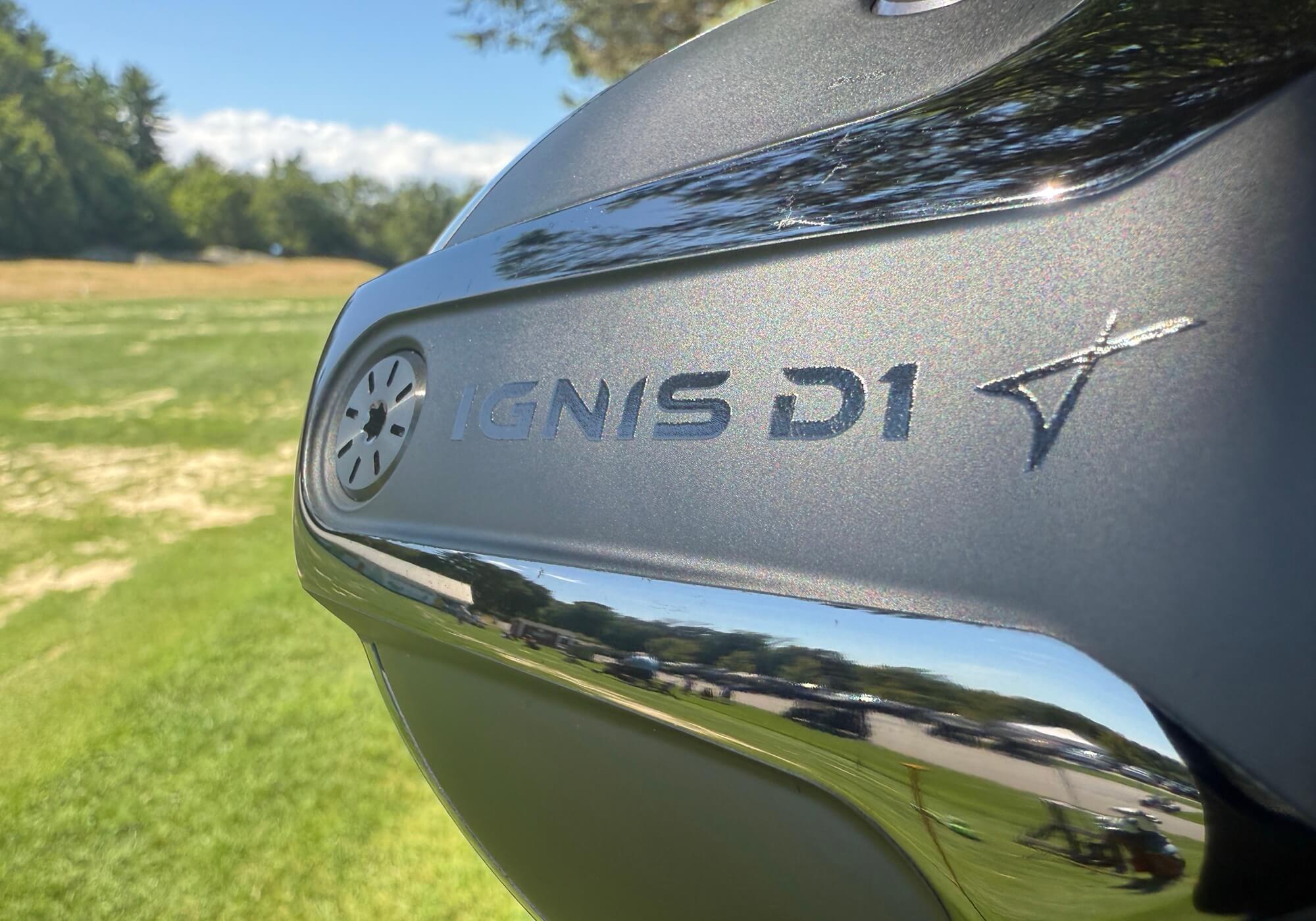
The pendulum test that governs driver faces allows 239 microseconds of characteristic time, with an 18-microsecond test tolerance on top. That 18 microseconds is the entire manufacturing margin a brand has if it wants to build a face at the legal ceiling. Big OEMs spend serious money on process control to live inside that window across tens of thousands of heads. Takomo just found out what happens when you don't.
Why Is Takomo Golf Replacing Every Ignis D1?
The Finnish DTC brand is shipping free replacement driver heads to every customer who bought the original Ignis D1, the model the R&A ruled non-conforming in certain weight configurations back in April. The replacement, the Ignis D2, isn't listed on Takomo's site yet. The entire first production run is going out to existing D1 owners rather than to new buyers. "We're doing a quiet launch," CMO Sean McCullum told MyGolfSpy. "We're making sure the thousands of customers that purchased this thing assuming it was conforming are taken care of."
The specific failure is worth understanding, because it explains the fix. The D1 shipped with three weight ports, two three-gram weights and one 13-gram weight installed, plus a spare eight-gram weight in the box. Put the 13 in the heel, the eight in the toe and a three in the rear, and some heads broke the CT limit. Some. Not all. Mass distribution behind the face changes how the face behaves under the pendulum, so a config Takomo never tested became the config the R&A did. That only some heads failed is the more revealing detail: it points at face thickness variance across the run, not a design that was over the line by intent.
How Did Takomo Respond to the R&A CT Limit Ruling?
History offers a sharper contrast than a parallel. When the USGA ruled the Callaway ERC II non-conforming in 2000, Callaway kept selling it and effectively told recreational golfers the governing body didn't speak for them. Ely Callaway had the market power to pick that fight. A DTC brand selling $250 drivers on direct margin does not, and Takomo didn't try. Worth remembering too that submission for conformance is voluntary. Neither the R&A nor the USGA tests anything on its own initiative, and plenty of smaller brands ship first and submit later, or never. Takomo shipped first. This is the bill for that sequencing.
The D2's design tells you the lesson landed. One weight port instead of three, swappable three- and eight-gram weights, added crown rigidity, a claimed 10 percent MOI gain over the D1, and prototypes sent to the R&A for pre-launch clearance. Removing configurability removes the variables you failed to test. Chasing MOI instead of CT moves you away from the ceiling you can't reliably manufacture to. This is the structural reason DTC drivers skew forgiving rather than fast, and it isn't a philosophy so much as an accounting of tolerance capability. Building to the CT maximum is not hard. Building to it consistently, across a run, in a factory you don't own, is the part you're paying mainstream OEMs for.
What Does the Takomo Golf Recall Cost the Brand?
The cost here is not small for a brand Takomo's size. A full production run absorbed as warranty expense, freight to thousands of individual consumers, and a launch that generates no revenue. It also buys something: a founder-era brand that had never been tested on service now has an answer when the question comes up on WRX. The brand's global attention sits at 15th of 215 this month, down 18.2 percent from the April spike, which is exactly the direction you want a conformance story to move.
The thing to watch isn't the D2. It's whether Takomo now treats R&A submission as a gate rather than a formality, and whether the forgiveness-first positioning survives the next product cycle or gets quietly abandoned the moment someone in marketing wants a ball speed number to put on a landing page. Growing pains only count as growing if the process changes with them.