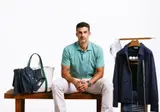
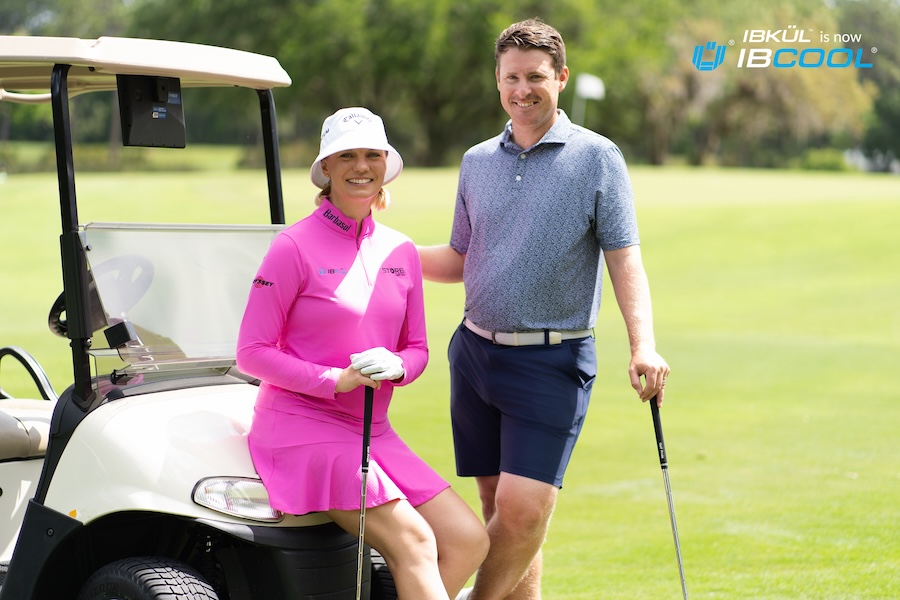
The product that built IBKUL is a long sleeve top designed to be worn in direct July sun. That is a hard sell in a category where women's golf apparel has spent two decades getting shorter and lighter, and it only works if the fabric does what the hangtag says. IceFil, the knit IBKUL patented and has built almost its entire catalog around, converts moisture into a cooling effect at the skin, and the brand's core customer figured out within one round whether it was real. Ten years of reorders suggests it was.
Who Founded IBKUL and What Does It Sell?
The Ann Arbor company is marking its tenth anniversary this month. Jamie Handler and Anurag Gauba launched it in 2016 on a narrow premise: performance knits with UPF sun protection, a cooling fabric platform, and a print library aggressive enough that the garment reads as a style choice rather than a medical precaution. Golf became the anchor category, with tennis, pickleball and travel picking up the volume in between seasons.
The credential worth reading closely is not on any tour bag. The Association of Golf Merchandisers named IBKUL the top performing brand at private clubs and resorts in the United States for three consecutive years. That award is decided by sell-through at the shops that carry the line, which means it is a survey of buyers and members rather than a marketing outcome. Anyone in the softgoods business understands what it costs to win it three years running. Green grass buying is a relationship business with limited open-to-buy and long memories, and a brand only repeats at that level if the second-season fit holds and the reorder ships. Plenty of women's lines get a shot at that rack. Very few keep it through three buying cycles.
Why Did IBKUL Sign Nancy Lopez as an Ambassador?
The ambassador roster tells the same story. Nancy Lopez, 48 LPGA titles and three majors, is not a Gen Z engagement play. She is the single most efficient signal you can send to a private club member who came into the game in the 1980s and buys three tops a season from the same shop. Madelene Sagstrom, a two-time LPGA winner, supplies the current tour proof point. Ann Liguori covers the broadcast and celebrity golf circuit. It is a roster assembled for a pro shop wall, not a timeline, and it is coherent in a way that a lot of larger apparel brands' endorsement spending is not.
The cost of that strategy shows up in visibility. IBKUL sits 150th of 215 brands in the DORMIED Index, up 23.1 percent month over month, which is a fair description of a company that wins at the register and is close to anonymous in consumer conversation. That gap is survivable while the club channel holds. It becomes a problem the moment the differentiation erodes, and cooling knits with UPF ratings are now a claim every apparel brand in the category makes, whether or not the fabric earns it. Patented construction does not read on a hanger. A member choosing between two printed long sleeves at $98 is not evaluating knit architecture, she is evaluating the print and whether the last one she bought pilled.
What Choices Face IBKUL in Its Second Decade?
What to watch in decade two is whether IBKUL spends to close the awareness gap or continues banking the channel it already owns. The safer path is more of the same: extend the print catalog, hold the club accounts, let pickleball absorb the excess capacity. The more interesting path is a second fabric platform, something that does a job cooling does not, because a single-technology brand eventually meets a bigger competitor willing to sell that technology at a lower margin. Handler talks about new products and technology for the next ten years. The specific answer to that question is the whole story of whether this becomes a durable apparel company or a very good fabric with a decade-long run.