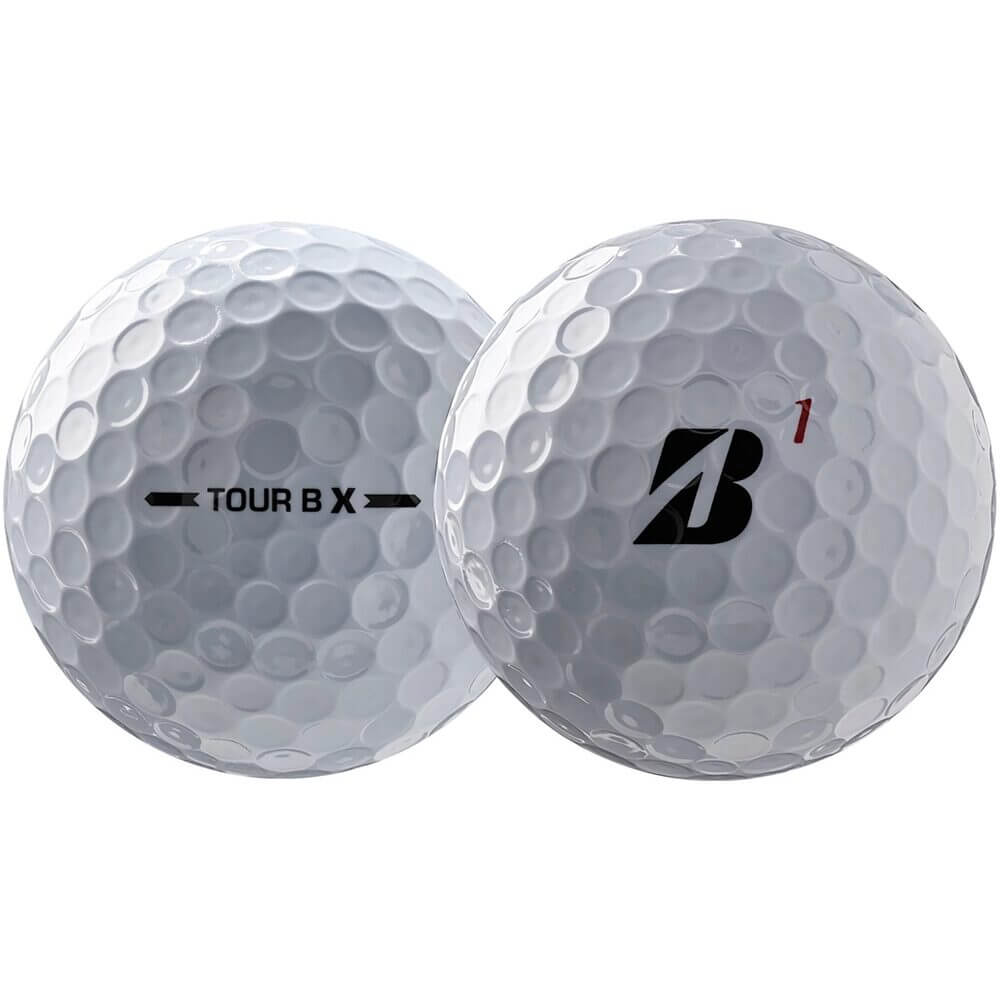
Zero defects across 36 balls is the kind of manufacturing result Bridgestone has been quietly chasing for a decade, and the 2026 Tour B X delivered it. The ball earned a Ball Lab Quality Score of 92, a Quality Award, and a perfect Good Ball Rate. The compression spread of 9.2 points is the part of the report worth lingering on.
What Did the MyGolfSpy Ball Lab Find in Tour B X?
MyGolfSpy's Ball Lab tested three boxes of the 2026 Tour B X for weight, diameter, compression consistency, compression symmetry, and defect rate. The ball came in at 98.5 compression, which is genuinely firm: seven points harder than this year's TP5 and at the upper edge of the database. Compression symmetry, which measures how evenly each individual ball compresses across three points, averaged 1.1 against a field average of 1.9. That's a top-of-class number and a real engineering achievement.
The weakness sits in compression delta: a spread from 93.8 to 103.0 across the 36-ball sample. In a soft ball, a nine-point spread is mostly invisible. In a ball already sitting at 98.5, it's the difference between a tour-firm feel and something approaching a range rock. Ball speed off the face will vary across the dozen in ways a tour player would notice and a single-digit might feel on long irons. The B grade is fair.
How Does Bridgestone Golf Compete With Titleist?
Context matters here. Bridgestone's Covington, Georgia facility has been making tour-grade balls since the late 1990s, when the operation was still building product under the Precept name for Bridgestone's first serious push into the US tour market. The brand's fitting program, launched in 2014, processed more than three million ball fittings before Titleist built a comparable infrastructure. Bridgestone has consistently bet that the path to share in a Titleist-dominated category runs through fitting data, not marketing spend. The 2026 Tour B X is a manufacturing argument for that thesis: the defect rate and symmetry numbers say the factory is dialed in. The compression delta says there's still a half-step to take.
At $54.99 a dozen, the Tour B X is priced ten dollars under a Pro V1x and five under a TP5x. That gap has been Bridgestone's positioning since the Tour B line relaunched in 2017, and it's why the ball shows up in big-box rotations where the Pro V1x doesn't get discounted. A Quality Award at that price point is a real competitive data point for any pro shop deciding what to stock against the Titleist wall. The brand posted a 22 percent month-over-month move in DORMIED's May rankings, which tracks with the kind of attention a clean Ball Lab result generates inside the gear-obsessed slice of the market that actually reads these reports.
Why Does Bridgestone Golf Face a Compression Tradeoff?
The forward question for Bridgestone is whether the next iteration tightens the compression delta without giving back the symmetry number. Those two metrics tend to trade against each other in ball manufacturing: tighter sample-wide tolerances often come at the cost of internal uniformity, and vice versa. Bridgestone has the fitting data to know exactly which trade-off its customer base actually feels. The 2027 Tour B X will tell us which way they decided to lean.