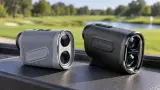
One yard. That is the accuracy gap MyGolfSpy found between a roughly $600 handheld golf GPS and a roughly $200 one, across a range of distances. Both scored 13.5 out of 15. Both scored an A-minus. When the flagship and the value option finish within a yard of each other, the category has stopped competing on the thing it was built to do.
How Does the Garmin Approach G82 Compare to the Shot Scope H50?
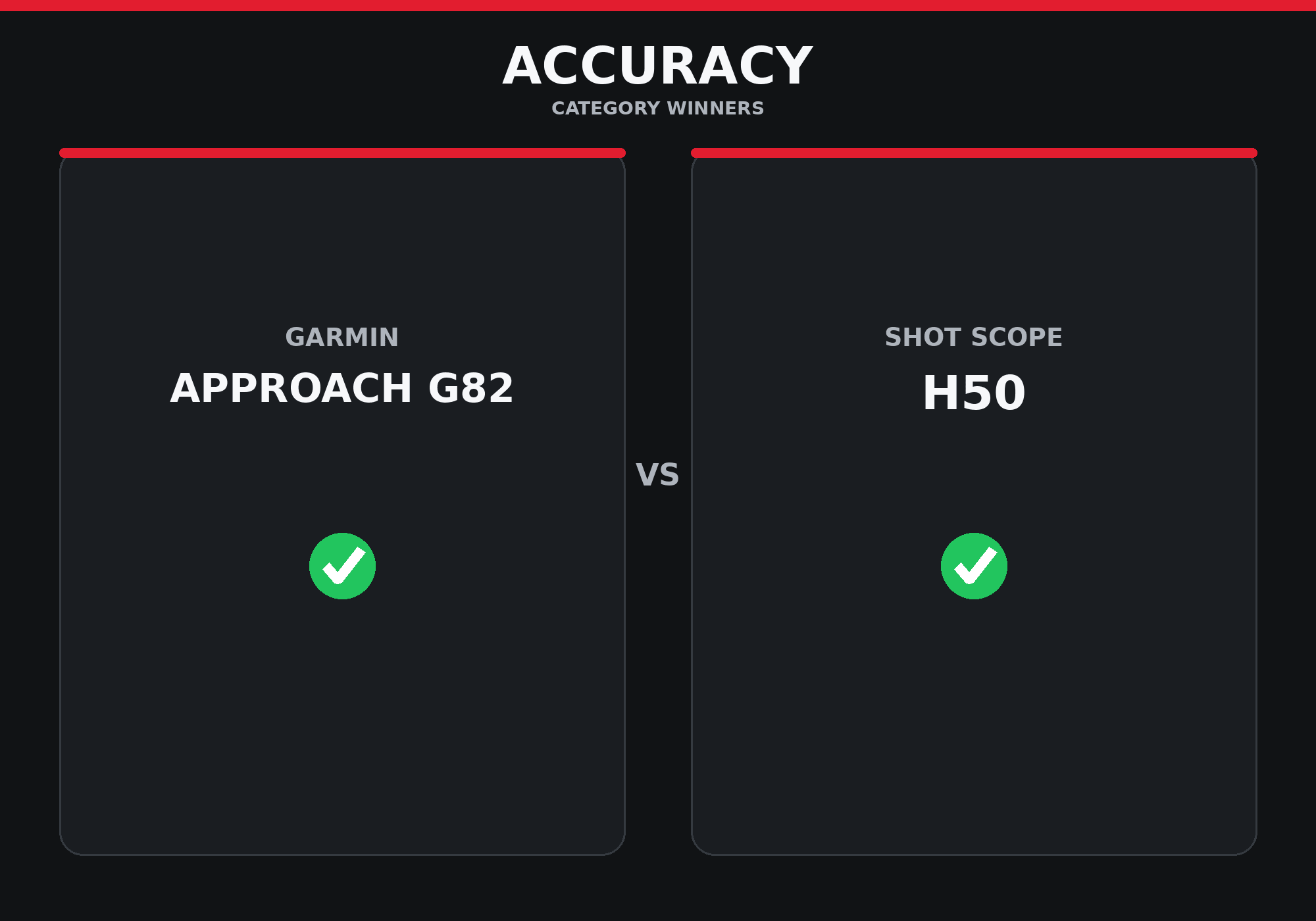
The head-to-head in question puts the Garmin Approach G82 against the Shot Scope H50. Accuracy: tie. Display: effectively a tie at 19.25 out of 20, with the H50's AMOLED panel scoring on vibrance and the G82's transflective touchscreen scoring on direct sunlight legibility, which is the condition golf is actually played in. Functionality went to Garmin, mostly on connectivity consistency: the H50 carries more than 42,000 preloaded courses but slows noticeably when it loses the phone. That is a real gap, and it is not a $400 gap.
The $400 gap is a built-in launch monitor. Ball speed, club head speed, smash factor, tempo. Four metrics, delivered by a device that also tells you the front, middle and back numbers. Strip that out and the G82 is a very good GPS that costs three times what a very good GPS costs. Which is the actual story here: Garmin is no longer selling yardages. It is selling a sensor and including the yardages.
Why Has Handheld Golf GPS Stopped Competing on Accuracy?
That shift has been visible in the category for two decades. SkyCaddie built a business in the mid-2000s selling laser-mapped course data at a hardware premium plus an annual subscription, because course data was scarce and expensive to produce. Phone GPS apps ended that scarcity. Preloaded course counts north of 40,000 are now a line item, not a moat. Every handheld on the shelf hits the pin within a yard or two of every other handheld on the shelf. There is no defensible margin left in distance, which is why the two best-scoring devices in a premium-versus-value comparison ended up separated by a rounding error.
Garmin's answer is the one it has been running since 2021, when the Approach R10 landed at $599 and reset what consumers expected to pay for ball and club data. That device did more damage to the entry launch monitor price ladder than any product since, and it established Garmin's real competency: cheap, reliable golf-specific sensing at consumer volumes. The G82 is that sensing package migrating into adjacent hardware. Garmin is not defending the GPS category. It is annexing it as a feature of a launch monitor.
Can Shot Scope Hold Its Value Position Against Garmin Golf?
Shot Scope's position is the harder one to hold. The company built its name on shot tracking tags and post-round data, and the H50 is a genuinely competitive device at a fraction of the price. But being the value option is only durable when the premium option is competing in the same category. Garmin has left. The H50 wins on price against a product whose price is set by something the H50 does not do at all, which means Shot Scope's ceiling is now capped by a competitor's floor. Garmin's global brand position, sitting at 51st and flat month over month in the DORMIED Index, suggests the hardware is doing more work than the brand narrative around it, and that a company with aviation and fitness revenue behind it can afford to keep it that way.
Watch where the sensor goes next. Garmin's advantage is not the G82; it is that the launch monitor components are now cheap enough to embed in something else. The Approach S-series watches are the obvious destination, and the moment wrist-worn club head speed becomes a $500 line item, the standalone handheld GPS becomes a legacy product Garmin sells to people who have not upgraded yet. That is not a launch, it is a migration, and the G82 is the halfway point.