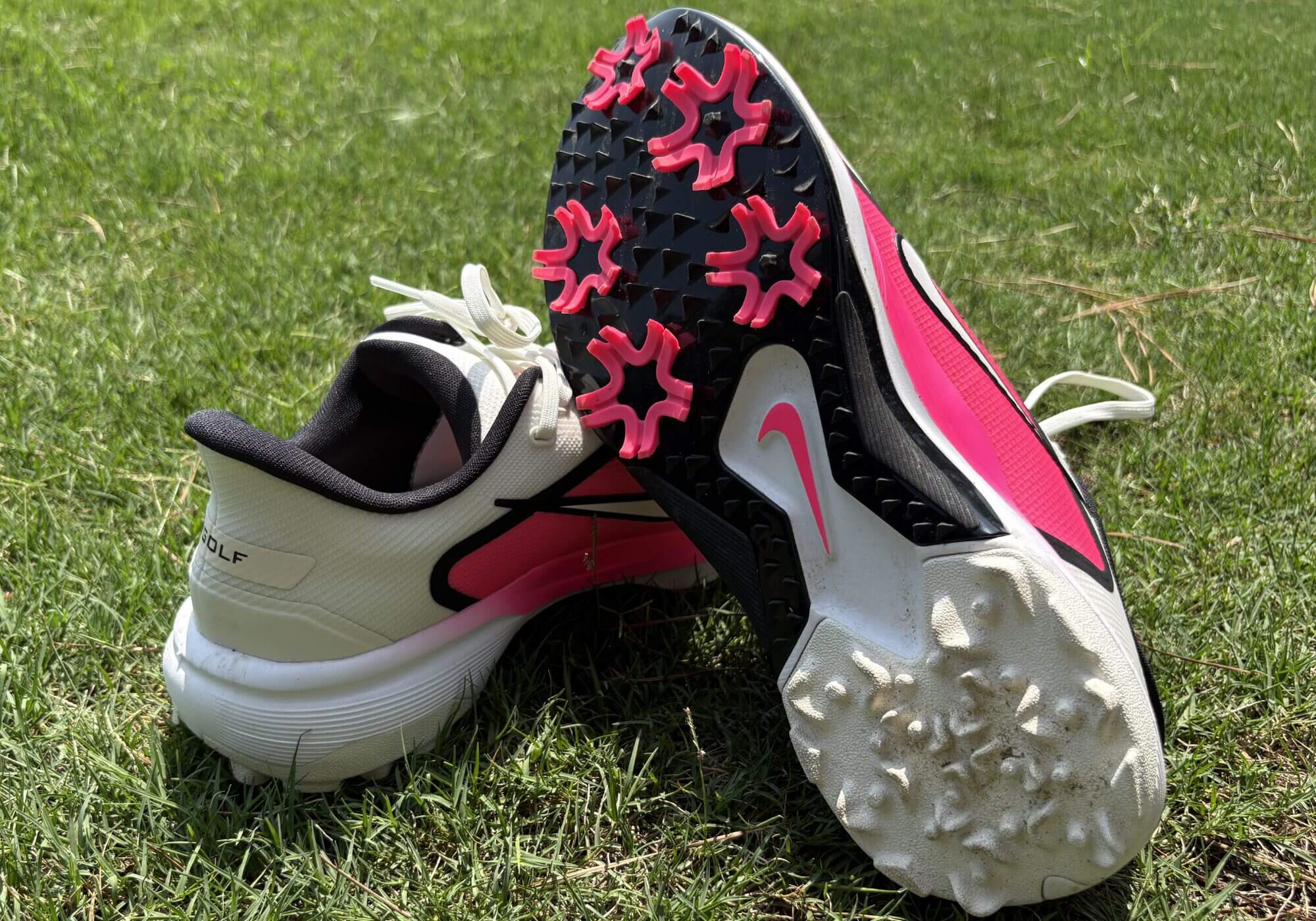
Three consecutive Nike golf shoe releases have landed. That has not been true in roughly a decade.
What Makes the Nike Pegasus 1 Different?
The Pegasus 1, Nike's latest spiked offering at $170, is drawing top-tier reviews from the testing community, with MyGolfSpy scoring it a 9.5 out of 10 and calling it one of Nike's best golf shoes of the decade. It follows the Victory Pro 4 and Victory Tour 4 in a run of releases that suggests Nike Golf's footwear team has finally stopped trying to reinvent the category and started borrowing from what already works elsewhere in the building.
That borrowing is the actual story. The Pegasus 1 is built on Cushlon foam and ReactX, the same energy-return system Nike uses in its running line. It is not a bespoke golf innovation. It is Nike doing what Nike should have been doing all along: pulling infrastructure from its billion-dollar running division and adapting it for a golfer who walks 18 with a bag on his back. The five-spike forefoot with rubberized rear grooves handles traction, and reviewers are reporting near-zero break-in time. None of this is exotic. It is competent, which for Nike Golf footwear qualifies as news.
How Does Nike Golf Compare to FootJoy and adidas?
The context matters because Nike's apparel and footwear presence has been drifting. The brand sits at #14 globally in the DORMIED Index but posted a 33 percent month-over-month decline in May, the kind of drop that reflects a brand coasting on legacy recognition rather than product momentum. Nike golfers have historically bought Nike because they buy Nike, not because the last three shoes were better than what FootJoy, adidas, or Puma put out. The Pegasus 1 is the first product in a while that rewards that loyalty instead of testing it.
The competitive read is more interesting. FootJoy owns the spiked category through sheer distribution and tour presence. adidas has quietly built the most credible performance line in golf with the Tour360 and Codechaos platforms. Puma has Rickie and a design language that punches above its market share. Nike, for years, was the brand that showed up with a slick silhouette and mediocre comfort, then discontinued it 18 months later. Building on proven running-line tech, at a $170 price point that undercuts the Tour360 by roughly $50, is the first coherent footwear strategy Nike Golf has executed since the club business shut down in 2016.
What Are the Nike Pegasus 1's Weak Points?
The soft spots in the review, some heel slippage and forefoot stiffness, are the kind of things a v2 fixes. What matters is that Nike is now shipping shoes that testers score in the top ten of the category rather than dismissing as brand-loyalty products. The apparel side is a separate conversation, and one where Nike has ceded more ground than it should have to Malbon, Eastside Golf, and a dozen smaller labels selling to the customer Nike used to own outright.
The question for the next 18 months is whether Nike Golf treats this footwear run as a foundation or a moment. Three good shoes in a row is a pattern. A fourth would be a category position. If the apparel team can find similar discipline, and stop chasing streetwear collabs that feel two seasons late, the brand's trajectory in the DORMIED rankings could look very different by this time next year.