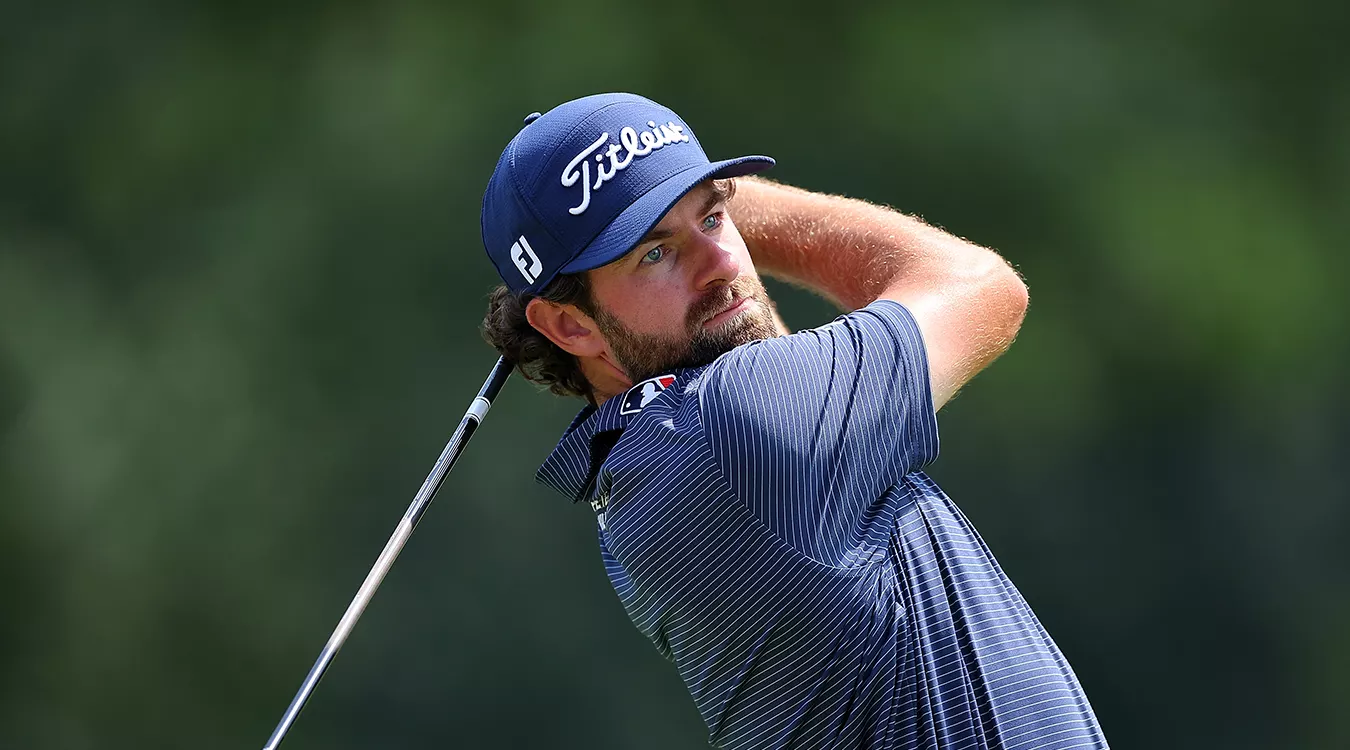
Traditional hybrids have become a minority club on the PGA Tour, replaced by high-lofted fairway woods, utility irons, and Callaway's Apex UW. The names still carrying a standard hybrid are few: Robert MacIntyre with a TaylorMade Stealth 2 Rescue, Joaquin Niemann with a PING G430, and a handful of Titleist loyalists. Meanwhile, the 7-wood has staged a full comeback. Ludvig Åberg, Patrick Cantlay, Max Homa, Jason Day, and Keegan Bradley all have one in the bag.
Why Is the PGA Tour 7-Wood Trend Growing?
The shift makes sense at Tour speeds. These players swing hybrids around 102 mph, where the draw bias and rear-weighted CG that define hybrid design become liabilities rather than assets. At that speed, a compact fairway wood or utility iron offers more control. TaylorMade's presence in this space is notable, with Stealth 2 and Qi-series woods showing up across multiple bags. The brand currently sits at number two globally with a 67 score, up 22 percent month over month, and Tour validation like this is part of the reason.
But here's the reality check: the average amateur swings closer to 87 mph, more in line with the LPGA Tour, where hybrids remain standard. The Champions Tour tells the same story. For most golfers, the hybrid's design advantages still outweigh its drawbacks. The Tour trend is real. It just doesn't apply to you.
What the Data Actually Shows
TaylorMade's hybrid decline tells only half the story. The brand's real positioning play is happening in the fairway wood segment, where DORMIED data shows consistent gains across both Tour and retail channels. The Qi10 fairway line has become the quiet workhorse of this transition, offering the low-spin, penetrating ball flight that Tour players want without the stigma some attach to traditional hybrids. This matters because TaylorMade is essentially cannibalizing its own hybrid sales with a more profitable, more differentiated product category.
Why Do Tour Players Choose Apex UW Over TaylorMade Rescue?
Callaway presents the clearest competitive contrast. Rather than abandoning the hybrid form factor, Callaway rebranded it. The Apex UW exists in a semantic middle ground, a utility wood that borrows hybrid geometry while distancing itself from hybrid associations. It's a smart marketing move that acknowledges Tour player psychology. Players who would never bag a "rescue club" will happily carry something called a utility wood. Callaway's approach preserves the hybrid's engineering while shedding its amateur connotations. TaylorMade has not matched this naming strategy, which may explain why its Stealth 2 Rescue sees limited Tour adoption despite solid performance metrics.
The broader industry context reveals a segmentation strategy taking shape across all major manufacturers. Premium brands are effectively splitting the long-club market into two tiers. Tour-oriented products emphasize workability, low spin, and compact profiles. Consumer-oriented products retain the forgiveness and launch characteristics that sell in retail. TaylorMade's current lineup reflects this split, with Qi10 fairway woods serving the former and Stealth Plus hybrids serving the latter. The risk is brand dilution. When Tour players visibly reject a product category, it becomes harder to sell that category to aspirational amateurs who model their bags on what they see on television.
DORMIED's 22 percent month-over-month increase for TaylorMade suggests the brand is navigating this transition effectively, at least for now. The score reflects strong Tour presence, retail momentum, and social engagement across multiple product lines. Fairway woods are driving much of that growth, while hybrids contribute less than they did two years ago.
The next move for TaylorMade likely involves a nomenclature shift. Expect a utility wood or similar rebrand within the next product cycle, following Callaway's lead in separating Tour-viable clubs from traditional hybrid positioning.
Why Naming Strategy Shapes Market Share
The gap between TaylorMade and Callaway in the utility segment reveals something deeper than product engineering. It exposes how brand language directly influences professional adoption, which then cascades into consumer purchasing behavior. Callaway understood that Tour players carry egos alongside their clubs. The word "rescue" implies a problem that needs solving. The word "utility" implies versatility and choice. This distinction matters more than most equipment analysts acknowledge.
DORMIED data shows Callaway's Apex UW appearing in bags where traditional hybrids would have been dismissed outright. Xander Schauffele, Sahith Theegala, and Sam Burns all carry some version of this club. These are players who project confidence and precision, not players who need rescuing from bad lies. The branding alignment is intentional. Callaway's marketing team recognized that professional golfers respond to language that affirms their skill rather than compensates for weakness.
TaylorMade's continued use of "Rescue" as a product name creates friction in this context. The Stealth 2 Rescue performs well by objective measures. Launch conditions, spin rates, and dispersion patterns all compare favorably to competitors. Yet the club sees limited Tour adoption. Robert MacIntyre remains one of the few high-profile players carrying it. This suggests the barrier is perceptual rather than technical.
Why Does Tour Validation Matter for TaylorMade Pricing Power?
The financial implications are significant. Tour validation drives premium pricing power. When professionals reject a product category, manufacturers lose leverage in retail negotiations and direct-to-consumer campaigns. TaylorMade's strength in fairway woods partially offsets this dynamic, but the hybrid segment represents lost ground that competitors are actively claiming.
PING occupies an interesting middle position here. The G430 hybrid carries no rescue branding and maintains modest Tour presence through players like Niemann. PING's approach suggests that neutral naming, neither utility nor rescue, can preserve market viability without requiring a complete rebrand.
TaylorMade's next product cycle will likely resolve this tension. The brand has shown willingness to retire underperforming nomenclature in the past. A shift toward utility wood positioning would align Tour strategy with retail messaging and close the gap Callaway currently exploits.