
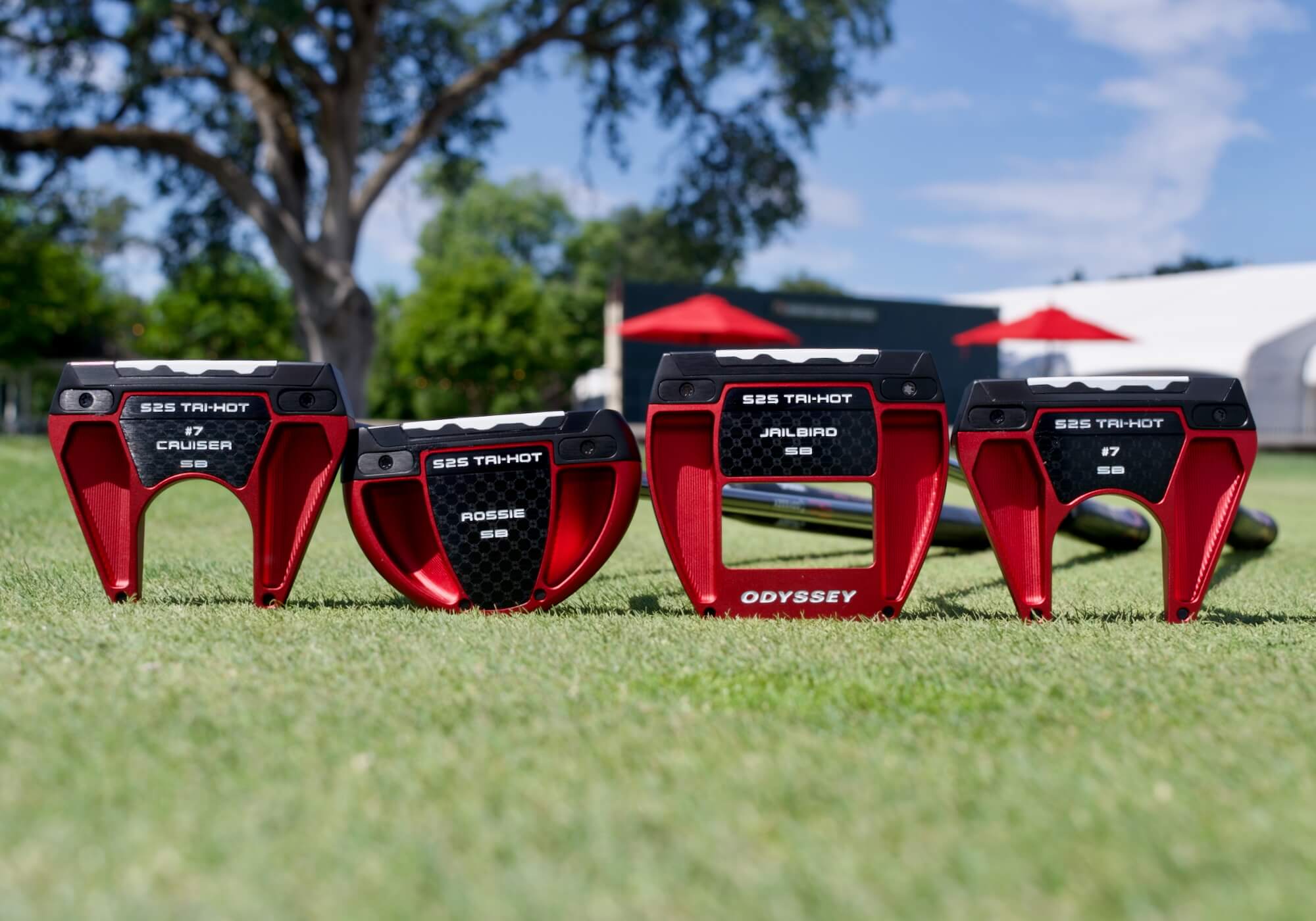
The perennial putter market leader has figured out what everyone else in the zero-torque space has been struggling with: how to hide the technology. The new Odyssey Tri-Hot S2S SB line delivers genuine torque-free performance in a package that looks like any other Odyssey putter on the rack.
This matters more than the engineering itself. L.A.B. Golf built its brand on letting weird-looking putters speak for themselves through performance. Every other OEM chasing that market has produced designs that scream afterthought or compromise. Odyssey took a different path. By pushing the center of gravity forward with tungsten weighting, they could move the shaft to a heel-side single-bend position that visually reads as completely conventional. The zero-torque geometry is there, but you have to know what you are looking for to see it.
At $599, these are priced at the premium end of the putter market. But Odyssey is betting that golfers who want the stability benefits of zero-torque without the conversation that comes with an unconventional-looking flatstick will pay the freight. Given that the brand still dominates tour usage and retail shelf space, that bet looks solid. The company ranked 78th globally on DORMIED enters this category not as a follower but as a legitimate threat to redefine what zero-torque putters should look like.
The L.A.B. Problem Just Got Harder
L.A.B. Golf built a genuine category from scratch. The company proved that zero-torque putters could work, could win on tour, and could command premium pricing from dedicated buyers willing to overlook unconventional aesthetics. That was a remarkable achievement for an independent brand operating without the distribution muscle or marketing budgets of the major OEMs. But the moat around that business just got significantly shallower.
The challenge L.A.B. faces now is existential in nature. Their entire value proposition rested on being the only credible option for golfers who wanted torque-free putting. That exclusivity justified the learning curve, the unusual appearance, and the price point. Odyssey entering this space with a visually conventional design removes the trade-off that L.A.B. required customers to accept. A golfer can now get zero-torque performance without explaining their equipment choices to playing partners.
DORMIED data shows L.A.B. currently ranks outside the top 100 in global brand intelligence, reflecting their niche positioning. Odyssey sits at 78th with vastly superior retail presence and tour visibility. The distribution gap alone creates problems for L.A.B. that no product innovation can solve quickly. Odyssey putters appear in virtually every golf retail environment in North America. L.A.B. relies heavily on direct sales and specialty fitters. When a curious golfer wants to try a zero-torque putter, the path of least resistance now leads to Odyssey.
L.A.B. does retain advantages. Their fitting process is more sophisticated. Their product line offers more customization. Their customer base includes true believers who evangelize the brand. But true believers represent a ceiling, not a growth strategy. The casual convert, the golfer who simply wants to putt better and heard something about torque-free designs, will increasingly find Odyssey first.
The independent brand playbook in golf equipment usually ends one of two ways. Either the company carves out a sustainable niche with loyal customers and accepts limited scale, or a larger player acquires them for the technology and brand equity. L.A.B. now faces pressure on both paths. Their niche just became contested territory, and their acquisition value may have peaked before Odyssey proved the technology could live inside conventional shapes. The next twelve months will reveal whether L.A.B. can differentiate on something beyond being first.
What This Signals About Callaway's Portfolio Strategy
Odyssey does not operate in isolation. The brand functions as Callaway's putter division, which means this zero-torque push reflects decisions made at the parent company level about where to allocate R&D resources and which market segments deserve serious investment. Callaway choosing to greenlight a $599 putter line with unconventional internal geometry tells us something about how the company views premium equipment categories going forward.
The timing aligns with broader shifts in Callaway's approach since the Topgolf merger created financial pressure across the business. The company has pulled back on some experimental projects while doubling down on categories where margin opportunity exists. Premium putters fit that profile perfectly. The development costs are manageable compared to driver programs, the pricing power is real, and the attachment rate potential with existing Callaway iron and wood buyers creates natural cross-selling opportunities.
DORMIED tracking shows Callaway's overall brand intelligence ranking has fluctuated over the past eighteen months as the company navigated integration challenges and market uncertainty. Odyssey maintaining its position at 78th globally during that period suggests the putter division operates with some insulation from parent company turbulence. This zero-torque launch represents the kind of category expansion that could push Odyssey higher in the rankings if retail velocity follows the tour seeding strategy the brand has already begun.
The portfolio logic extends beyond putters. Callaway now has proof of concept for taking niche technologies and scaling them through conventional industrial design. That template could apply to other equipment categories where small brands have established beachheads with performance innovations wrapped in unconventional packaging. The company's resources allow them to solve the aesthetics problem that constrains smaller competitors, then leverage distribution advantages to capture market share.
Odyssey's next move likely involves expanding the zero-torque line into additional head shapes once this initial launch establishes demand. The single bend shaft worked for blade and flow neck designs. Mallets present different challenges but also larger volume opportunity. Callaway will be watching sell-through data closely to determine how aggressively to scale this technology across the Odyssey range.