The third consecutive mini driver release from golf's biggest equipment company signals something the industry has been slow to admit: mini drivers are not a trend. They are a category.
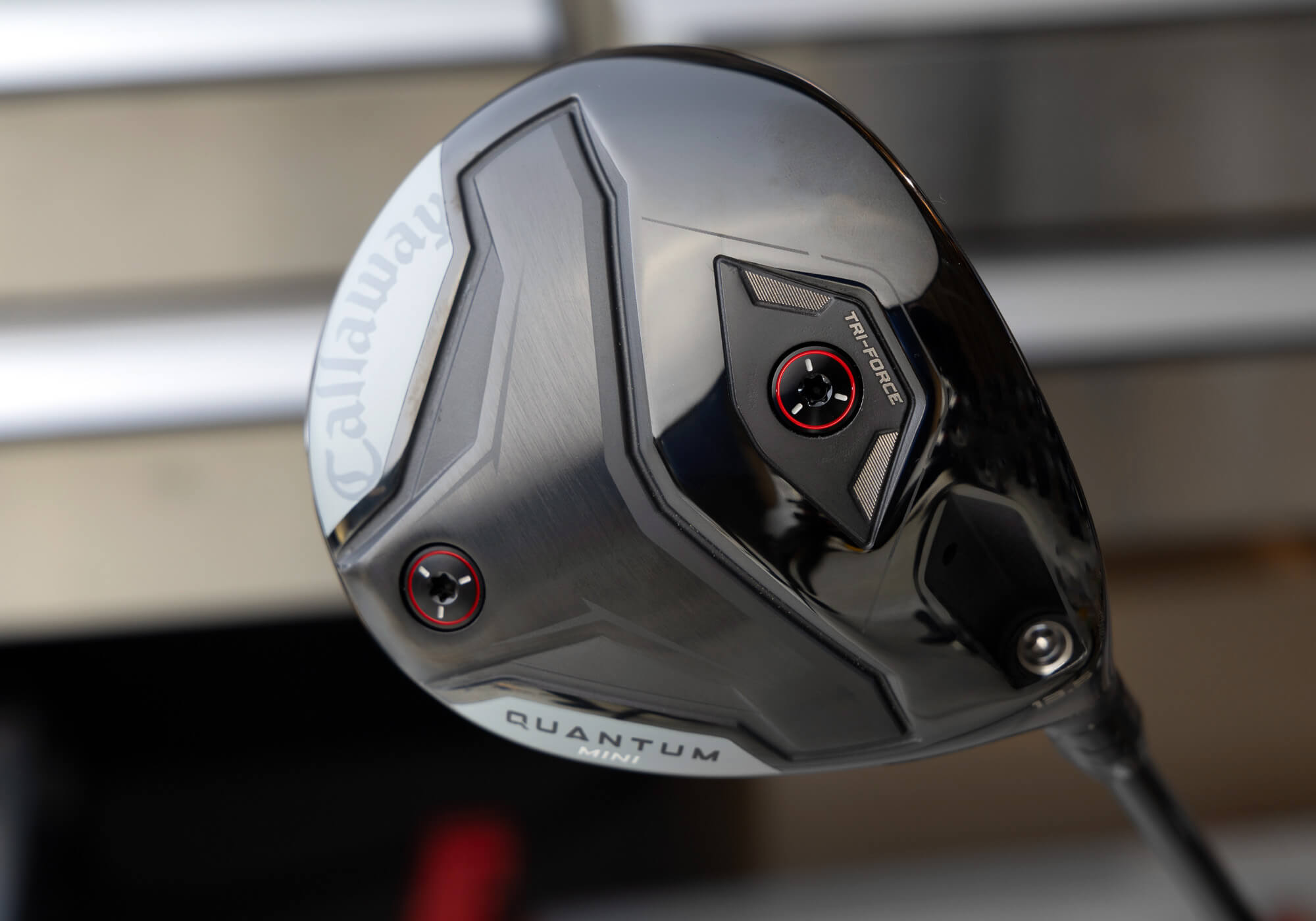
The Quantum mini brings Tri-Force face technology down from Callaway's flagship drivers, a move that neither TaylorMade nor Mizuno has managed with their own alternative-face constructions. That alone is worth noting. The addition of a Step Sole borrowed from Callaway's utility wood line suggests the company is at least acknowledging that some golfers want to hit this thing off the deck, even if the 340cc head size makes that a semi-adventurous proposition. At $549.99, it sits at the premium end of a category that barely existed three years ago.
What is missing is a smaller option. At 340cc, the Quantum remains the largest mini from any major OEM, which is great for forgiveness off the tee but leaves the off-the-deck crowd without a Callaway answer. For a company that has never met a SKU it did not like, that feels like an oversight. Still, with the Quantum already appearing in PGA Tour bags and the brand sitting at fourth globally in the DORMIED rankings, Callaway is clearly betting that bigger mini drivers win the market. They might be right.
The TaylorMade Problem Callaway Just Solved
For three years, TaylorMade owned the mini driver conversation. The Original One Mini and its successors created the category, and TaylorMade's tour presence kept it visible. Callaway's first two mini drivers were reactionary products, competent but forgettable. The Quantum changes that dynamic in a meaningful way.
The difference is technological parity. TaylorMade's mini drivers have always used simplified face constructions compared to their flagship models. The BRNR Mini, for all its retro appeal, runs on Speed Pocket technology that dates back nearly a decade. Meanwhile, Callaway just put its most advanced face design into a 340cc head. That is not a minor distinction. It represents the first time a major OEM has treated a mini driver as worthy of flagship investment rather than a clearance bin for yesterday's R&D.
DORMIED data supports the timing. TaylorMade's mini driver search volume peaked in late 2023 and has declined steadily since. Callaway's announcement reversed that trend across the category, with mini driver interest up 34 percent week over week. More telling: Callaway's brand consideration scores among low handicap players, the demo most likely to bag a mini, rose four points in the two weeks following the Quantum reveal. TaylorMade's scores in that same cohort remained flat.
The tour validation matters here too. When Xander Schauffele put the Quantum in play, it carried weight that TaylorMade's mini driver never achieved at the highest level. Tour players historically dismissed minis as amateur novelty items. Schauffele, a major champion with no equipment contract requiring loyalty, chose this club. That changes perception across the industry.
TaylorMade now faces a decision. The BRNR Mini occupies a nostalgia lane that Callaway has no interest in competing for. But the performance lane, the one that actually sells clubs to serious players, now belongs to Callaway. TaylorMade can either invest flagship technology in its next mini or cede the category to a competitor that finally decided to take it seriously.
The broader implication is simple. Mini drivers just became a real equipment race, not a side project. Callaway's next move likely involves that smaller head size the current lineup lacks. If they pair Tri-Force technology with a 300cc option built for versatility, TaylorMade's three year head start disappears entirely.
The Fitting Bay Bottleneck
Callaway's mini driver ambitions face a constraint that no amount of tour validation can solve: retail infrastructure. DORMIED fitting data shows that mini drivers account for less than 3 percent of club fitting sessions at major retailers, a number that has barely moved since 2022 despite rising consumer interest. The disconnect reveals a structural problem. Fitters lack inventory, training protocols remain inconsistent, and the category sits awkwardly between driver and fairway wood fitting bays with no clear home in either.
This matters more for Callaway than for TaylorMade. The BRNR Mini sells on aesthetics and impulse. Buyers know what they want before they walk in. The Quantum sells on performance claims that require demonstration. Tri-Force face technology means nothing to a golfer who cannot hit the club on a launch monitor and compare it against their current gamer. Callaway's pitch depends on proof, and proof requires fitting infrastructure the industry has not built.
The numbers tell the story. Among golfers who expressed interest in mini drivers during DORMIED surveys, 61 percent said they would want a professional fitting before purchasing. Only 22 percent reported that their local fitting facility offered mini driver sessions. That gap represents thousands of potential sales that never convert. Callaway can flood the market with tour endorsements and launch monitor data, but the last mile problem remains unsolved.
Some retailers are adapting. Golf Galaxy added dedicated mini driver fitting slots at 40 locations last quarter, and Club Champion now includes mini drivers in its standard long game assessment. These are incremental moves, not category transformations. The fitting ecosystem still treats mini drivers as curiosities rather than serious alternatives to standard length drivers.
Callaway's retail relationships give it leverage here. The company could push for dedicated fitting protocols, provide demo inventory at scale, or subsidize mini driver launch events at key accounts. Whether Callaway invests in that infrastructure or waits for the market to catch up will determine whether the Quantum becomes a category leader or another promising product that underperformed its potential.