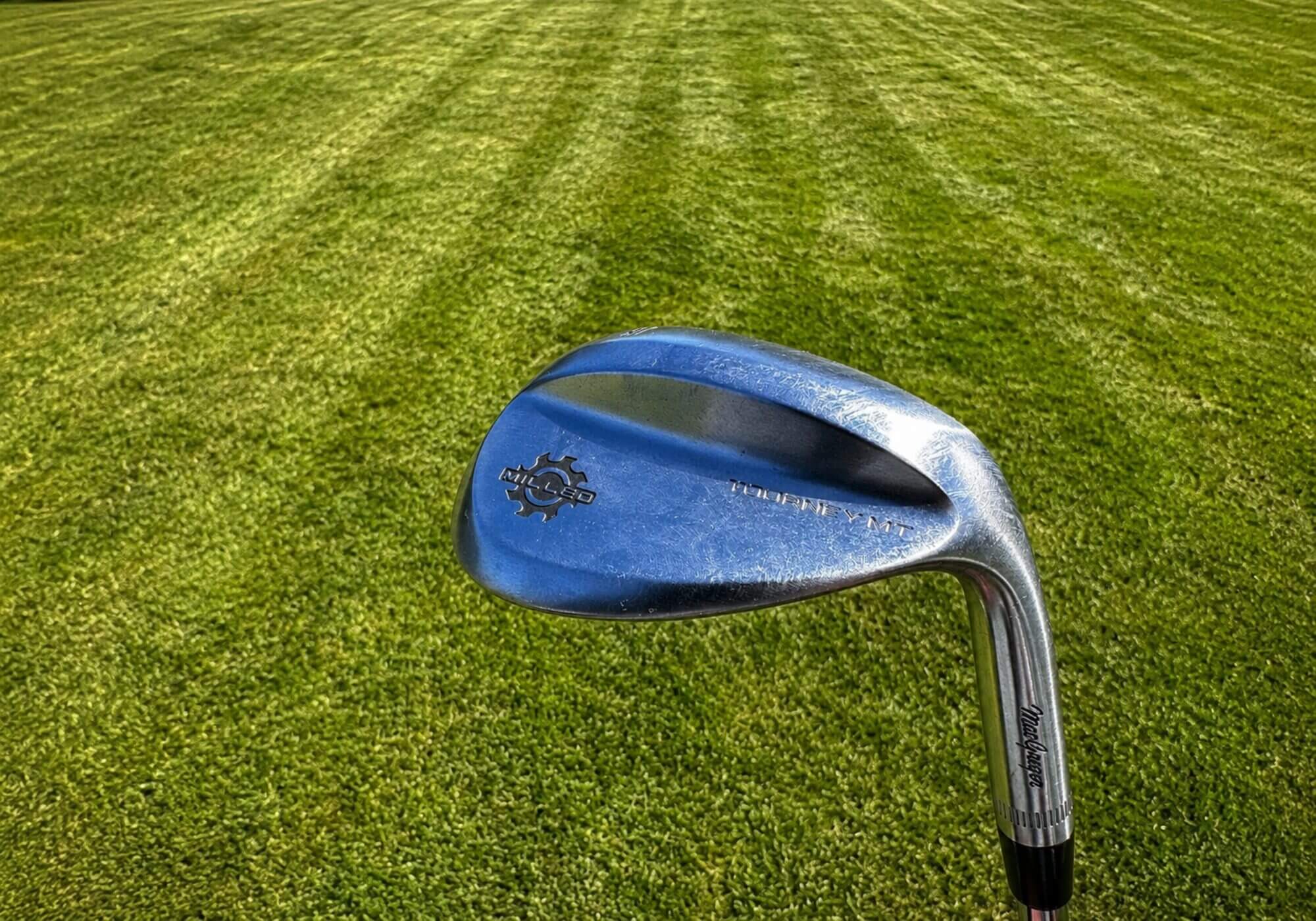
Three full-face wedges for less than the cost of one Vokey. That is the value proposition MacGregor is running with the MT Tourney Wedge Set, and it represents the clearest challenge yet to the wedge pricing structure that major OEMs have spent a decade building. The set includes 52, 56, and 60 degree lofts at $170 total, which puts it in direct competition with the Kirkland Signature wedge set that Costco introduced to predictable industry panic.
Why Is MacGregor Challenging Costco's Budget Golf Wedges?
MacGregor's positioning is explicit. The brand released these wedges, in their own words, to compete with Costco "on the basis that your golf clubs shouldn't be the same brand as your toilet paper." That line is doing more work than it appears. MacGregor is not positioning itself as a budget alternative to premium brands. It is positioning itself as the legitimate golf brand that plays in the value space, a distinction the company clearly believes matters to a certain segment of buyer who wants affordable equipment without the warehouse-store stigma.
The performance reports are more interesting than the marketing angle. Early testing indicates spin rates that fall short of the Titleist SM10 or Cleveland RTX Zipcore, but not by margins that most recreational players would notice or exploit. The wedges check on approach shots, they allow for open-face manipulation around greens, and they flight predictably across the loft range. For a $57-per-club price point, that performance profile is not a compromise. It is the floor that budget wedges have historically failed to reach.
What Is MacGregor's History in Affordable Golf Equipment?
MacGregor's history in this space is worth remembering. The brand that Jack Nicklaus played for two decades and that dominated the equipment market through the 1960s has spent the last twenty years in various states of ownership uncertainty and market repositioning. The current iteration, under Founders Club parent company ownership, has leaned hard into the value segment with products like the MACSPD iron set. That iron line received similar reception: not tour-level performance, but dramatically more playable than the price would suggest.
The fixed loft configuration is the obvious limitation. Players who prefer a 50-54-58 setup or any non-standard gapping are out of luck. MacGregor is clearly optimizing for manufacturing efficiency and inventory simplicity over customization, which is the correct trade-off at this price point but limits the addressable market. The full-face-only design creates a similar constraint. Full-face wedges have genuine performance benefits for players who open the face frequently, but they remain a minority preference. A standard groove option would expand the appeal without meaningfully increasing production complexity.
How Do MacGregor's Wedge Prices Compare to Major OEMs?
The broader industry context matters here. Wedge prices from major OEMs have increased roughly 40% over the past decade, outpacing inflation by a significant margin. Titleist's Vokey SM10 retails at $185. Cleveland's RTX6 sits at $180. Callaway's Jaws Raw runs $175. These are not luxury products with exotic materials or complex manufacturing processes. They are forged or cast steel with milled grooves. The pricing reflects brand positioning and tour validation more than production cost. MacGregor is making an implicit argument that the emperor has fewer clothes than the fitting bay experience would suggest.
Whether this product moves the needle for MacGregor's broader positioning remains uncertain. The brand ranks 86th globally in the DORMIED Index, reflecting limited marketing presence and distribution compared to major OEMs. A 22.7% month-over-month increase suggests some momentum, likely driven by coverage of value-oriented products like this wedge set. But converting viral value plays into sustained brand relevance requires follow-through that MacGregor has historically struggled to execute.
The wedge set itself is not revolutionary technology. It is competent engineering sold at a price that exposes how much margin exists in the premium wedge category. For MacGregor, the question is whether being the legitimate alternative to Kirkland is a viable long-term position or a dead end. The answer probably depends on whether the company can build a product line that graduates players into higher-margin equipment, or whether value buyers simply stay value buyers forever. The next product launch will tell that story.