
A downtown Financial District address tells you everything about who Club Champion is chasing. The brand's 151st location opens at 125 High Street in Boston, a block from South Station and priced accordingly. This is not a golf destination play. This is a commuter intercept strategy, designed to capture the after-work fitting appointment from the same demographic that books $400 dinner reservations without checking the menu.
Why Is Club Champion's Expansion Moving This Fast?
The timing matters. Club Champion has opened more than 30 locations in the past 18 months, an expansion pace that suggests either aggressive confidence or private equity pressure to hit growth targets. The company's 2021 acquisition by Norwest Equity Partners came with the standard playbook: scale fast, professionalize operations, prepare for exit. A Boston Financial District studio is the kind of move that looks good in an investor deck. Whether it produces the same fitting volume as a suburban location near a practice facility is a different question.
The 65,000 head and shaft combinations number has become Club Champion's signature stat, repeated in every press release since 2019. It is also somewhat misleading. The actual selection at any given studio depends on inventory allocation, and most fittings narrow to a handful of realistic options within the first fifteen minutes. The number serves a marketing function: it positions Club Champion as the brand-agnostic alternative to manufacturer-owned fitting centers, where the recommendation conveniently aligns with the logo on the door. That positioning has worked. Club Champion has built the closest thing to a national fitting brand that exists in golf, with the margin structure to prove it.
What Technology Drives Club Champion's Custom Club Fitting?
The technology stack matters more than the location. TrackMan is table stakes. SAM PuttLab is uncommon enough to be a differentiator for players who care about putter fitting. The A.I. Fitter Co-Pilot, introduced in late 2024, is the more interesting bet. Club Champion is sitting on years of fitting data, thousands of sessions correlating swing characteristics with equipment outcomes. If the Co-Pilot can surface patterns that human fitters miss, it becomes a defensible advantage. If it is primarily a training tool dressed up as artificial intelligence, it is marketing copy with a software license attached. The company has not released enough detail to evaluate which version is closer to reality.
Boston's golf market is underserved relative to its wealth concentration. The greater metro area has fewer premium fitting options per capita than comparable markets like Chicago, Dallas, or the Bay Area. Club Champion is betting that latent demand exists, that there are enough golfers willing to pay $350 for a driver fitting and $1,800 for the club that follows. The Financial District address filters for income. It also filters out the casual golfer who might benefit most from a fitting but cannot justify the spend. Club Champion has made peace with that trade-off. The business model requires a certain average transaction value, and downtown rents require a certain volume. The math either works or it doesn't.
The Perfect Fit Guarantee, which allows exchanges within 30 days, addresses the obvious objection: what if the fitted club does not perform on the course the way it performed on the launch monitor? That guarantee is expensive to honor. It also builds the kind of trust that produces referrals and repeat customers. Club Champion has reportedly kept return rates low enough to maintain the program, though specific data remains proprietary. The guarantee is a signal of confidence, and confidence is the product Club Champion is actually selling.
Which Brands Does Club Champion Boston Stock?
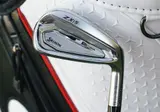
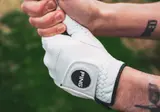
TaylorMade, Titleist, Callaway, and PING inventory will anchor the Boston studio, the same four brands that dominate every Club Champion location. The brand-agnostic pitch is technically accurate and practically incomplete. These four manufacturers account for the vast majority of fitting outcomes because they account for the vast majority of what serious golfers want to buy. Club Champion's role is to optimize within that universe, not to challenge it.
The Boston opening is a bet on the continued growth of the premium fitting category. That category has expanded every year since 2018, with the pandemic accelerating adoption among golfers who suddenly had disposable income and tee times to fill. Whether that growth continues or whether the fitting market is approaching saturation will determine if Club Champion's expansion pace looks smart or stretched by 2027. The Financial District address suggests the company is not waiting to find out.