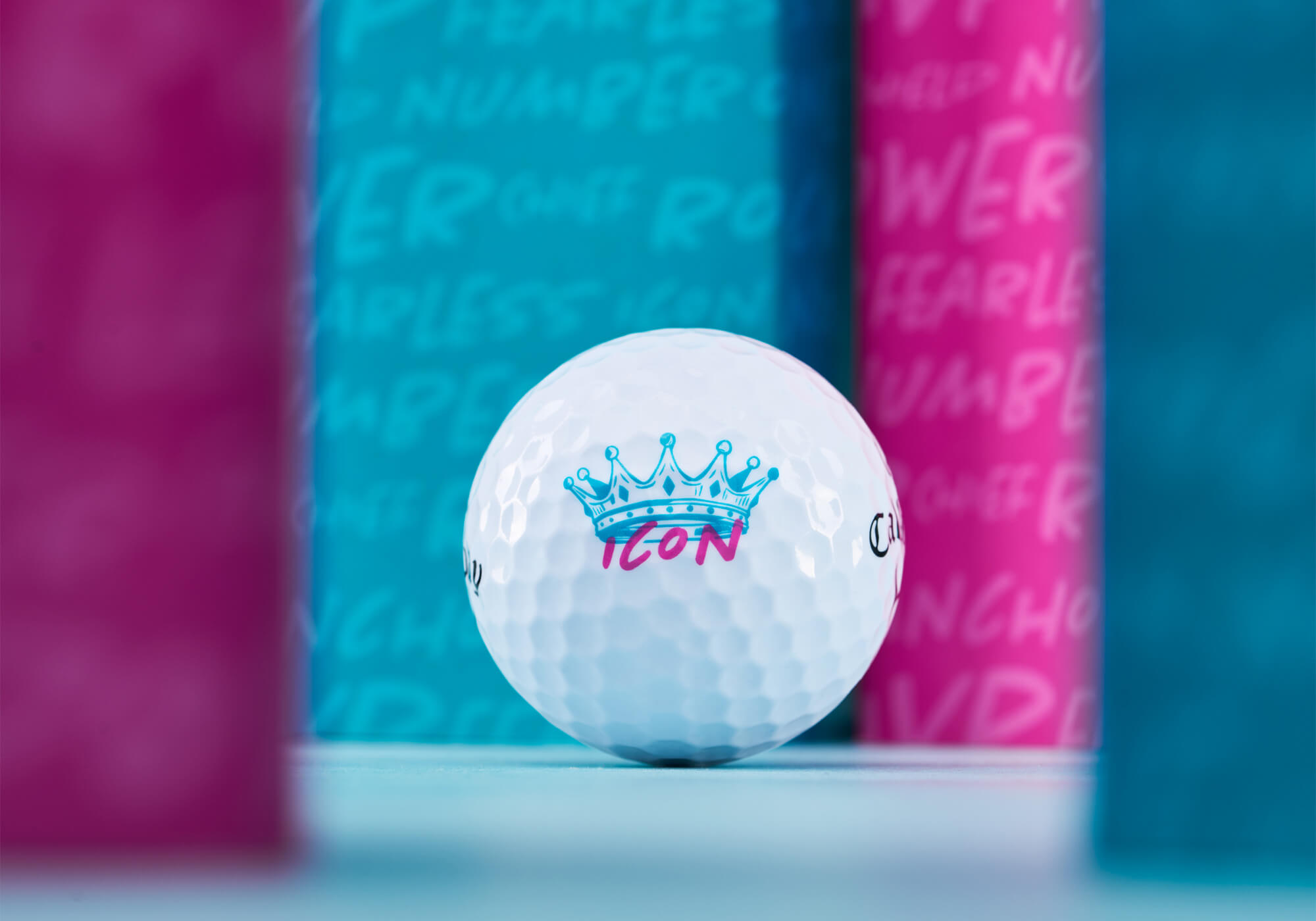
Limited-edition holiday golf balls are the participation trophies of golf marketing. They cost almost nothing to produce, require zero R&D, and exist primarily to occupy shelf space at Golf Galaxy during peak gift-buying weekends. Callaway's new Supersoft Super Mom, priced at $27.99 a dozen, is exactly that kind of product.
The execution is competent enough. Four sleeve designs in a sketched art style featuring crowns, flexed arms, coffee cups, and trophies. The palette skips the usual aggressive pink saturation for something slightly more restrained. The player number reads "365" because moms work year-round, which is the kind of detail that looks thoughtful on the packaging but took someone about four seconds to conceive. Underneath the graphics sits a standard Supersoft, unchanged from what already sits on every big-box retailer's shelves.
This is not a product designed to move the needle for Callaway. It is a product designed to move units during a two-week window when non-golfers wander into pro shops looking for something their golf-obsessed mother might appreciate. That is a perfectly valid business strategy. It is also not particularly interesting from a brand-building perspective.
What makes this release worth noting is what it says about where Callaway allocates its creative energy. The company currently sits fourth globally in brand momentum, riding genuine product innovation in its Paradym and Ai Smoke lines. A 23 percent month-over-month jump in brand activity suggests real marketing muscle being deployed. And yet here we are, discussing a ball that exists because someone checked a calendar and noticed Mother's Day was approaching.
The holiday golf ball industrial complex will continue to churn. Father's Day is next. Then July Fourth. Then whatever else the marketing calendar demands. Callaway will sell every dozen it manufactures because the Supersoft name carries weight and the price point hits the gift-giving sweet spot. But for a brand with Callaway's resources and current momentum, this feels like autopilot. The question is whether that matters when the core product line is already doing the heavy lifting.