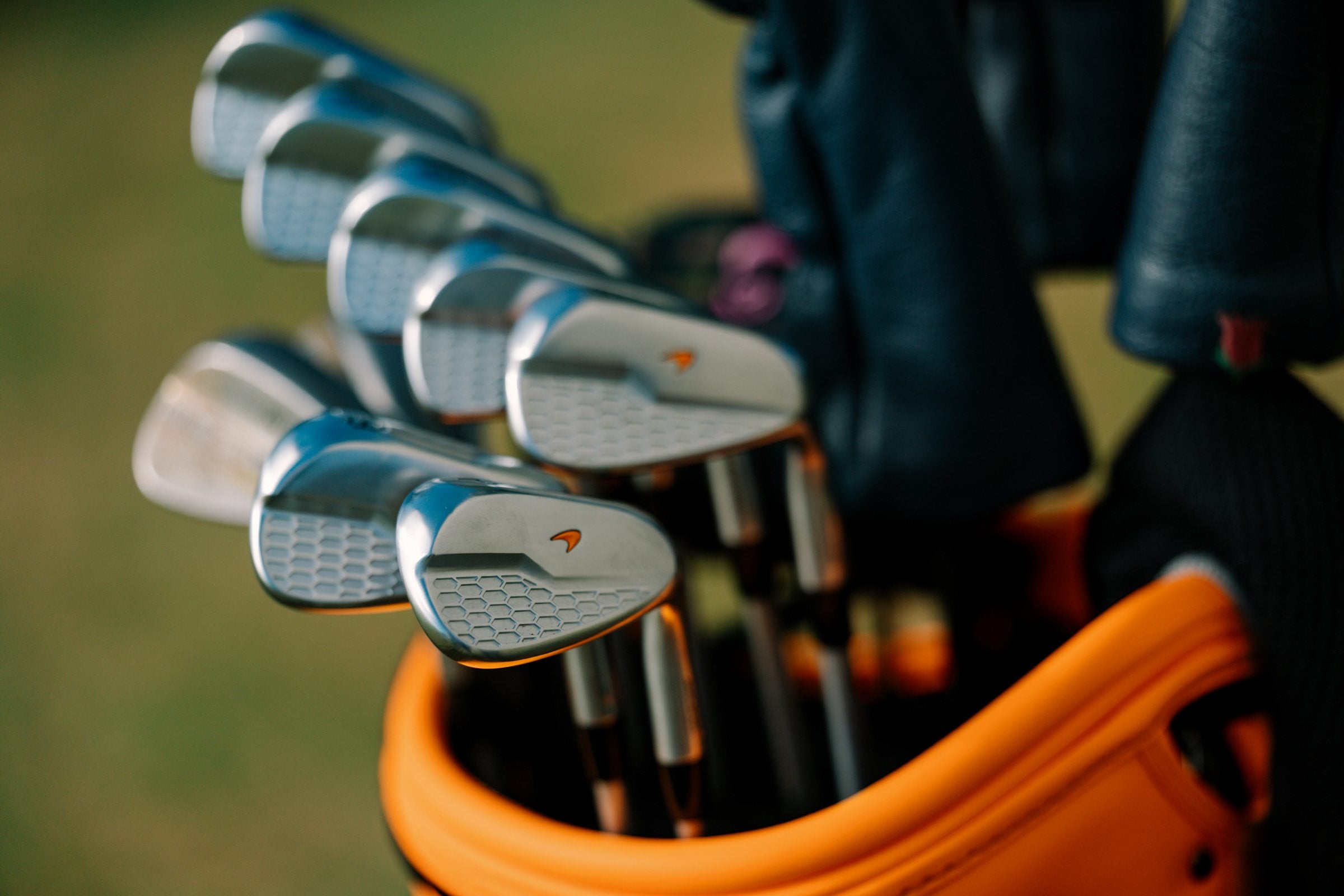
McLaren Golf clubs are made by McLaren Racing in collaboration with 8AM Golf, the parent company of GOLF.com. The clubs are designed in-house by a team of former Titleist, Cobra, TaylorMade, and Callaway veterans who were hired specifically to launch the brand. McLaren Golf is a wholly-owned subsidiary of the broader McLaren group, which is best known for its Formula 1 Grand Prix racing team and its supercar division. The clubs launched on April 29, 2026, with Justin Rose, Ian Poulter, and Michelle Wie West as the inaugural brand ambassadors.
The team behind the clubs is more accomplished than the brand's debut would suggest. CEO Neil Howie spent 25-plus years at Callaway, ultimately serving as President and Managing Director of Callaway Europe. Senior Design Manager for irons and wedges JP Harrington was a former Titleist designer and the founder of JP Wedges before joining McLaren. Director of Engineering Ryan Badgero is a 12-year Cobra Golf veteran. Chief Marketing Officer Ryan Lauder spent his career at TaylorMade. The collective experience of the founding team across the major OEMs is one of the most pedigreed assemblies of golf industry talent ever brought together to launch a new brand.
How Are McLaren Golf Clubs Made?
How the Clubs Are Made
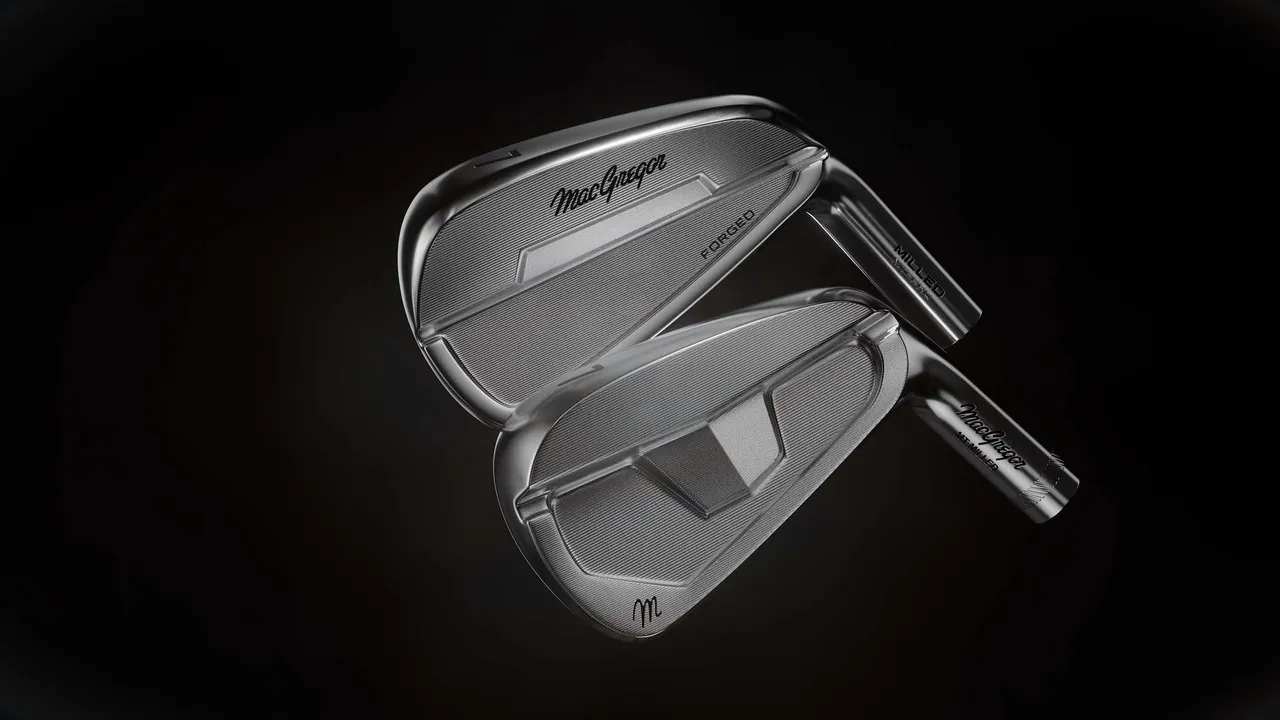
The Series 1 and Series 3 iron sets are built using Metal Injection Molding (MIM) technology, which is a manufacturing process that injects fine metal powder into a mold and then sinters the result at high temperature. MIM is not new in golf. Cobra Golf uses it for its King wedge line. Callaway Golf uses it for the Opus wedge series. The advantage of MIM is that it produces tighter design tolerances than casting can achieve while maintaining the metal density that gives the clubs a forged feel.
McLaren uses MIM with a specific twist. Each iron head in the set includes a calibration weight inside the cavity. These weights are not uniform across the set. Each iron has a slightly different weight with slightly different geometry, designed to fine-tune the center of gravity and headweight per club so the entire set feels uniform when swung. The weights are factory-installed and are not user-serviceable. They are calibration weights, not swing-weighting tools.
Does McLaren Golf Build Its Own Clubs?
The Production Partners
McLaren Golf does not operate its own manufacturing plant. Like every major OEM, it contracts manufacturing through specialist partners. The MIM heads are produced by a manufacturing partner that has not been publicly disclosed in McLaren's launch materials. Final assembly happens at McLaren's contracted facility. The complete supply chain is similar to how every premium golf brand operates: heads from foundries, shafts from established Japanese and global producers, grips from established manufacturers, and final assembly to specification.
The headquarters operation sits at McLaren Technology Centre in Woking, England, which is the same campus where the McLaren F1 team designs and tests its race cars. Justin Rose has been involved in the iron testing program at Woking, and McLaren has been explicit that the engineering culture borrowed from F1 racing is central to the brand's identity. Whether that translates to a competitive advantage on the course is the open question.
Is McLaren Golf More Than a Licensing Deal?
The DORMIED Take
McLaren Golf is not a vanity project the way previous luxury car brand attempts at golf were. Porsche Design tried golf clubs in the 902 series and quietly exited the category. Ferrari teamed with Cobra on a $2,000 driver that became a collector's item rather than a product. Aston Martin had a Merchandise Show booth nobody remembers. Those projects were licensing deals with golf brands. McLaren built its own team and its own design pipeline with industry veterans who have shipped at OEM scale.
The team McLaren assembled is good enough to ship product that competes on engineering and design. The price point ($375 per club, or about $2,520 for a 7-club set) is positioning the brand as a premium niche player, not a volume competitor. That is the right strategic answer for a luxury automotive brand entering golf, and it matches how PXG launched in 2013. Whether McLaren can build a sustained business out of the niche depends on the next 18 to 36 months of product cadence and tour validation.
For now: McLaren Golf is a subsidiary of McLaren Racing, designed in Woking, manufactured through MIM technology by contracted partners, and launched with a team of OEM veterans who collectively have decades of golf industry experience. It is the most serious luxury-car-into-golf attempt to date.