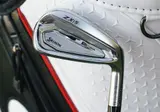
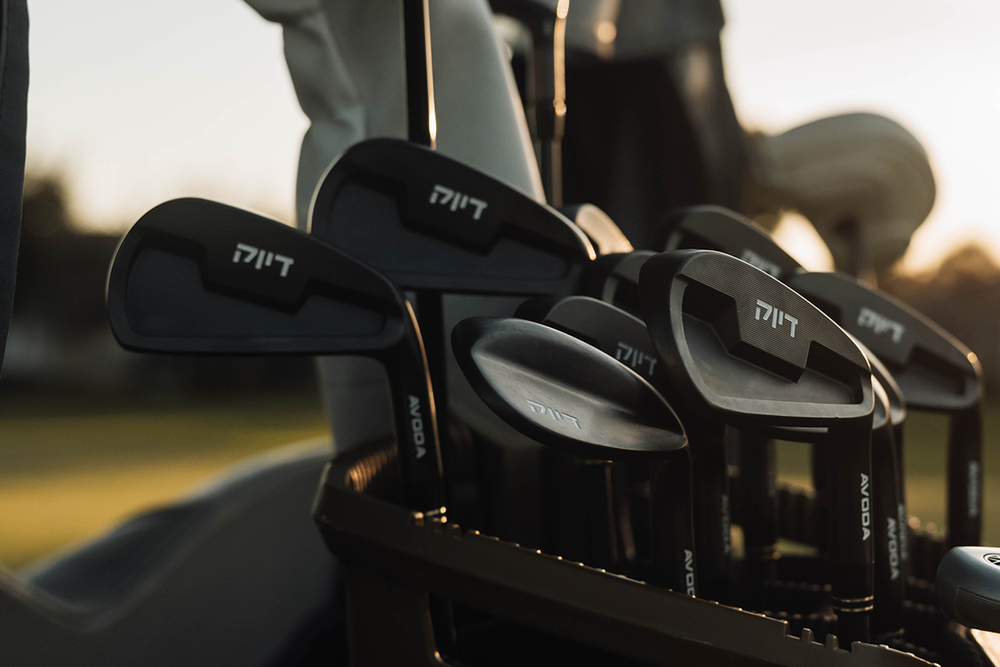
Avoda Golf is based in Pittsburgh, Pennsylvania. The brand was founded in 2023 by Tom Bailey, a former European Tour coach who built the company around hand-built, made-to-order iron sets. Avoda's defining technical idea is combo-length and same-length iron construction, which reduces or eliminates the length variation between irons in a set. The pitch is consistency: same setup, same swing plane, same ball-striking dynamics across the bag.
Why Is Avoda Golf Based in Pittsburgh?
Pittsburgh is not a coincidence. Bailey built the operation there to keep the supply chain close, the build process visible, and the customer fitting experience controllable. Avoda's irons are not cast at scale and shipped through retail. Each set is built individually to a player's anatomy, swing data, and preference inputs gathered through the brand's Precision Fit system. The model is closer to a boutique club-maker than a traditional equipment manufacturer, and the geography reflects that. A small, hands-on operation in Pittsburgh is easier to scale carefully than a multi-continental supply chain optimized for volume.
The Bryson Effect
How Did Bryson DeChambeau Put Avoda Golf on the Map?
Avoda went from unknown to widely-searched in a single Masters week. Bryson DeChambeau put Avoda prototype irons in the bag at the 2024 Masters, with the clubs only receiving USGA approval the week of the tournament. DeChambeau led the first round at Augusta playing them. He did not win the Masters that year, but he won the U.S. Open at Pinehurst weeks later, still playing Avoda irons. A small Pittsburgh club-maker with under a year of operating history had become the iron brand of a major champion.
That kind of validation is what most boutique brands spend a decade chasing. DeChambeau was not a paid endorser at the time. He had been instrumental in the prototype design, drawn to Avoda's same-length theory because it aligned with his own long-standing belief that same-length irons could improve consistency. Same-length is not new in golf. DeChambeau had previously won majors with Cobra irons built to a single length. What Avoda did was design from scratch around the concept, with a curved face geometry intended to counteract the gear effect inherent in single-length sets.
What Pittsburgh Means for the Business
Why Does Pittsburgh Limit Avoda Golf's Scale?
The geography limits Avoda's scale in the short term, and that is the point. Hand-built irons cannot scale the same way cast game-improvement irons from Callaway or TaylorMade scale. A Pittsburgh-based operation building each set to order will always have a lead-time bottleneck. Avoda's growth pace depends on how many fitters and coaches Bailey can certify through the Precision Fit program and how much production capacity the local build operation can add without sacrificing quality.
The bet Bailey is making is that golfers who can wait for hand-built irons are exactly the golfers who will pay for them. It is the opposite trade from a brand like Takomo, which prices aggressively to a global mass market by trading custom fitting for volume. Avoda is selling craftsmanship and personalization at a premium and using Krank Golf's playbook as a model: tour validation first, then expand carefully.
The DORMIED Take
Pittsburgh is a useful location for what Avoda actually does. It is a manufacturing city with a deep machinist tradition, accessible to the Midwest and East Coast golf markets, and far enough from the OEM cluster in Southern California to maintain its outsider identity. The brand has the rare combination of a clear technical theory, a major-winning player who genuinely believed in the product, and a build process that scales slowly enough to protect quality. Whether that combination becomes a sustainable business or a one-tournament-cycle moment will depend on the next 18 months.
For now: Pittsburgh, Pennsylvania. Founded 2023. Tom Bailey. Hand-built. Same-length and combo-length irons. The story is real, and the address is unusual enough to be worth knowing.