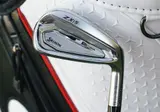
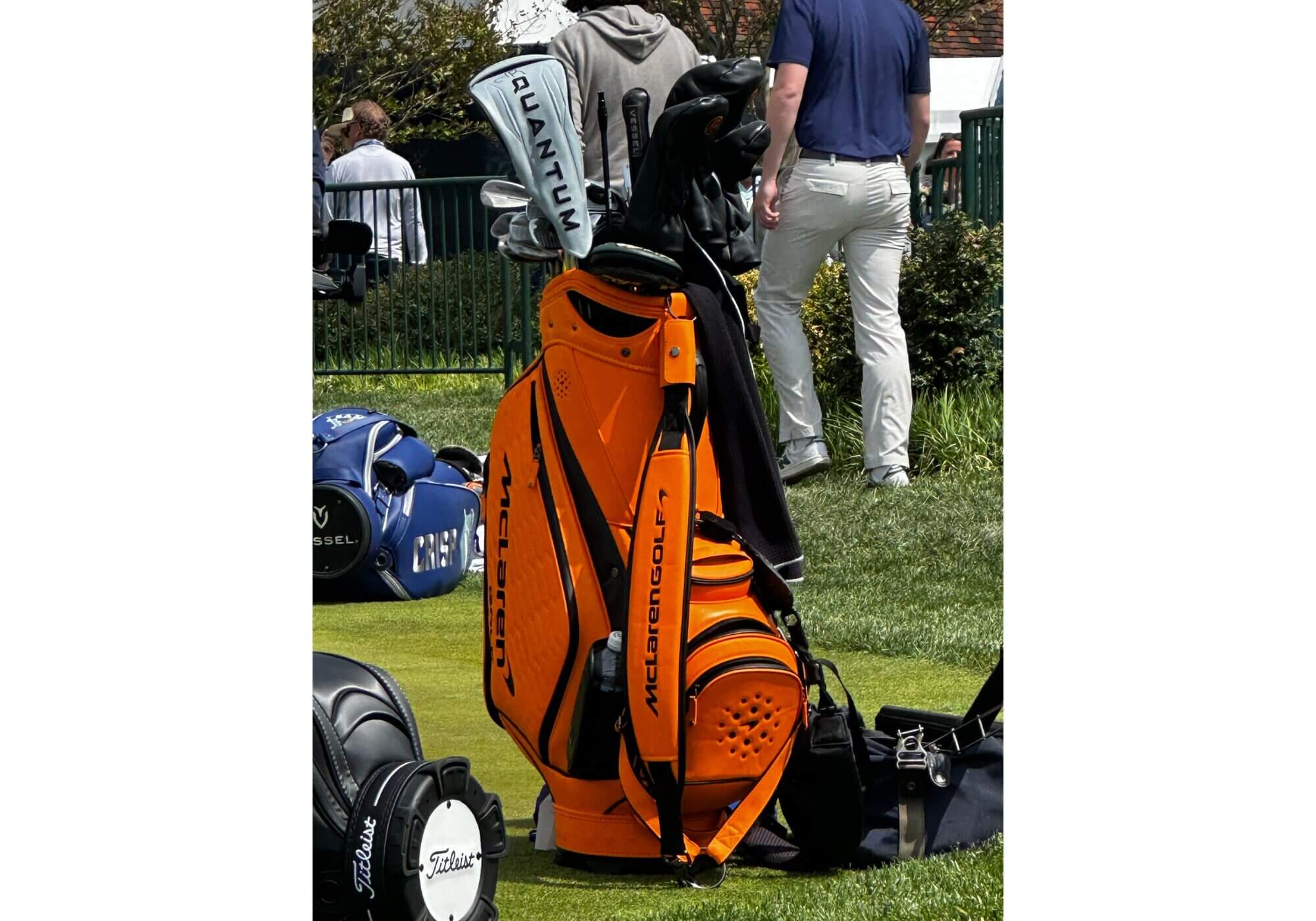
A driver change one week after switching irons is not routine maintenance. Justin Rose showed up to Aronimink with a Callaway Quantum Triple Diamond in the bag, replacing the Paradym Ai Smoke Triple Diamond that had been working just fine. Combined with his McLaren iron debut at the Truist Championship, Rose is now two weeks into what looks like a full equipment reset at a major championship.
Why Did Justin Rose Change Drivers at Aronimink?
The timing matters. Rose's driving accuracy with the Ai Smoke was solid. His ball-striking metrics were not screaming for intervention. When a player who ranks among the Tour's more methodical equipment testers starts swapping multiple club categories in rapid succession, the signal is rarely about the clubs themselves. It suggests a player searching for feel, for confidence, for something the numbers alone cannot provide. Whether the Quantum Triple Diamond delivers that something will play out over 72 holes at one of the year's four biggest stages.
Callaway's Quantum line represents the company's latest push at the premium driver tier, and Rose's adoption gives it instant visibility in a major championship setting. For a brand currently ranked fourth globally on the DORMIED Index and riding a 22.7 percent month-over-month surge, the validation of a major winner testing new equipment under pressure is the kind of earned media that advertising budgets cannot replicate. Rose may be searching, but Callaway benefits from the search regardless of outcome.
What Prompted the Justin Thomas Putter Switch?
The Rose storyline was not the only equipment intrigue at Aronimink's practice rounds. Justin Thomas arrived with Cameron Young's Scotty Cameron Phantom 9.5R prototype still in his bag after debuting it at Truist. Thomas currently ranks 152nd on Tour in Strokes Gained: Putting, sitting at minus 0.605 for the season. When asked about the switch, Thomas offered a revealing response: "Just give me Cam's putter." That kind of candor about equipment envy is rare from a player of Thomas's stature, and it speaks to the psychological weight putting struggles carry at the highest level. Thomas has won five times on Tour and a major championship. He does not need to borrow confidence from anyone's equipment. The fact that he did tells you where his head is on the greens.
The Scotty Cameron prototype market operates on a different plane than retail. These are one-off builds, often hand-delivered to players, tweaked and adjusted based on feedback that never reaches a spec sheet. When Thomas adopted Young's exact model rather than requesting his own custom build, it suggested the switch was as much about mental reset as mechanical improvement. The putter that works for the hottest putting hand on Tour must work for him, too. That logic is not engineering. It is superstition dressed in titanium and milled faces.
Why Did Keith Mitchell Settle on the Odyssey Two-Ball?
Then there is Keith Mitchell, whose 2026 putter carousel finally appears to have stopped spinning. Mitchell has already gamed a Scotty Cameron JAT Proto, a custom Napa, and a Kombi S this season. After debuting the Odyssey EXO Two-Ball at the Valero Texas Open, the alignment aid classic seems to have found a permanent home. Mitchell's putting has been his career-long weakness, and the Two-Ball's return to a Tour bag is a reminder that some designs transcend eras. The original Odyssey Two-Ball launched in 2001 and became one of the best-selling putters in golf history. Odyssey has revisited the design multiple times since, and the EXO version Mitchell now carries represents the latest iteration of a silhouette that helped an entire generation of amateurs aim better.
Major championship practice rounds are where equipment stories surface before the pressure arrives. Some changes stick. Others disappear by Sunday. Rose's full-scale overhaul, Thomas's borrowed confidence, and Mitchell's return to a proven design each represent different relationships between player and equipment. One is searching, one is borrowing, and one has finally stopped looking. By Sunday evening, we will know which approach held up under the weight of a major.