A club cleaning brush company just announced a B2B platform partnership, which is exactly the kind of news that should disappear into the golf industry's daily noise. Except this one has a Good Good Golf logo attached to it, and that changes the calculus entirely.
What Is Grooveit's RepSpark Golf Wholesale Move?
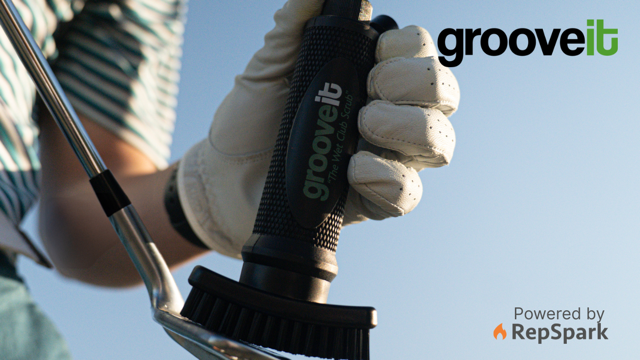
Grooveit, the veteran-owned accessories brand that makes the Wet Club Scrub and miniG line of club cleaners, has joined RepSpark's wholesale platform to expand its reach into green grass accounts and specialty retail. The move is infrastructural, not flashy, but it represents a critical phase in the brand's growth: the transition from direct-to-consumer darling to legitimate wholesale player. For a company that started when its founder sold his airplane to fund production, getting onto golf's primary B2B ordering system is the kind of unsexy milestone that actually matters.
The Good Good Golf connection is the through-line worth examining. Grooveit signed on as the media brand's official club cleaning partner through 2028, a deal that gives a niche accessories company sustained exposure to one of golf's youngest and most engaged audiences. Good Good's YouTube channel pulls millions of views per video. Their audience skews younger, more online, and more likely to buy gear based on creator endorsement than traditional tour validation. For Grooveit, that partnership created the consumer awareness. The RepSpark deal is designed to convert that awareness into retail shelf space.
How Does the Good Good Golf Partnership Drive Demand?
The strategy mirrors what other Good Good partners have done. The media brand's commercial relationships tend to follow a pattern: align with a creator-friendly company, let the content do the demand generation work, then watch the brand figure out how to scale distribution on its own. Grooveit appears to be executing that playbook with discipline. The RepSpark integration gives pro shops and campus stores a frictionless way to order, which matters when you're selling a $30 accessory that lives or dies on impulse placement near the register.
Grooveit's product line has quietly expanded beyond the flagship brush. The Aluminum miniG, available in multiple colorways and NCAA-licensed editions, is a clear play for the collegiate retail market. Campus bookstores and fan shops represent a distribution channel that most golf accessory brands ignore entirely. Grooveit is betting that a school-branded club cleaner sitting next to the polo shirts will move units. It is the kind of lateral thinking that suggests the company understands its product is as much a gift item as a performance tool.
The founder story adds texture. Clint Sanderson, a former U.S. Army helicopter pilot, designed the original brush while recovering from surgery. The military background is not just marketing copy. The product's design emphasis on leak-proof construction, magnetic attachment, and refillable reservoirs reflects an engineer's obsession with solving friction points. Tour caddies and professional fitters have adopted the brand, which provides the credibility layer that wholesale buyers look for before committing shelf space to an unfamiliar SKU.
Why Does RepSpark Matter for Golf Accessories Wholesale?
RepSpark's role here is worth noting for anyone tracking golf's B2B infrastructure. The platform has become the default ordering system for green grass accounts, which means getting onto it is table stakes for any brand serious about wholesale penetration. Grooveit's inclusion signals that the company has its operational house in order: inventory management, order fulfillment, and the backend systems that retailers expect. These are not exciting announcements, but they are the difference between a brand that stays niche and one that scales.
The broader read is that Good Good Golf's partnership model is proving out. The media company has become a distribution channel in its own right, not for selling products directly, but for creating the consumer pull that makes retail buyers confident enough to stock unfamiliar brands. Grooveit is not the first Good Good partner to leverage that exposure into wholesale expansion, and it will not be the last. The question for Grooveit now is whether the infrastructure can keep up with the demand the partnership generates. Selling out is a good problem. Staying sold out is a fatal one.