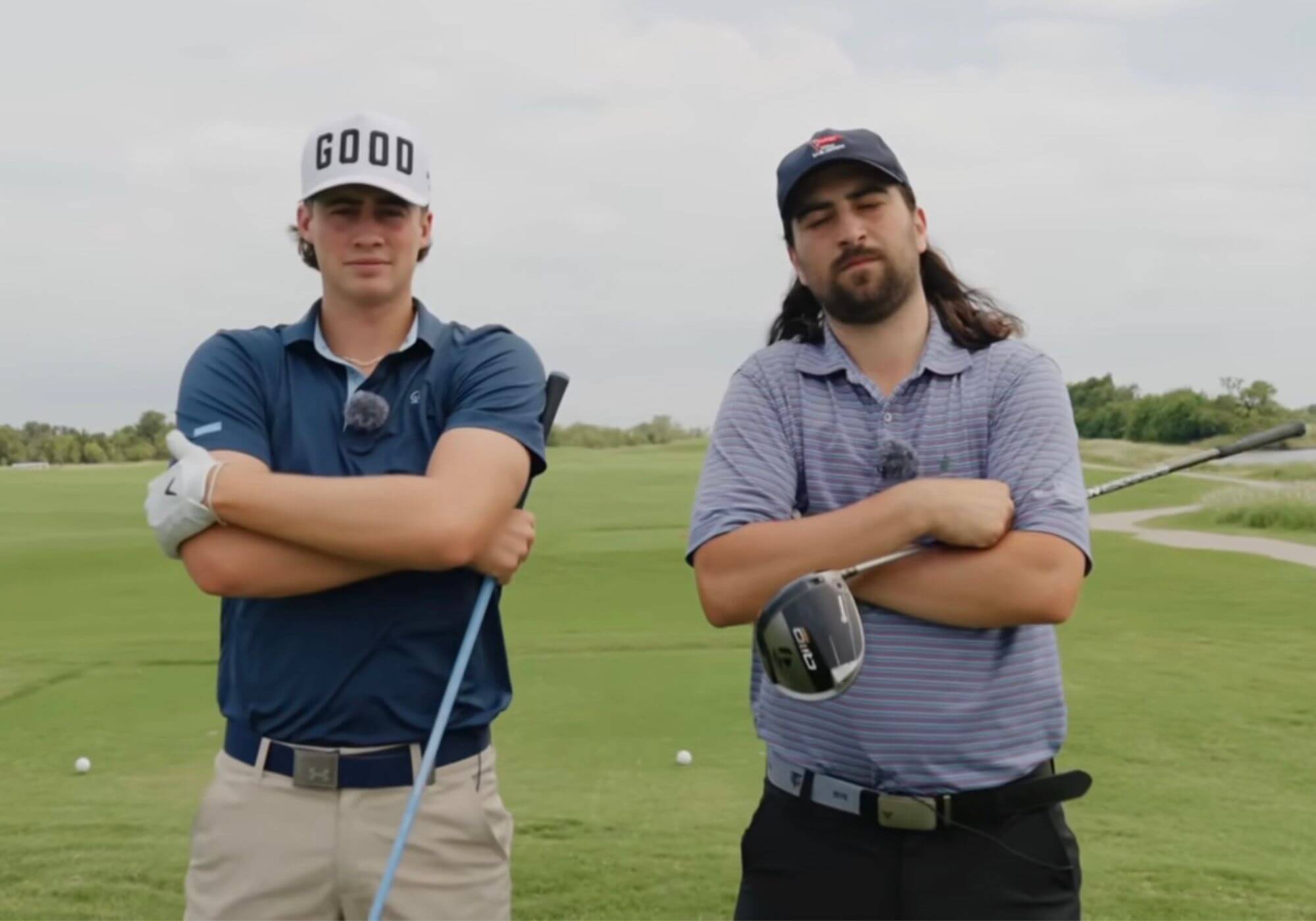
Three videos featuring Noah Kahan have generated over 3 million views for YouTube golf channels, and Good Good sits at the center of that equation. The folk singer's crossover from Tiny Desk darling to golf content staple represents something more calculated than organic fandom. This is what modern golf media companies do now: they find celebrities who actually play, put cameras on them, and let authenticity do the heavy lifting that traditional advertising cannot.
Why Does Good Good Golf's Celebrity Model Work?
Good Good has built its entire brand on this premise. The crew of former college golfers turned content creators understood early that the golf audience was hungry for something the PGA Tour broadcast could never provide: relatability mixed with genuine skill. Adding Kahan to the mix, a Vermont native who jokes about shooting 90 from the whites with generous lies, fits the template perfectly. He is famous enough to draw new eyeballs but unpretentious enough to feel like someone you would actually want in your foursome. The TGL-style exhibition match in November 2025, featuring Kahan alongside Good Good members Brad Dalke, Garrett Clark, and Matt Scharff against Niall Horan's squad, was not a coincidence. It was a proof of concept for how celebrity integration and content creation can feed each other.
The numbers suggest Good Good's approach is resonating beyond the YouTube algorithm. The brand currently ranks 17th globally among 175 golf brands tracked for market visibility, a position that puts them ahead of equipment manufacturers with decades of history. For a company that started as a group of friends filming trick shots, that placement reflects something structural about where golf culture is heading. The PGA Tour has TGL. Good Good has the comment section and the merchandise revenue that comes with it.
How Does Noah Kahan's Golf Crossover Benefit Everyone?
What makes the Kahan connection particularly instructive is the bidirectional nature of the exposure. Kahan's new album "The Great Divide" explicitly references golf on the track "Paid Time Off," a detail that would have been unthinkable from a mainstream artist five years ago. Golf used to be something celebrities hid from their younger audiences because it carried connotations of exclusivity and wealth. Now artists are weaving it into their lyrics because the cultural coding has shifted. Good Good and channels like GM Golf deserve partial credit for that shift. They made golf look like something fun rather than something aspirational, and the celebrity ecosystem followed.
The TGL investor angle adds another layer. Kahan buying into Boston Common Golf alongside his YouTube appearances creates a feedback loop that benefits everyone involved. TGL gets a famous face with an authentic connection to the game. Kahan gets credibility as a real golfer rather than a dabbler. Good Good gets content that performs well and association with a league that has Tiger Woods and Rory McIlroy attached to it. The strategy is not subtle, but it does not need to be. Golf's growth demographics skew toward people who discover the game through content rather than country clubs, and content requires characters worth watching.
Can YouTube Golf Content Bring In New Players?
The Taylor Swift comparison embedded in the original coverage is not accidental. When Swift started appearing at NFL games, viewership among demographics that had never cared about football spiked measurably. The golf version of that phenomenon is smaller in scale but similar in mechanics. Kahan fans who click on a Good Good video because their favorite artist is in the thumbnail might never become serious golfers, but some of them will. That conversion rate, however modest, represents market expansion that traditional golf marketing has struggled to achieve for decades.
Good Good's trajectory suggests the brand has figured out something that established golf companies are still processing. The path to relevance runs through content, personality, and cultural crossover rather than sponsorship deals and tour presence. Whether that model sustains as the founders age and the YouTube landscape evolves remains an open question, but for now they are writing a playbook that others will attempt to copy.