
A player wins his first PGA Tour event after 94 starts and seven runner-up finishes, and the difference traces back to a 48-hour equipment decision. Cameron Young's switch to the Pro V1x Double Dot before the 2025 Wyndham Championship is now the cleanest case study in modern golf for why ball fitting matters, and Titleist did not have to spend a dollar on advertising to make the point.
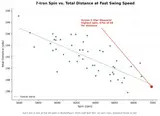
Young had been playing the Pro V1x Left Dot for years, a higher-spinning variant designed for players who need help holding greens. The problem is Young already spins the ball too much. His fast swing and steep angle of attack generate spin naturally, and layering a high-spin ball on top of that was compounding the issue rather than solving it. During a visit to the Titleist Performance Center in Massachusetts, Young tested a prototype Pro V1x Double Dot, a lower-spinning model outside the standard product line. He described the ball flight as coming straight back down rather than floating, which to him signaled consistency he had not seen before. He put it in play 48 hours before the Wyndham and won by six shots.
The numbers since then are not subtle. Before the switch, Young ranked 129th on the PGA Tour in Strokes Gained: Approach, losing 0.124 strokes to the field per round. After the switch, he jumped to 19th, gaining 0.486 strokes per round. His greens in regulation climbed from 64.18% to 69.14%. His scoring average dropped a full stroke. His total strokes gained moved from 19th on Tour to third. The approach game, the category most directly affected by ball choice and spin control, flipped from a consistent weakness to a consistent strength.
The tournament-by-tournament data makes it starker. In the five events before the switch where approach data is available, Young posted negative Strokes Gained: Approach numbers in every single one. At the Valspar Championship, he lost 1.53 strokes to the field on approach alone. In the eight events since the switch, he has posted positive numbers in all eight, including a plus-2.01 performance at THE PLAYERS Championship. That is not noise. That is a structural change.
What makes this story more layered is the regulatory timing. Reports indicate the Pro V1x Double Dot would likely conform under the USGA and R&A's proposed new Overall Distance Standard. Young did not switch balls to get ahead of the rollback, but he may have accidentally positioned himself for it. If the new distance rules take effect and higher-spinning balls become the norm for maintaining control at reduced distances, Young is already playing a ball built for that environment. Whether that was luck or foresight, Titleist now has a proof point that the prototype works at the highest level.
The broader industry context here is that ball fitting remains one of the most underutilized levers in amateur golf. Fittings for drivers, irons, and wedges are now standard at any serious retail location. Ball fitting is not. Most golfers pick a ball based on brand loyalty, price, or what a tour player endorses. Young's story is a reminder that the ball is the only piece of equipment that touches every shot, and that choosing one that works against your swing tendencies can quietly cost strokes for years.
Titleist, already ranked first globally with a perfect DORMIED Index score, did not need this win to validate its position in the ball market. But the Cameron Young case gives the company something harder to manufacture: a narrative. A talented player who could not close finally figures it out, and the difference is a ball that fits his game. That story will sell more Pro V1x units than any advertisement could.
The question now is whether Titleist moves the Double Dot from prototype to production. If Young continues to perform at this level, the demand will be there. And if the distance rollback arrives on schedule, Titleist will have a head start on the next generation of tour-level balls built for a different set of rules.