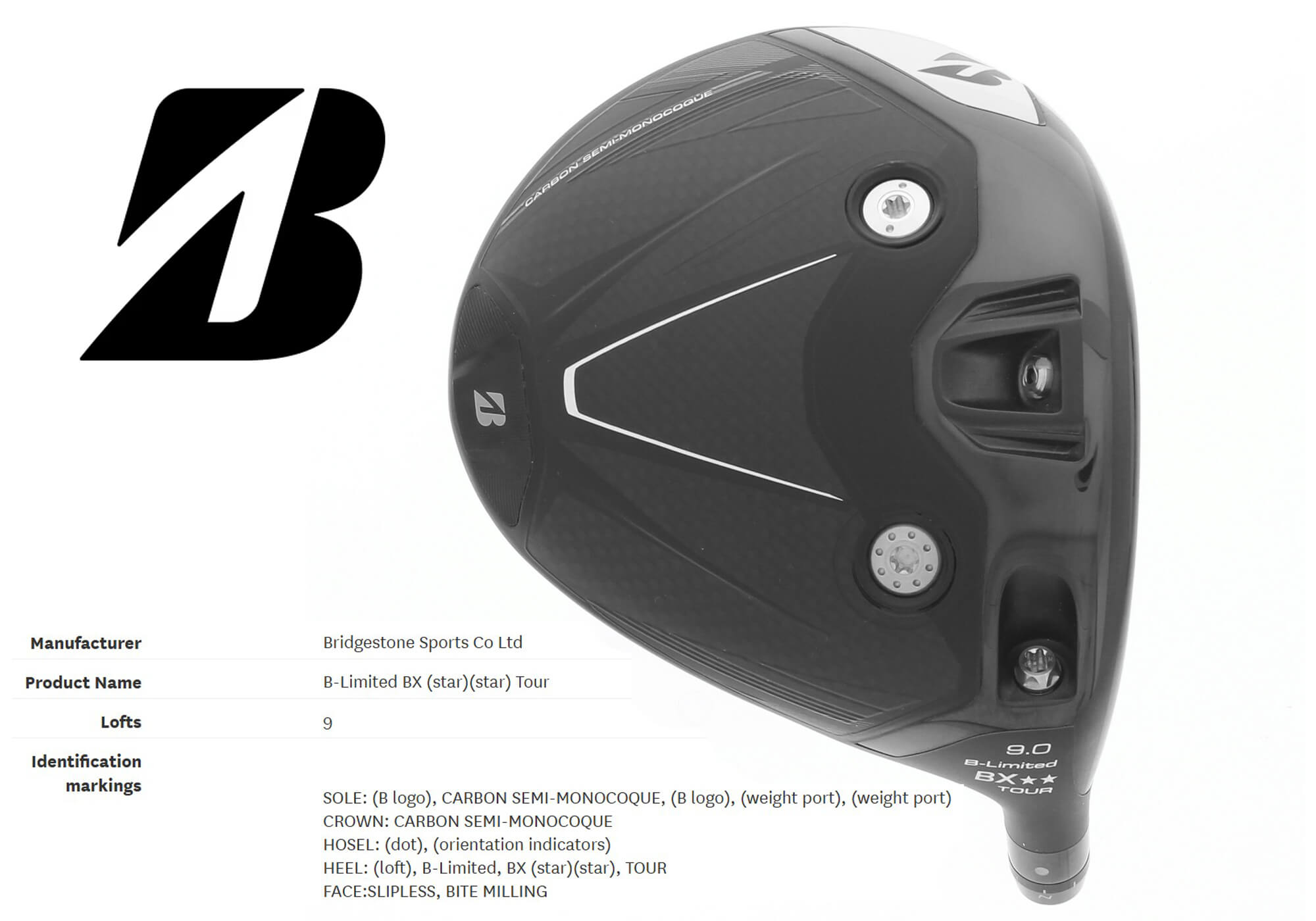
Two new driver models appearing on the USGA Conforming List would normally be routine housekeeping. When those models belong to Bridgestone, a company that has spent the better part of a decade retreating from the North American equipment market, the filing becomes something else entirely. The B-Limited BX Tour Two-Star and BX TOURMAX represent the clearest signal yet that Bridgestone is done playing defense.
Why Is Bridgestone Filing Drivers While Closing a Plant?
The timing is impossible to ignore. Ten days before these drivers surfaced on the conforming list, Bridgestone announced it would shutter its Covington, Georgia ball plant, a move that read to many as the beginning of the end for the brand's American ambitions. The driver filing suggests the opposite. Bridgestone is not winding down. It is reallocating. Ball manufacturing can move offshore without damaging brand equity in the way that abandoning the club category would. Drivers, on the other hand, are the front door of any equipment company. Showing up with two new models while competitors are mid-cycle is a statement of intent.
The technical story here is worth parsing. Both models carry the phrase "Carbon Semi-Monocoque" on the sole and crown, a construction term borrowed from aerospace and motorsports engineering. The concept is not new to golf. PING, TaylorMade, and Callaway have all embraced versions of this design philosophy, using carbon panels, internal ribbing, and titanium frames as integrated load-bearing systems. Bridgestone is late to this party, but showing up with the right vocabulary. Semi-monocoque construction allows for weight savings that can be redeployed to lower the center of gravity, push it farther back for forgiveness, or move it forward for reduced spin. The tradeoff is manufacturing complexity, which is why smaller OEMs have been slower to adopt the approach.
What Sets the B-Limited BX Tour Models Apart?
The "Slipless Bite Milling" face treatment is the more interesting detail for anyone who follows Bridgestone's engineering history. The company has been using friction-enhancing face milling on its Japanese market drivers for years, with internal data suggesting measurable gains in spin consistency on off-center strikes. Whether that data translates to the kind of performance improvement that moves needles in the American market is a different question. Spin consistency is a hard sell to recreational golfers who are still chasing distance. It is an easier sell to the low-handicap players who tend to gravitate toward Japanese equipment anyway.
The two models appear to follow a familiar Tour-versus-game-improvement segmentation. The BX Tour Two-Star, listed at nine degrees only, features two swappable weight ports on the sole, positioned toward heel and toe. The configuration suggests a fitting-focused, lower-spinning head aimed at better players. The BX TOURMAX, listed at 9.5 degrees with no visible sole weights, is likely the higher-MOI, more forgiving option. Neither model carries the 10K combined MOI branding that has become shorthand for maximum forgiveness in 2025 and 2026. That omission is probably intentional. Bridgestone has never chased the forgiveness arms race the way its American competitors have. The brand's identity, at least in clubs, has always leaned toward precision over protection.
Why Is Distribution Hard for Bridgestone Golf Equipment?
Distribution remains the open question. Bridgestone's North American club presence has been limited to a narrow line of forged irons and wedges, sold through a handful of specialty retailers and custom fitters. Drivers require a different go-to-market strategy. The brand will need Tour validation, which means getting these heads into the bags of Chris Gotterup, Jason Day, or a visible Korn Ferry player before any consumer launch. It will also need retail shelf space, which is harder to secure now than it was five years ago. The major OEMs have consolidated their grip on big-box real estate, and independent retailers have shrunk in both number and influence.
Bridgestone's path back into the North American driver market was never going to be straightforward. The company is betting that a technically credible product, aimed at the right slice of the market, can reopen doors that have been closing for a decade. The USGA filing is the first step. The next six months will determine whether it leads anywhere.