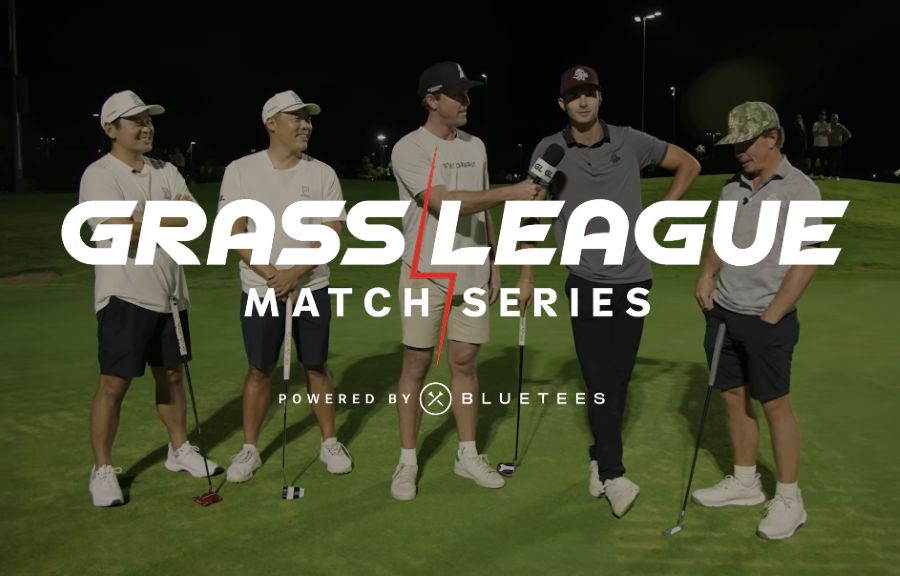
A multi-year presenting sponsorship of an upstart par-3 league is not the move of a brand playing defense. Blue Tees Golf, the California-based rangefinder and launch monitor company, has signed on as the presenting sponsor of Grass League's Match Series, putting its Rainmaker portable launch monitor at the center of the league's broadcast infrastructure through at least 2027.
The deal positions Blue Tees alongside Anheuser-Busch, Golf Channel, and GolfNow as Grass League's fourth major partner of 2026. For a brand ranked 50th globally in the DORMIED Index, that's ambitious company. But the 22.3% month-over-month growth Blue Tees posted in April suggests the brand sees an opening that traditional rangefinder marketing cannot reach.
What Is the Grass League Match Series Format?
Grass League represents a specific bet on where golf viewership is headed. The league's format, a 2v2 single-elimination match play series across par-3 courses, is built for YouTube and streaming rather than traditional broadcast windows. The talent mix of tour professionals, amateurs, and creator-class personalities like Paige Spiranac reflects an audience that discovers golf through content rather than Sunday afternoon coverage. Blue Tees is betting that audience converts.
The integration model matters here. Blue Tees is not simply slapping its logo on a broadcast. The Rainmaker launch monitor and the company's distance-measurement tools will feed real-time data visualization directly into the Grass League production. Spin rates, carry distances, and shot shapes become part of the viewing experience rather than post-round graphics. For a brand competing against Garmin, Bushnell, and the Trackman-dominated tour-level market, owning the data layer of an emerging broadcast format is a differentiated position.
Why Does the Rainmaker Launch Monitor Need Visibility?
Portable launch monitors remain one of the fastest-growing segments in golf technology, and the competitive landscape has compressed rapidly since 2022. Garmin's Approach R10 established the sub-$600 price point. Rapsodo followed. Blue Tees entered with Rainmaker in late 2024, and the device has earned credibility in independent testing for accuracy at its price tier. But accuracy alone does not build a consumer brand. Visibility does. Grass League provides the kind of repeated, contextual exposure that traditional tour sponsorships struggle to deliver to the under-40 demographic Blue Tees needs to own.
The strategic logic extends beyond the Match Series itself. Grass League's franchise model, with team ownership and season-long competition, creates narrative continuity that one-off tournaments cannot match. Fans follow teams. Teams generate content between events. Blue Tees branding lives inside that content ecosystem for the duration of the partnership. Compare that to a PGA Tour event sponsorship, where brand visibility competes with a dozen other logos and disappears the moment the trophy is lifted.
What Are the Risks in This Golf Sponsorship?
There is risk in the bet. Grass League is still proving its model. The league launched in 2023 and has grown quickly, but par-3 golf as a standalone broadcast product remains unproven at scale. The Golf Channel partnership announced earlier this year suggests traditional media sees potential, but potential is not audience. If Grass League's viewership plateaus, Blue Tees will have committed multi-year dollars to a niche platform.
The timing, however, favors experimentation. Blue Tees is not yet competing for the same customer as Bushnell's Tour V6 or Garmin's premium GPS watches. The brand's growth has come from golfers who buy online, research through YouTube, and trust creator recommendations over pro shop advice. Grass League's audience profile matches that customer almost exactly.
Blue Tees exits 2025 as a mid-tier tech brand with momentum and a product line that competes on value. The Grass League deal is a signal that the company intends to compete on visibility next. Whether the league's audience scales fast enough to justify the investment will determine if this sponsorship looks prescient or premature by 2028.